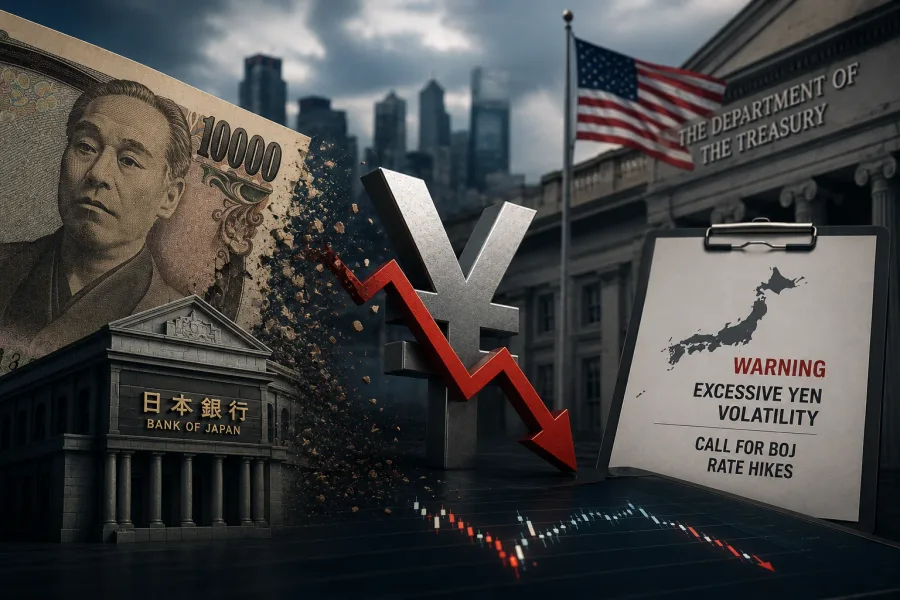
US Treasury warns on yen volatility
The U.S. Treasury Department has warned against excessive volatility in the Japanese yen, calling on the Bank of Japan (BOJ) to raise interest rates. In a recent report, the department noted that yen weakness has persisted despite the narrowing of U.S.-Japan interest rate differentials.
Persistent yen weakness
According to the Treasury, the gap between U.S. and Japanese interest rates has been shrinking, yet the yen continues to depreciate against the dollar. This suggests that the BOJ needs to tighten monetary policy further to address the currency's weakness. Economists say that while a weaker yen benefits Japanese exporters, it also raises import costs and could fuel inflation in the long run.
Global market implications
The U.S. warning is being closely watched by global investors, as excessive yen volatility could spill over into other Asian currencies and emerging markets. The Treasury's statement has heightened expectations that the BOJ may soon adjust its ultra-loose monetary policy, which has been a key factor in the yen's decline.
Uncertainty over BOJ timing
Analysts say that while a rate hike is likely in the coming months, the exact timing remains uncertain. Any shift in BOJ policy would have significant implications for global interest rates and currency markets. The U.S. Treasury's call is seen as part of ongoing economic dialogue between the two countries, and markets are now awaiting Japan's response.
The yen's trajectory and the BOJ's next moves will remain key themes for global financial markets in the near term.
