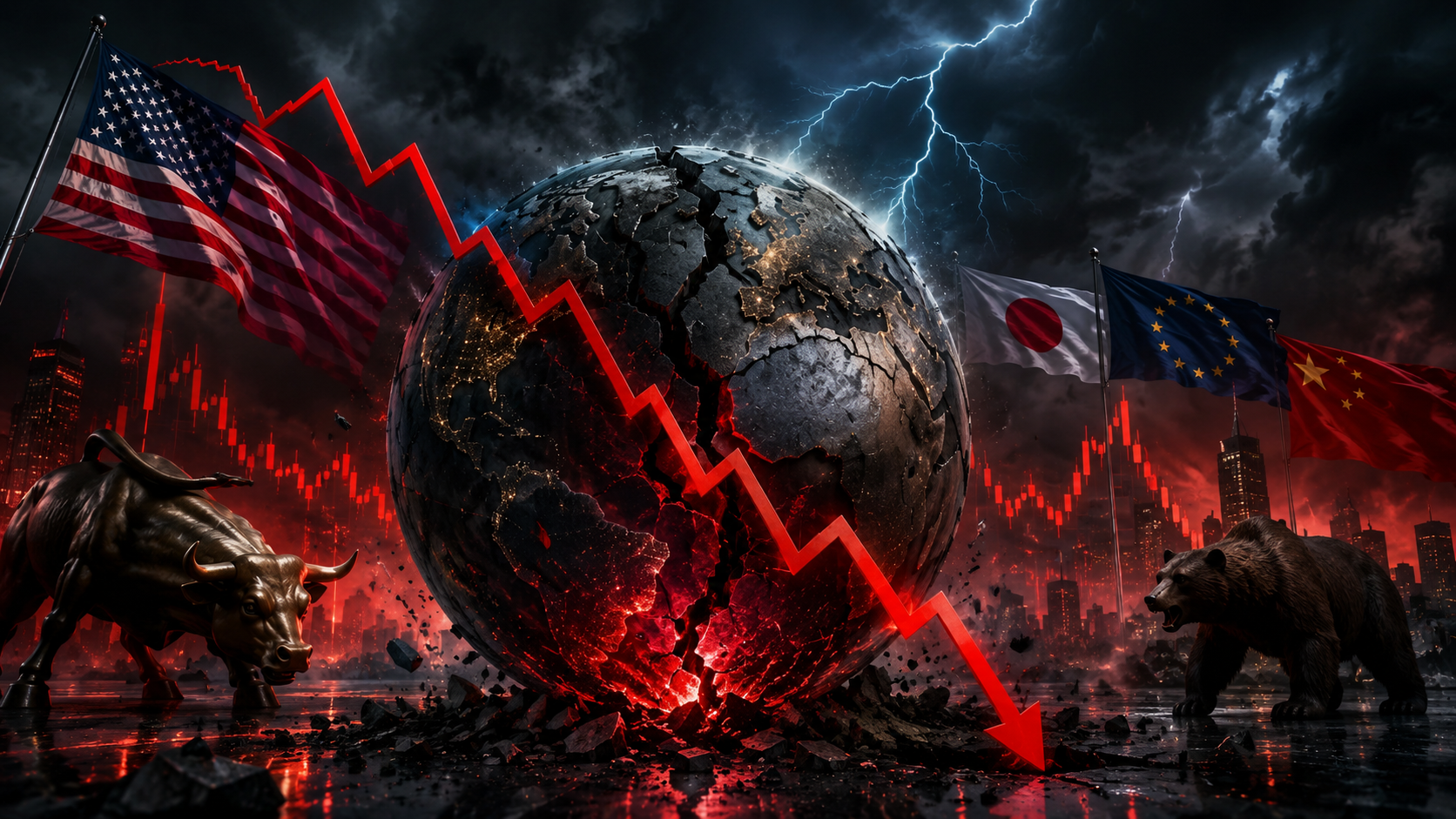
On the morning of June 21, 2026, turning your eyes to a stock market screen immediately triggers a deep wave of uncertainty. Indices spent the night searching for direction, with the Nikkei closing 2.3% lower in the Asian session, while S&P 500 futures repeated the exhausting volatility we have seen since the start of the year. This is not just an ordinary sell-off; as we approach the end of the second quarter of 2026, global markets are trapped in the middle of three clashing narratives.
The brief relief that came with interest rate cuts last year has given way to resurgent inflation fears, supply chain shocks, and an AI-driven corporate landscape that is creating an almost bipolar market. Millions of investors are asking the same question: Is this storm temporary, or the sound of a much larger fracture?
The Second Act of the AI Rally
The AI-led stock explosion that began in 2025 has turned into a runaway train in 2026. The S&P 500 information technology sector index surged 34% in the first six months of the year, but 70% of that gain came from just four mega-cap stocks. This concentration has pushed market breadth to historic lows, creating an environment where the rest of the index is practically standing still.
Valuations and the Breaking Point
As of today, the forward price-to-earnings ratio of leading AI chip manufacturers has climbed to 52. Last year, such levels were interpreted as “pricing in the future,” but in 2026, even the slightest slowdown in corporate balance sheets causes corrections of 15-20%. For example, just last week, a one-month delay in the new chip launch of an industry giant wiped $120 off its share price. This picture shows that investors are beginning to question the mantra that “growth forgives everything.”
Geopolitical Fire and the Energy Quake
Tensions that escalated in the Middle East in autumn 2025 are still producing supply security nightmares as summer 2026 arrives. Crude oil prices have dropped 23% compared to the same period last year, falling to $58 per barrel. However, this decline reflects a far greater fear than demand contraction: recession. Energy stocks are struggling to price both the loss of geopolitical risk premium and the softening of global demand simultaneously.
The Hidden Crisis in Natural Gas
While eyes are on crude oil, the liquefied natural gas (LNG) market is quietly moving towards a historic supply deficit. Asian spot LNG prices rose 41% in the first quarter of 2026. Europe's storage levels are 15% below average, and alarm bells are already ringing for the coming winter. Despite all optimistic talk about energy transition, production cuts are on the table for many industrial nations this winter.
The Desperate Synchronization of Central Banks
The year 2026 is a complete impasse for central banks. The Fed held rates steady in the 4.75–5.00% range during the first half of the year, while core inflation stubbornly resists at 3.8%. The European Central Bank, in turn, cannot dare to cut interest rates due to energy-driven cost pressures. The Bank of Japan's yen interventions are creating chain-reaction volatility in foreign exchange markets. The result: the macro uncertainty index is at its highest level in 15 years.
The Domino Effect on Emerging Markets
A strong dollar and a high global interest rate environment have accelerated portfolio outflows from emerging markets. In the first five months of 2026, net capital outflows from these markets reached $92 billion, the largest wave of exits since 2008. Countries with melting foreign exchange reserves are struggling to finance imports, heralding new disruptions in the global supply chain.
The 2026 Formula for Building a Resilient Portfolio
In this chaotic environment, investors must abandon the “buy and forget” reflex and adopt a multi-layered strategy. The first layer is managing opportunity costs with 15–20% cash and short-term instruments. The second layer is preserving purchasing power with inflation-linked bonds and commodity baskets. The third layer is a stock selection focused only on companies with positive cash flow, stable dividend growth, and low leverage ratios.
The Power of Data-Driven Decisions
Today, individual investors can access real-time data streams, alternative data sets, and customized alert systems just as institutional investors do. An investor who uses these tools correctly can price in supply chain delays weeks in advance. The key is not just receiving the data, but reading it in the right context. For instance, the US PMI figure released today signaled contraction at 48.1; this should be evaluated not just as bad news, but as a parameter that increases the probability of a rate cut.
The speed and depth of financial information will be the key to survival in this cycle. Which data do you trust, and which strategy are you deploying to adapt your portfolio to today's realities?
