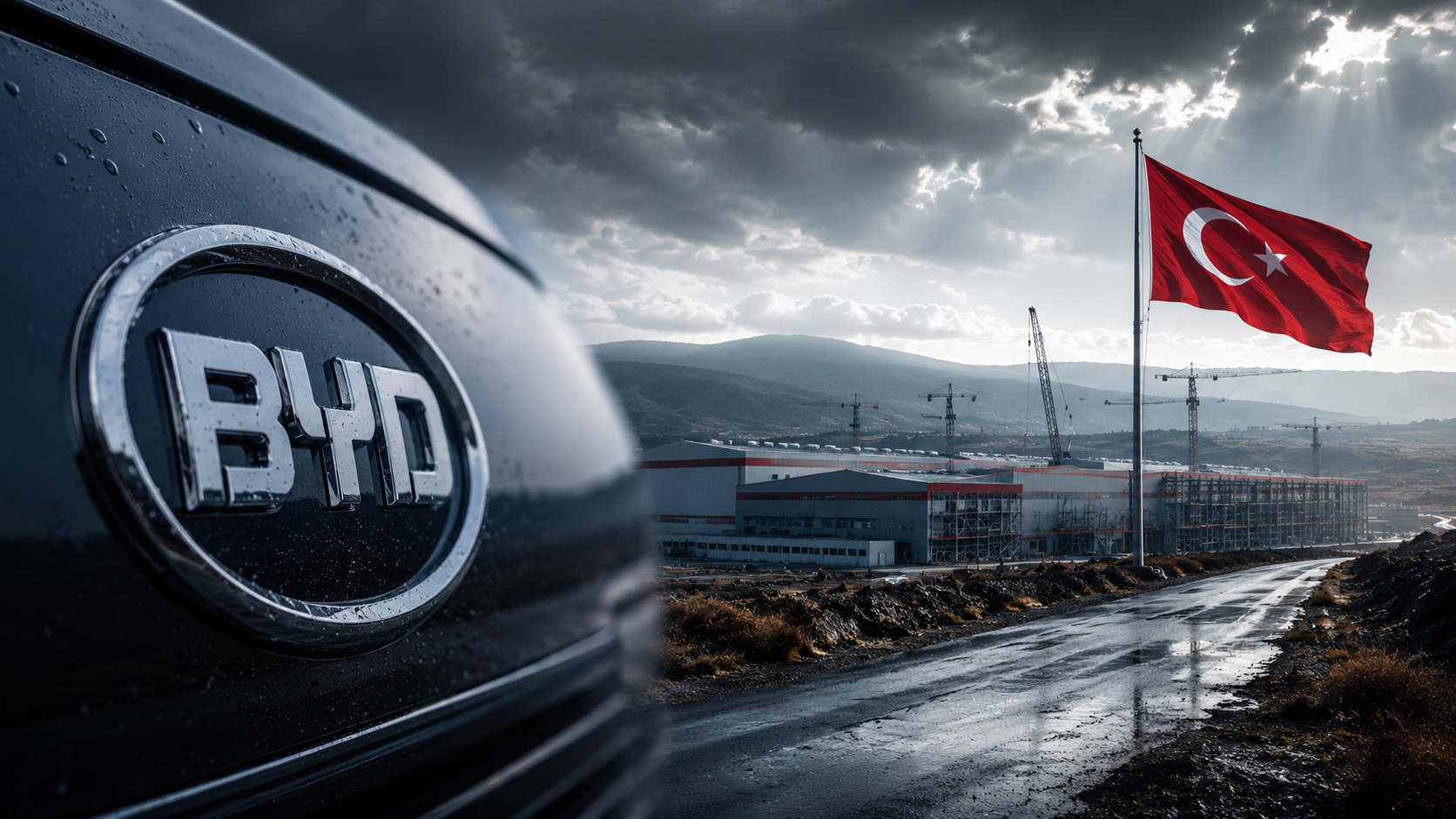
BYD, the global giant of the electric vehicle market, is facing an unexpected pause in its major investment plans in Turkey. According to a breaking statement from Turkey's Ministry of Industry and Technology, the incentives provided for the Chinese manufacturer's planned production facility in Manisa have been suspended due to a lack of progress in the investment. This decision raises critical questions for both the local economy and Turkey's electric vehicle vision.
Why Was the Incentive Process Suspended?
Ministry officials confirmed that the incentive process has been postponed to 2026 because BYD failed to take the necessary steps according to the project timeline and did not complete the feasibility studies. While the investment was originally planned to begin in 2024, delays in site preparations and infrastructure work prompted the Ministry to take this decision. According to experts, uncertainties in BYD's global supply chain and market conditions are also among the factors slowing down the process.
BYD's Global Strategy and Turkey's Role
BYD viewed Turkey as a strategic base for entering the European market. The Manisa facility was expected to have an annual capacity of 150,000 vehicles and create 5,000 jobs. However, the company's recent investment moves in Hungary and other European countries have led to speculation that the Turkey project has lost its priority. Experts believe that the likelihood of BYD returning to Turkey within the next two years is low, but the project has not been completely canceled.
Impacts on the Industry and Local Economy
The suspension of incentives has caused disappointment among small and medium-sized enterprises in and around Manisa that were planning investments contingent on BYD. Many of these SMEs have now decided to freeze their projects. Meanwhile, Turkey's electric vehicle transformation targets are directly affected by this decision. The government aims to have 1 million electric vehicles on the road by 2030, and the absence of a major producer like BYD puts this target at risk.
Turkey's Search for Alternatives
Experts suggest that the Ministry may redirect the now-vacant incentive package to other investors. Interest from BYD's Chinese rival Chery and South Korean Hyundai in Turkey is well known. Additionally, plans to increase the production capacity of the domestic carmaker TOGG could play a key role in filling this gap. However, TOGG alone seems unlikely to match the employment and export volume that BYD would have generated.
Future Perspective: Will the Investment Be Completely Canceled?
Although official statements use the term “suspension,” market analysts believe this decision is effectively a cancellation. The magnitude of BYD's investments in Europe over the past two years and the lengthy bureaucratic processes in Turkey weaken the chances of the project being revived. Still, without official confirmation, it is possible for BYD to chart a new roadmap after 2026. Potential talks between the parties in the coming months will determine the project's fate.
Do you think Turkey can still meet its electric vehicle targets despite this delay? Or does BYD's withdrawal create a new opportunity for domestic production? Share your thoughts in the comments below!