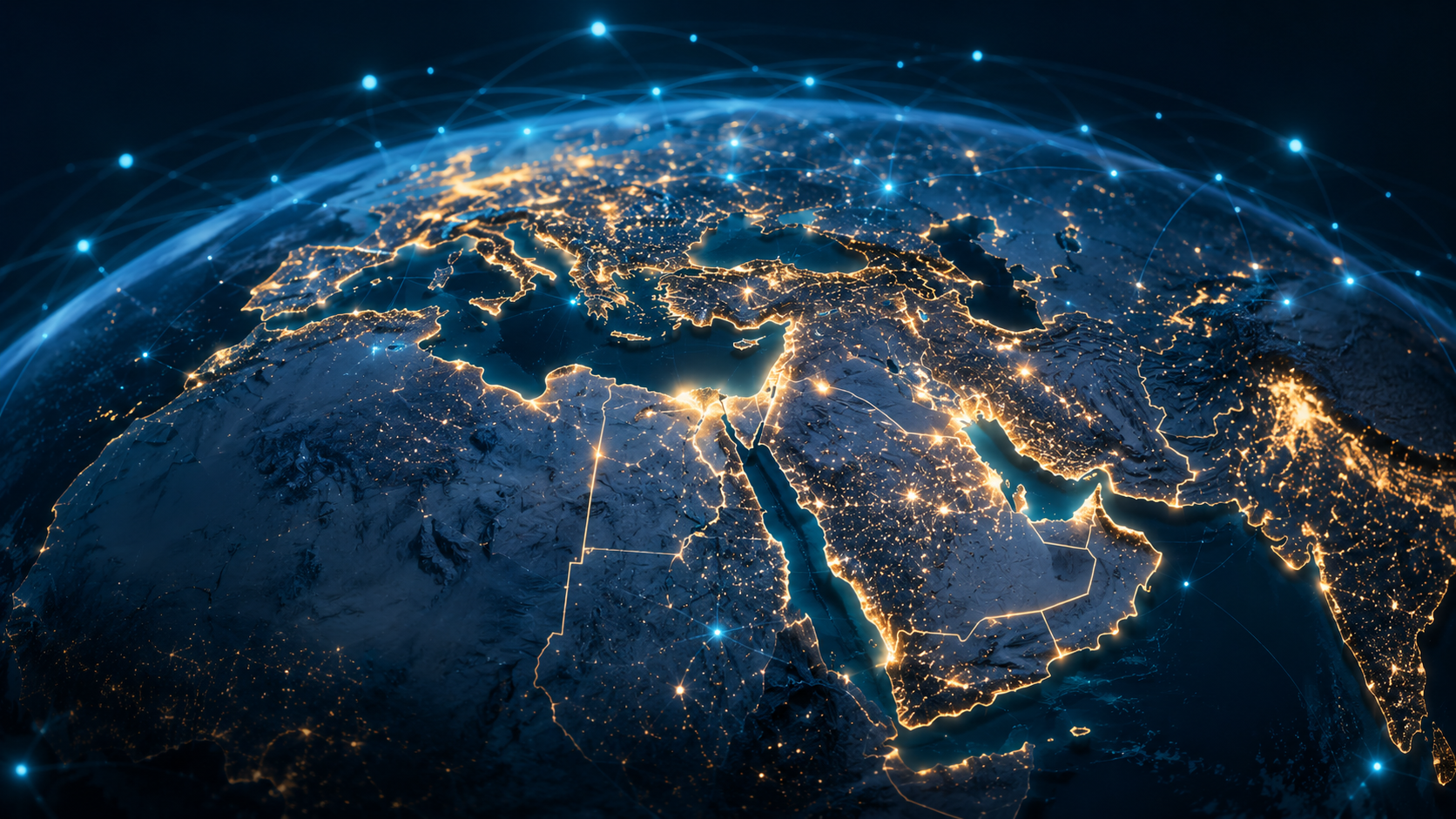
On the morning of June 17, 2026, Cairo’s stock exchange screens displayed nearly double the trading volume compared to a year earlier. At the same time, a new quantum computing lab broke ground in Dubai’s artificial intelligence free zone. By mid-2026, the Middle East and North Africa (MENA) is no longer capturing global attention only for energy supply—its alliances, technology, and human capital have become equally magnetic. Drawing on the World Economic Forum’s network of leaders and experts, this live analysis tracks four critical dimensions reshaping the region.
Geopolitical Shifts: Alliances Redrawn
After frozen conflicts thawed throughout 2025, 2026 has become the year of accelerated diplomatic normalization in MENA. The expansion of the Abraham Accords into what is now dubbed “Abraham 2.0” includes economic integration packages spanning Morocco, Sudan, and even Lebanon. Data released at the World Economic Forum’s May regional meeting showed cross-bloc trade volumes up 23% year-on-year. Meanwhile, a parallel 11% rise in defense spending has turned attention to the emerging security architecture.
Behind this picture are not only states but also new multilateral structures like the MENA Security and Cooperation Council, launched in 2025. The council contributes to regional stability through joint drone patrols and shared cybersecurity protocols during crises. Experts project membership could reach 18 by the end of 2026—the most comprehensive regional security umbrella since the Cold War.
Yemen and Syria: The Economic Dividend of Reconciliation
In Yemen, the Hodeidah Accord signed in autumn 2025 is delivering its first tangible economic benefits in 2026: oil exports have recovered to 40% of pre-war levels, and the country’s logistics hub linking Aden, Djibouti, and Dubai has begun contributing $2 billion annually to regional trade. In Syria, a reconstruction fund launched in July, backed by Gulf capital and a joint EU credit facility, has made possible the construction of 120,000 housing units in Aleppo and Homs. These cases prove that peace carries not just political but also concrete economic returns.
Economic Transformation: Stepping Out of Oil’s Shadow
In 2026, MENA economies are racing to build immunity against oil-price swings. Saudi Arabia’s non-oil GDP growth, 5.8% in 2025, climbed to 6.2% in the first quarter of 2026. The Public Investment Fund (PIF), the investment arm of Vision 2030, signed $40 billion in biotech and space tourism deals this year. The United Arab Emirates took a historic step by implementing a corporate tax, diversifying state revenues; the $8 billion collected in the first six months nearly erased the budget deficit.
But the most striking transformation is in the green energy sector. The region’s solar radiation and wind corridors are turning it into a global hub for hydrogen production. Egypt’s Benban complex surpassed 2 GW of capacity; Morocco’s Noor facilities began exporting green ammonia. According to the International Energy Agency’s April 2026 report, MENA’s green hydrogen production capacity grew 70% compared to last year.
Clean Energy Corridors: From Oman to Europe
The 30 GW solar-wind hybrid park built in Oman’s Duqm region will connect directly to the European grid via a subsea cable set to go live in autumn 2026. This line is changing not just the energy flow but also the region’s export model: long-term energy purchase agreements and carbon credits are replacing fossil-fuel revenues. Oman climbed 12 places in one year on the World Economic Forum’s Energy Transition Index, breaking into the top 10.
Digital Leapfrogging: Tech Hubs Rise
By 2026, MENA is no longer just an energy and logistics crossroads; it is attracting global talent with AI, fintech, and gaming ecosystems. Dubai’s AI District now hosts over 400 startups, while “The Garage” entrepreneurship hub in Riyadh received 1,200 tech-startup applications in the last quarter alone. Saudi Arabia’s digital nomad visa, introduced in 2025, attracted over 50,000 applications in the first half of 2026, 60% of them software developers or data scientists.
The region’s digital infrastructure investments are equally noteworthy. The UAE’s 5G-Advanced network now has the highest connection density per square kilometer; Qatar turned its post-World Cup stadiums into giant data centers, offering carbon-neutral cloud services. These moves are making the region an indispensable node on the global technology map.
Fintech and Inclusion: Unicorns Emerging from Cairo
Egypt’s fintech scene exploded in 2026, driven by a youthful population and central-bank regulatory easing. Cairo-based payment platform Falone became the region’s newest unicorn with a $1.2 billion valuation in its Series D round. The company’s AI-based micro-lending model reached 18 million unbanked Egyptians. This case was featured on the World Economic Forum’s agenda as concrete proof of how financial inclusion can merge with commercial success.
Human Capital and Social Change
MENA’s greatest asset remains its young population. As of 2026, 55% of the region’s people are under 30. Managed correctly, this demographic window can become a productive growth engine; neglected, it could fuel social tensions. Fortunately, 2026 data offers hope: youth unemployment in Algeria, Tunisia, and Jordan has fallen by an average of 4 percentage points since 2025, thanks to mass coding bootcamps and entrepreneurship support programs.
Education reforms are equally striking. Saudi Arabia added mandatory AI and data literacy courses to its school curriculum; half of the UAE’s public high schools switched to a “Professional Second Path” program that provides vocational skill certification. These steps are already aligning skill supply with economic demand across the region. The World Economic Forum’s 2026 Skills Report declared MENA “the region closing the digital skills gap fastest.”
Women’s Employment: The Point of No Return
Women’s labor-force participation is one of the region’s quietest yet most powerful transformations. Female participation exceeded 50% in Kuwait and Bahrain; in Saudi Arabia’s tech sector, one in three workers is a woman. This trend accelerated with parental-leave regulations enacted in 2025 and remote-work models. Economists calculate that women’s employment could add $600 billion annually to the region’s GDP; by 2026, about a quarter of that potential has been realized.
These headlines together show a 2026 MENA that is multipolar, fast-moving, and writing its own narrative. Geopolitical alliances are woven with data cables as much as energy pipelines; hydrogen and human capital are replacing oil. What do you see as the most critical factor for the sustainability of this transformation? Share your views and forecasts to join the regional conversation.