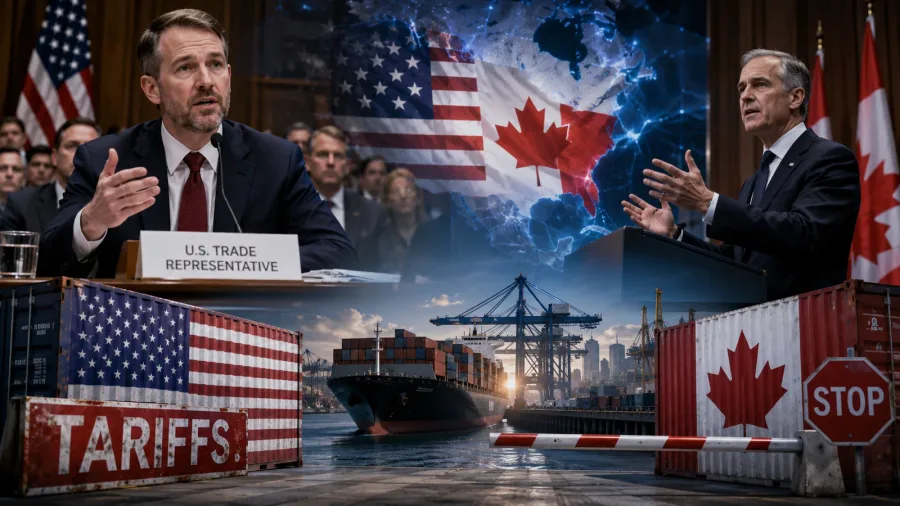
Greer defends Trump's tariffs amid trade tensions with Canada
U.S. Trade Representative Jamieson Greer testified before Congress on Tuesday, defending the latest tariffs imposed by President Donald Trump as essential to protecting American workers and industries. Greer framed the trade policy as central to the 'Make America Great Again' agenda, arguing that the measures target unfair trade practices by key partners.
Canada's Carney says talks with Trump intensified
Canadian Prime Minister Mark Carney said Tuesday that he and Trump have agreed to intensify negotiations on a trade agreement between the two countries. 'We have agreed to ramp up discussions to restructure our trade relationship for mutual benefit,' Carney stated. The announcement comes amid heightened trade tensions, signaling a diplomatic push to avoid further escalation.
Global implications of Trump's trade policy
The Trump administration's aggressive tariff policies have strained relations not only with Canada but also with the European Union and China. Economists warn that while tariffs may protect certain domestic industries in the short term, they risk disrupting global supply chains and fueling inflation. Greer's testimony aimed to justify these measures, stating they are a 'stand against unfair trade practices.' The international community is closely watching the outcome of U.S.-Canada talks as a bellwether for broader trade dynamics.
Outlook for U.S.-Canada trade negotiations
Negotiations between the U.S. and Canada are expected to intensify in the coming weeks. Carney expressed optimism, saying both sides are 'committed to reaching a mutually beneficial deal.' However, Trump's 'America First' stance suggests tough bargaining ahead. Greer's congressional defense underscores the administration's resolve to maintain its protectionist approach. As of 2026, the trajectory of these trade talks will have significant implications for global markets and supply chains.
In summary, the U.S.-Canada trade negotiations serve as a critical test of Trump's protectionist policies. Greer's testimony and Carney's remarks indicate both nations remain at the table, but a resolution may take time. The outcome will shape global trade patterns and economic stability in the months ahead.
