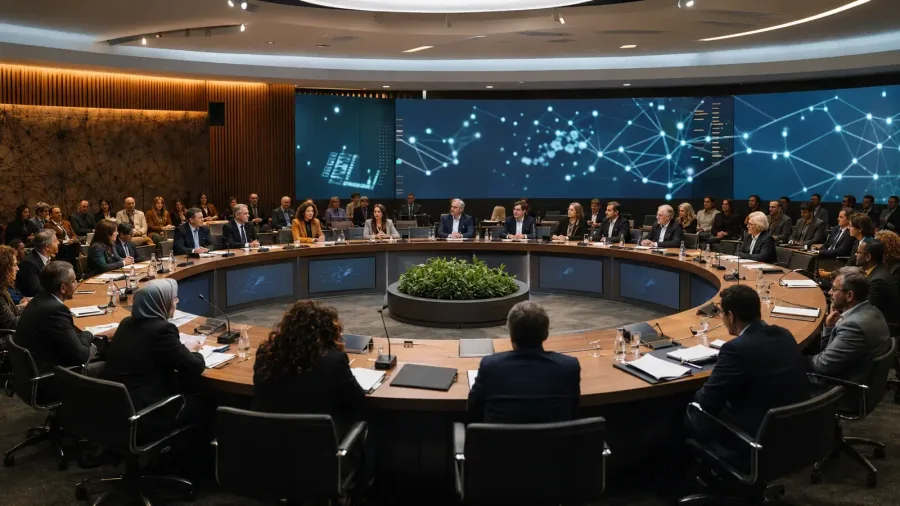
The Second Communication Council opened in Ankara on July 28, 2026, under the theme “Century of Türkiye: Century of Communication.” The two-day event is organized by Türkiye’s Directorate of Communications, with the opening session held at ATO Congresium. President Recep Tayyip Erdoğan and Director of Communications Burhanettin Duran attended the opening program.
The council is focusing on the effects of rapid technological change on public institutions, media organizations, academia and society. Its agenda ranges from local and digital media to artificial intelligence, disinformation, hybrid threats and strategic communication. Duran said the event is intended to assess the risks facing Türkiye, respond to emerging developments and outline the country’s strategic communication vision.
Reports from 16 working groups
The program extends beyond opening speeches. A preparatory workshop held in January 2025 formed 16 working groups, bringing together 425 participants to examine needs, weaknesses and policy options in the communication field. Two publications, titled “Second Communication Council Reports” and “Second Communication Council Papers,” are expected to be presented during the council.
The working-group structure is designed to bring multiple professional perspectives into the discussion. Contributions from local media representatives, academics, public officials and communication professionals are expected to support a broader assessment of both the opportunities and the risks associated with digital transformation.
Why AI and disinformation are central
The rapid spread of AI-assisted content has created new questions for news verification, editorial responsibility, personal data protection and public trust. False or decontextualized information can move across platforms quickly, increasing pressure on institutions and newsrooms to develop more effective verification practices. By addressing artificial intelligence, digital media and disinformation within the same program, the council is placing the relationship between technology and accountable communication near the center of its agenda.
The hybrid-threats theme connects cybersecurity concerns with manipulative information campaigns and communication security during crises. The recommendations produced by the council are not themselves binding regulations. They may, however, provide a reference point for future public policy discussions and for the internal practices of institutions operating in the communication sector.
Panel sessions scheduled for the second day
Panel sessions are scheduled for July 29 at the Directorate of Communications Conference Hall. Specialists from several disciplines are expected to discuss the preparatory reports and current communication challenges in greater detail. The program is due to conclude after those sessions.
The two-day structure separates the opening program from specialist panel discussions. The first day establishes the broader framework and strategic priorities, while the second day is intended to allow experts to examine individual areas in greater detail. Reports produced during the preparatory process are expected to provide a common basis for those discussions. This structure may help the council move beyond listing current problems and toward reviewing findings collected through earlier working-group sessions.
The reports and papers released during the council will be its most concrete outputs. Their proposals on responsible AI use, countering disinformation, the sustainability of local media and digital communication policy will be the main points to watch after the event ends.
The council also highlights a wider issue faced by many countries: technological tools are advancing faster than professional standards and public policies can adapt. Whether the event produces detailed and measurable recommendations will become clearer once the full reports are available. Until then, claims about future rules or institutional changes would go beyond the published program.
The available sources agree that the event is intended to bring together different parts of the communication ecosystem to discuss current problems. They do not yet establish which recommendations will be placed on a formal timetable or adopted by public institutions. The council’s impact should therefore be assessed against the content of the final documents and any follow-up steps, rather than against opening statements alone.
That distinction matters because conferences can identify broad priorities without immediately changing policy. The publication of the working-group reports will allow readers to examine whether proposals contain clear responsibilities, realistic timelines and methods for measuring progress. Those details will determine whether the discussions on AI, disinformation and local media lead to practical outcomes.
