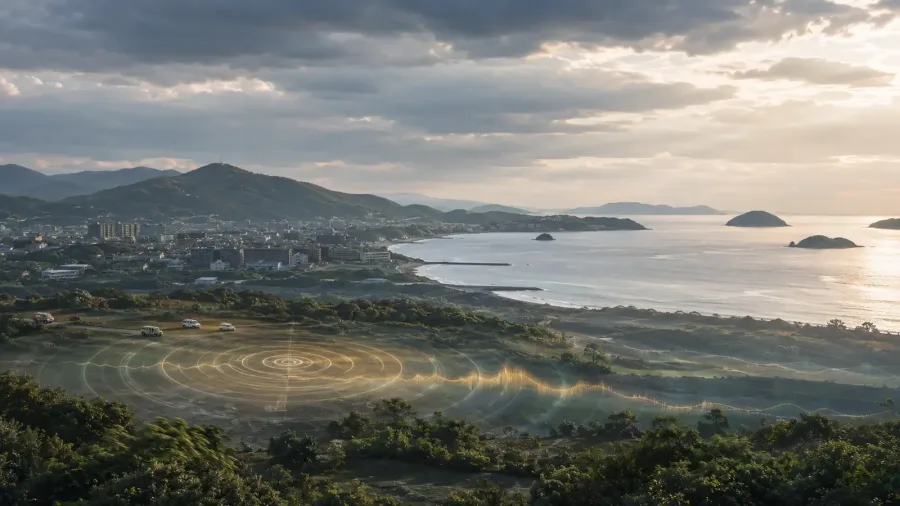
Japan has lifted the tsunami advisory issued after a powerful earthquake struck Kumamoto Prefecture on the southern island of Kyushu on July 28, 2026. The Japan Meteorological Agency reported a preliminary magnitude of 7.1, a depth of about 10 kilometres and an origin time of 4:27 p.m. local time. The agency’s latest tsunami page says no major tsunami warning, warning or advisory is currently in effect.
Magnitude differs between agencies
JMA lists the earthquake at magnitude 7.1, while the United States Geological Survey later assessed it at magnitude 6.8. Such differences can occur because agencies use different data sets, measuring methods and magnitude scales. For readers, the important point is that both assessments describe a strong and shallow earthquake capable of causing serious local shaking. The Japanese scale also recorded a maximum seismic intensity of 7 in parts of Kumamoto, according to the Prime Minister’s Office.
Damage assessments are continuing
Japanese authorities reported injuries, power outages, fires and damage to buildings and transport infrastructure. Rail services were suspended for safety checks and airport operations in the affected region were disrupted. The full extent of the damage was still being assessed as emergency teams inspected affected communities.
Prime Minister Sanae Takaichi said strong tremors had been felt over a wide area and instructed authorities to provide timely information, support evacuation, assess damage and prioritise rescue operations. The government activated its emergency response arrangements shortly after the earthquake.
Independent reports said hospitals received injured residents and that roads, rail lines and buildings were damaged. Authorities also checked critical facilities. At the time of the latest reports, no abnormalities had been identified at nearby nuclear power plants. Because the situation remains fluid, early numbers about injuries or damage may change as local inspections continue.
Tsunami advisory lifted, aftershock risk remains
The lifting of the tsunami advisory means JMA no longer has a tsunami alert in effect for the event. It does not mean every hazard has passed. Emergency officials warned residents to remain alert for aftershocks, unstable structures and possible landslides, especially in areas affected by heavy rain or strong shaking.
People in the region should follow JMA, local government and emergency-service instructions rather than unverified social media posts. Transport schedules and public-service information may change as inspections progress. Residents outside the affected area should avoid sharing old or unrelated earthquake footage as if it came from the July 28 event.
This report reflects information available on July 28, 2026. Official assessments and confirmed impact figures may be updated as Japan’s emergency response continues.
