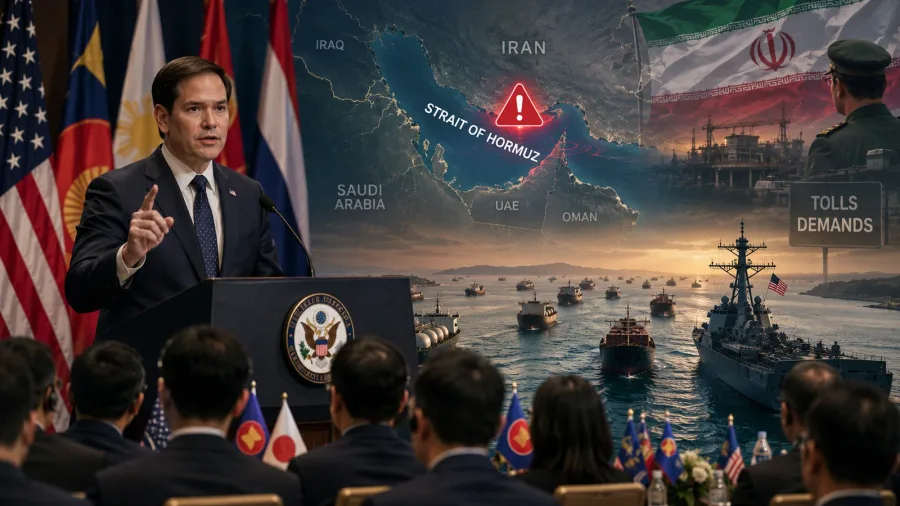
Rubio's warning at Manila summit
U.S. Secretary of State Marco Rubio warned Asian leaders on Wednesday that Iran's demands to control and collect tolls in the Strait of Hormuz would set a dangerous precedent. Speaking at a gathering in Manila, the capital of the Philippines, Rubio emphasized that such actions threaten international maritime trade and regional stability.
Iran's demands and global implications
Rubio noted that the Strait of Hormuz handles about one-third of the world's oil trade, making it a critical chokepoint for global energy supplies. He argued that Iran's attempt to assert control over the waterway could disrupt energy markets and supply chains. 'This would set a dangerous precedent, encouraging other nations to make similar claims and undermining international law,' Rubio said.
Regional and global security concerns
The U.S. secretary of state stressed that Iran's actions in the Strait of Hormuz have implications beyond the region. Many Asian countries rely heavily on the strait for their energy imports, making the issue a shared concern. 'We must act together to protect our common interests and maintain the free flow of commerce,' Rubio added.
International response
Rubio's remarks drew attention from the international community. Analysts say Iran's demands violate international maritime law and may require action by the United Nations Security Council. The U.S. administration has stated it is coordinating with allies on the matter. Rubio called on Asian nations to present a united front against Iran's moves, saying, 'Together, we can counter these threats and preserve the international order.'
