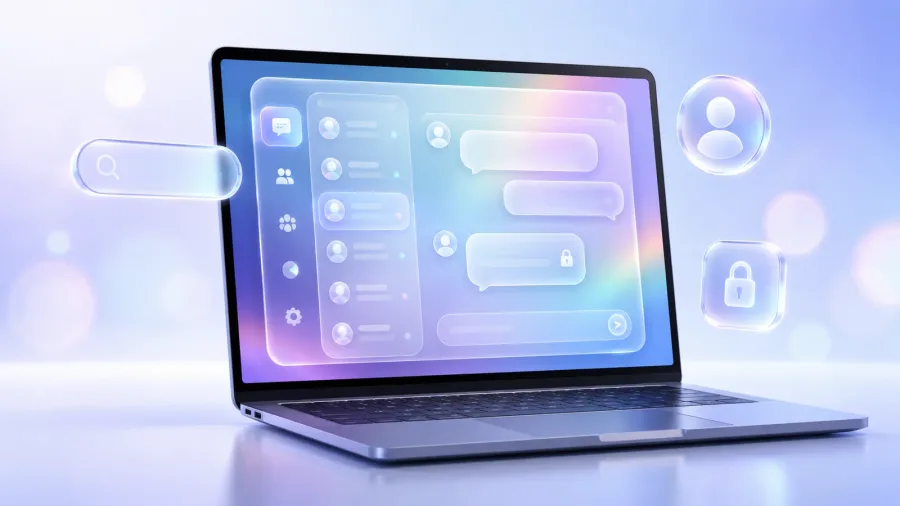
In a significant move that bridges the gap between third-party apps and native macOS aesthetics, WhatsApp has started rolling out a comprehensive redesign for its Mac application in July 2026. Embracing Apple's 'Liquid Glass' design philosophy—first introduced to developers in 2025—the Meta-owned messaging giant is shedding its utilitarian skin for a translucent, depth-rich interface. This update marks the most dramatic visual overhaul of the desktop app since it transitioned from a web-wrapper to a native Catalyst application years ago.
The rise of Liquid Glass in Apple's ecosystem
Apple's Liquid Glass design language, unveiled at the 2025 Worldwide Developers Conference (WWDC), represents a departure from the flat, minimalist interfaces that have dominated the last decade. The new philosophy focuses on depth, translucency, and dynamic light reflection—simulating the behavior of light moving across physical glass surfaces. By 2026, Apple has successfully migrated nearly all of its proprietary software, from Safari to Final Cut Pro, to this new visual standard. The core idea is to create a digital environment that feels more tactile and physically intuitive, reducing cognitive load by subtly indicating interface hierarchy through light and shadow rather than harsh dividing lines.
For developers, adapting to Liquid Glass is not merely a matter of swapping color palettes. It requires a fundamental rethinking of how UI elements interact with the desktop background and with each other. WhatsApp's adoption of this language is a technical feat, given the app’s massive global user base and the need to maintain performance across both older Intel-based Macs and the latest Apple Silicon M4 chips. The update ensures that the app doesn't just look like it belongs on a Mac—it behaves like it, leveraging Metal graphics acceleration for silky-smooth animations.
A strategic move against iMessage
By adopting Liquid Glass, WhatsApp is making a direct play for the loyalty of Apple users who might otherwise default to iMessage for desktop communication. While iMessage offers seamless integration, it lacks the cross-platform ubiquity that WhatsApp provides. This redesign eliminates one of the last remaining subjective advantages iMessage had: a superior, more native-feeling user interface. For international users, especially in markets like Europe and Asia where WhatsApp dominates, the new look reinforces the app's position as a premium communication tool, not just a utility.
Deconstructing the new interface: a technical and aesthetic analysis
The most striking change in the updated Mac app is the implementation of a frosted glass sidebar. Unlike the previous opaque dark or light menus, the new sidebar allows the user's desktop wallpaper to bleed through subtly, creating a layered, spatial effect. The chat bubbles have been refined with softer corners and adaptive lighting that responds to the system-wide appearance settings. Buttons for voice calls, video chats, and search no longer float aggressively on the screen; instead, they are recessed into the interface, appearing as if they are molded into a single, continuous glass surface.
Navigation has also been streamlined. The archaic settings menu, often criticized for its labyrinthine structure, has been reorganized into a more logical hierarchy that mirrors the iOS app's simplicity. Profile icons have shifted from perfect circles to 'capsule' shapes, and the entire typography system has been updated to use Apple's San Francisco variable font more dynamically. This attention to detail extends to the micro-interactions—clicking a reaction button now sends a gentle ripple across the screen, a hallmark of the Liquid Glass aesthetic that makes digital interactions feel more physical and responsive.
Performance optimization for Apple Silicon
Under the hood, the update is heavily optimized for Apple's M-series chips. Early benchmarks run by tech analysts show that the new Liquid Glass interface, despite its visual complexity, consumes less GPU memory than the previous version on M4 MacBooks. This efficiency is achieved through Apple's native rendering frameworks, which allow translucent materials to be processed without constantly redrawing the entire background. For users in regions with a high density of older hardware, the update is designed to gracefully degrade, reverting to solid colors on machines that cannot handle the transparency effects smoothly, ensuring broad accessibility.
WhatsApp's global strategy: blending AI with aesthetics
This redesign is not happening in a vacuum. 2026 has been a pivotal year for WhatsApp as it aggressively expands its business and AI capabilities. The Liquid Glass interface provides the perfect visual container for Meta AI, the company's virtual assistant. The translucent panels are ideally suited for overlay interactions, allowing the AI to provide contextual suggestions without completely obscuring the ongoing conversation. This is a critical differentiator from competitors like Telegram, which, while feature-rich, has often been criticized for a cluttered interface. WhatsApp is betting that a cleaner, hardware-integrated design will encourage users to engage more deeply with its advanced features, including in-chat payments and business directories.
Furthermore, the update aligns with broader regulatory trends. The simplified settings pane makes it easier for users to access privacy controls, a necessary adjustment for compliance with the evolving digital governance laws in the European Union and the United Kingdom. By making data export, contact management, and blocking tools more visually prominent, WhatsApp is using design to signal transparency. In emerging markets where the app serves as the primary gateway to the internet for millions, this balance between advanced aesthetics and straightforward usability is crucial for maintaining trust.
The future of cross-platform design
Insiders suggest that the Liquid Glass design is a precursor to a broader unification of WhatsApp's visual identity across all platforms. While Windows is expected to receive a Fluent Design counterpart, the iPad version is next in line for the Liquid Glass treatment. This strategic alignment with platform-specific design languages—rather than forcing a generic 'Facebook blue' interface—signals a maturation in Meta's product strategy. By respecting the design ethos of each operating system, WhatsApp aims to become an invisible layer of communication that feels native whether you are on a Mac in New York, a Windows PC in Berlin, or an iPad in Istanbul.
Market reception and user adaptation
As the update propagates through the App Store in July 2026, initial user feedback has been overwhelmingly positive, though not without its critics. Power users who rely on muscle memory for quick navigation have experienced a brief adjustment period, searching for relocated menu items. However, the consensus among tech reviewers is that this is the most polished version of WhatsApp for Mac ever released. The design has been praised for making long messaging sessions less visually fatiguing, thanks to the softer contrast ratios and the harmonious blending with the system theme.
Looking ahead, the success of this update may influence how other major third-party developers approach the Mac platform. Applications like Spotify, Discord, and Slack have historically maintained their own distinct, cross-platform design systems. WhatsApp's pivot to Liquid Glass could set a new industry standard, encouraging developers to invest more heavily in platform-native aesthetics as a form of competitive advantage. For the end-user, this means a future where the lines between first-party and third-party software continue to blur, creating a more cohesive and enjoyable computing experience.
Security implications of the redesign
Despite the radical visual changes, WhatsApp confirmed that its end-to-end encryption protocol remains untouched. The new interface is purely a presentation layer and does not alter how messages are transmitted or stored. In fact, the design's emphasis on clear visual hierarchy helps surface security indicators more effectively. Encrypted chat badges and verification codes are now displayed with higher contrast, making it easier for users in high-risk professions—such as journalists and activists in regions with limited press freedom—to verify the integrity of their communications at a glance. This fusion of beauty and security underscores the holistic nature of the 2026 redesign.
