Nine out of ten startups fail, yet the five Japanese ventures selected for the 2026 Japan–U.S. Innovation Awards Innovation Showcase aren’t just surviving—they’re rewriting the rules in AI, sustainability, and space. On June 20, 2026, the Japan Society of Northern California revealed its shortlist, chosen from over 200 applicants vying to bridge two of the world’s most dynamic tech ecosystems. For these founders, the showcase is a launchpad to Silicon Valley, venture capital, and global scale.
A Cross-Pacific Talent Pipeline
Now in its 14th year, the Japan–U.S. Innovation Awards have become a critical conduit for de-risking market entry in both directions. The 2026 Innovation Showcase provides mentorship from Stanford faculty, introductions to Series A investors, and hands-on go-to-market strategy sessions. Historically, selected startups see a 40% increase in venture access within 12 months. One 2025 participant raised a $120 million Series B just three months after its demo at the event.
From Kyoto to Palo Alto: Real Connections
“This isn’t a vanity showcase—it’s a genuine synapse between two innovation ecosystems,” says Keiko Nakamura, co-founder of a bioprinting unicorn that debuted in the 2019 cohort. The 2026 lineup aims to replicate that trajectory, with an emphasis on hardware-software fusion that goes beyond mobile apps.
Meet the Five Game-Changers
The selection committee prioritized market viability, cross-border scalability, and technology readiness. Here are the five startups that rose to the top:
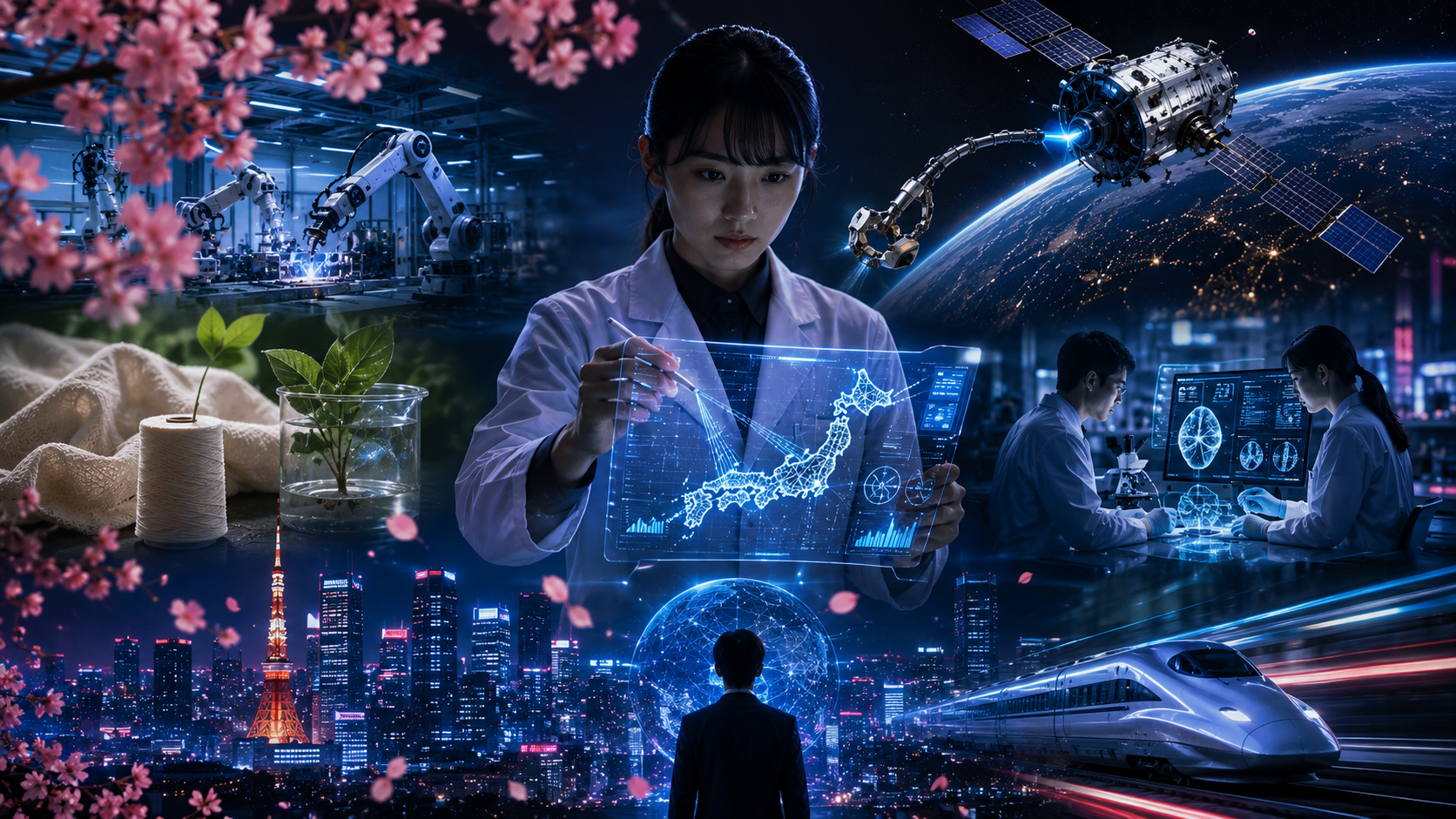
Quantex: Redefining enterprise communication security with quantum encryption. It already holds three U.S. defense subcontracts signed in late 2025.
EcoFibre: Turning agricultural waste into biodegradable textiles, promising a 30% carbon footprint reduction for fashion brands. Its prototype garments appeared at Paris Fashion Week this spring.
MedAI Japan: An AI platform generating personalized cancer treatment plans, validated by a 12,000-patient study published in Nature Medicine in 2025. It’s now integrated into two Japanese teaching hospitals.
FactoryMind: Edge AI for autonomous factories, already cutting energy consumption by 25% in pilot projects with Toyota and Mitsubishi Electric.
Orbital Sweepers: Satellite-mounted magnetic arms that capture space debris. In March 2026, a test successfully reeled in 12 pieces of orbital junk, stunning insurers and satellite operators alike.
Orbital Sweepers: Tackling the 36,000-Kilometer Problem
With over 170 million pieces of hazardous debris in low Earth orbit, the startup’s patented technology could save $4.5 million per launch in avoidance maneuvers. It’s no wonder Lloyd’s of London is already in talks for a bespoke liability framework.
What Makes These Startups Stand Out?
The 2026 judging panel, featuring experts from Stanford, Toyota Ventures, and NEDO, deliberately focused on deep tech over consumer apps. Eighty percent of the selected startups require hardware-software integration, and all have active partnerships with at least one U.S. university or corporation. “We set a hard threshold of Technology Readiness Level 7 this year—market-ready proof of concept was non-negotiable,” said lead judge Dr. Emily Chen.
Japan’s Edge in Deep Tech
Japan’s aging society is a catalyst, not a hindrance, forcing innovation in robotics, healthcare, and automation. Venture funding into Japanese deep tech reached $1.8 billion in 2025, an 18% jump from the prior year. The five honorees are collectively targeting $200 million in new rounds over the next two years, and the showcase is their moment to convert interest into term sheets.
The Impact on U.S.-Japan Tech Collaboration
On July 15, 2026, the showcase’s live demos at Stanford University will be streamed to over 10,000 registered investors, corporate scouts, and media. Bilateral tech trade between Japan and the U.S. has grown 27% over five years, and this event is increasingly seen as a starting point for formal R&D alliances. “How we innovate together will shape not just venture returns but the planet’s future,” said NASA’s former Chief Technologist Dr. Hiroshi Sato, who will deliver the closing keynote.
Why Silicon Valley Is Betting Big on Japan
Japan’s R&D spending is the world’s second highest as a share of GDP at 3.4%. The government’s “Deep Tech Visa,” launched in 2025, processes work permits for U.S. engineers in 48 hours. This symbiotic pipeline gives the selected startups a speed advantage in a world where capital is abundant but scalable execution is scarce.
Which of these five will be the next unicorn? Mark your calendar for July 15 and follow the Innovation Showcase live. More importantly, ask yourself: which deep tech sector will define the next decade of cross-Pacific innovation? The answer may already be in orbit.
