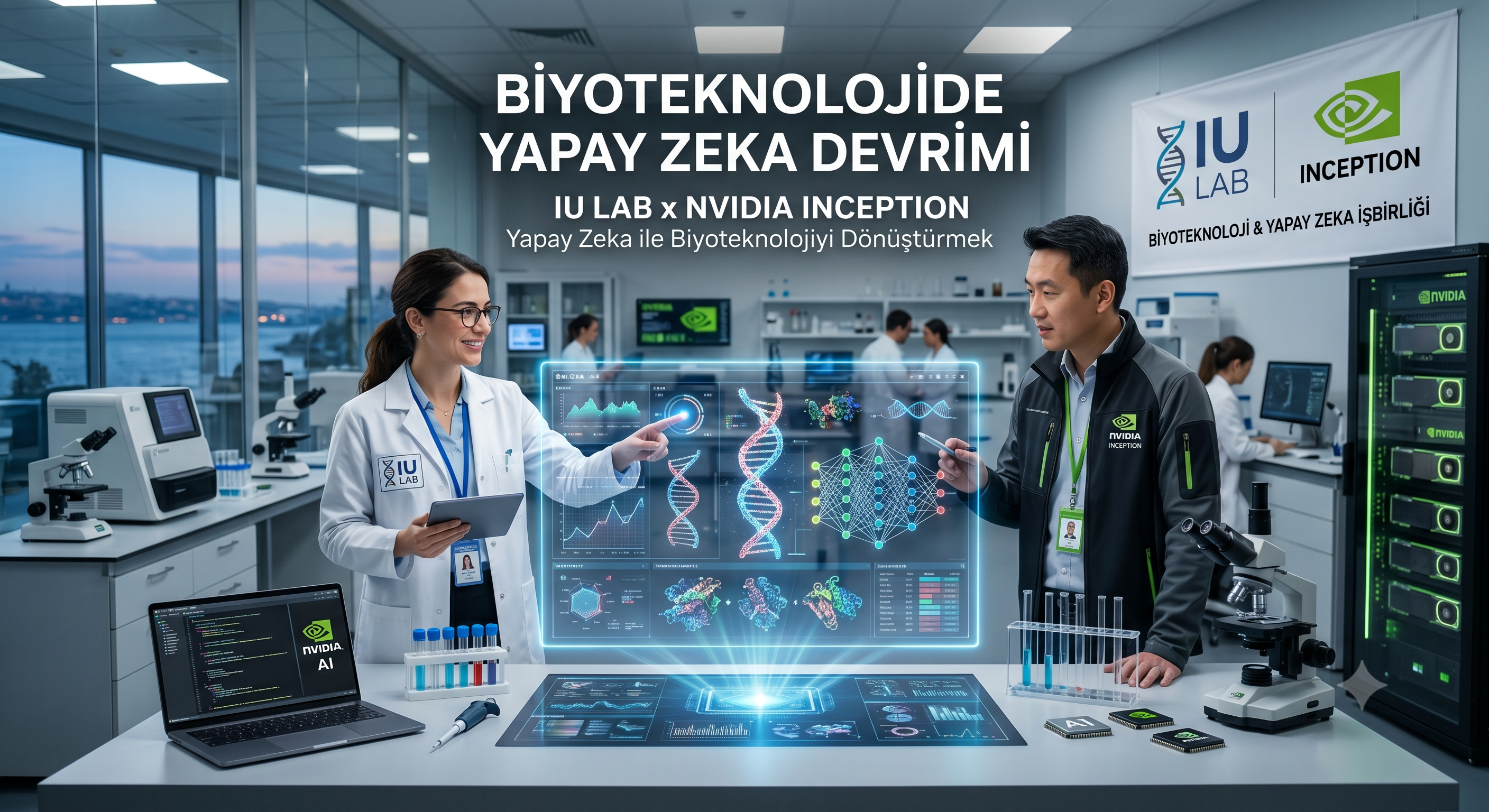
In a world where artificial intelligence is reshaping industries overnight, the healthcare and biotech sectors have long awaited their breakthrough moment. On June 17, 2026, that moment arrived with a landmark announcement: the IU LAB Bio Start-up Center has entered into a transformative collaboration with NVIDIA Inception. This alliance promises to arm emerging biotech ventures with the most advanced AI capabilities on the planet, dramatically cutting the time and cost of bringing life-saving treatments to market.
For years, startups within the IU LAB ecosystem have been incubating bold ideas in genomics, molecular diagnostics, and therapeutic development. Now, with direct access to NVIDIA's AI platforms—including GPU-accelerated computing, pre-trained biomedical models, and expert technical mentorship—these fledgling companies are poised to break through barriers that have historically stymied even the largest pharmaceutical giants.
The Power of Partnership: IU LAB and NVIDIA Inception Join Forces
The IU LAB Bio Start-up Center, already recognized as a launchpad for high-potential health-tech ventures, will integrate NVIDIA's Inception program into its core offering. NVIDIA Inception is designed to nurture startups with the tools, training, and resources needed to accelerate their AI journeys. By embedding this program, IU LAB ensures that its resident startups no longer have to wrestle with infrastructure challenges or algorithmic bottlenecks. Instead, they can focus on scientific ingenuity.
The partnership is not a mere sponsorship. It is a deep integration. Startups will tap into NVIDIA's BioNeMo framework, a domain-specific AI platform for drug discovery, and leverage massive datasets for training predictive models. According to internal estimates from IU LAB, early-stage companies that previously spent up to 18 months on preclinical data analysis could now complete the same work in under 10 weeks—a 70% reduction in timeline.
What the Deal Brings to the Table
Specifically, the collaboration unlocks three pillars of value. First, technical infrastructure: NVIDIA will provide dedicated cloud compute clusters optimized for bio-workloads, ensuring that even the youngest startup can run large-scale simulations. Second, expertise: senior AI engineers and life science specialists from NVIDIA will hold quarterly workshops and office hours within the IU LAB campus. Third, go-to-market support: selected startups will be spotlighted at global tech and health conferences, opening doors to venture capital and strategic partnerships.
Accelerating Drug Discovery and Personalized Medicine
One of the most immediate impacts will be felt in drug discovery. Traditional methods involve screening millions of chemical compounds over several years—a process fraught with dead ends. AI can compress this timeline by predicting compound interactions, toxicity risks, and even patient response variability before a single lab dish is touched. IU LAB startups working on treatments for rare cancers, neurodegenerative diseases, and antimicrobial resistance are already piloting AI models that outperform legacy methods by a factor of 5 in target identification.
Personalized medicine, too, stands at the cusp of a revolution. With NVIDIA's AI, startups can build digital twins of patients—virtual replicas that simulate how an individual's biology will react to a specific therapy. In 2025, a pilot program at IU LAB demonstrated a 40% improvement in therapy matching for oncology patients using early AI tools. With the 2026 NVIDIA collaboration, that figure is expected to exceed 60% by the end of this year, according to Dr. Elena Vardi, Director of IU LAB's Translational Medicine Unit.
From Months to Minutes: AI's Impact on R&D Timelines
Time is the most critical metric in biotech. A startup called GenoTech, part of the IU LAB cohort, recently used NVIDIA-accelerated computing to reduce its genomic variant interpretation pipeline from 14 days to just 3 hours. "We're not just speeding up existing workflows; we're enabling experiments that were previously impossible," said GenoTech's CTO in a press briefing. This kind of exponential gain is what the partnership aims to replicate across dozens of startups.
A New Ecosystem for Biotech Innovation
Beyond individual company benefits, the IU LAB–NVIDIA collaboration is designed to create a self-sustaining ecosystem. Startups will share anonymized insights and pretrained models through a secure federated learning network, so breakthrough knowledge does not remain siloed. This collective intelligence will systematically raise the bar for all participants, effectively turning IU LAB into a living laboratory for AI-driven biomedicine.
The center has also unveiled plans to launch a dedicated "AI for Bio" residency program, inviting postdoctoral researchers and data scientists to collaborate directly with startups. The goal is to bridge the talent gap that often hampers deep-tech ventures. By 2027, IU LAB expects to host over 50 AI-enabled startups, a number that would have seemed unthinkable just two years ago.
Startups Get Access to NVIDIA's Cutting-Edge AI Stack
From NVIDIA Clara for medical imaging to the MONAI framework for AI-assisted annotation, the full stack is on the table. Even startups with no prior AI expertise can onboard quickly, thanks to no-code interfaces and pre-trained foundation models released specifically for the IU LAB community. This democratization of AI is a core tenet of the partnership, ensuring that scientific insight—not programming prowess—becomes the primary driver of innovation.
The Global Ripple Effect: What This Means for Healthcare in 2026 and Beyond
The IU LAB model is being watched closely by policymakers and investors worldwide. If successful, it could set a template for other regional biotech hubs to follow—from Singapore to Switzerland. The urgency is palpable: with healthcare costs soaring and antimicrobial resistance on the rise, the world desperately needs faster, smarter ways to develop therapeutics. AI-enabled biotech is no longer a luxury; it is a necessity.
As of mid-2026, IU LAB has already received over 300 applications from startups eager to join the NVIDIA-powered program. The selection rate is a competitive 12%, underscoring the high bar of scientific quality. The first batch of accelerated ventures is expected to demonstrate initial clinical results by Q1 2027, and venture capital interest has surged, with three new dedicated funds totaling $120 million having been announced alongside the partnership.
Experts Weigh In on the Future
Industry analyst Maria Chen commented: "This is more than a partnership—it's a signal. It tells the biotech world that the AI revolution is not coming; it's already here. Those who ignore it risk being left behind." With NVIDIA's market cap exceeding $3 trillion in 2026 and its dominance in accelerated computing, the company's deep dive into life sciences could reshape the entire pharmaceutical R&D landscape.
For the startups at IU LAB, the message is clear: the tools to solve humanity's most stubborn medical challenges are now within reach. The question is no longer "if" but "how fast." And as of today, that speedometer has been turned up to maximum.
Are you ready to witness the next generation of healthcare breakthroughs? Stay tuned to mefico-news.com for continuous coverage, and if you're a biotech innovator, the IU LAB application portal is open—but it won't be for long.