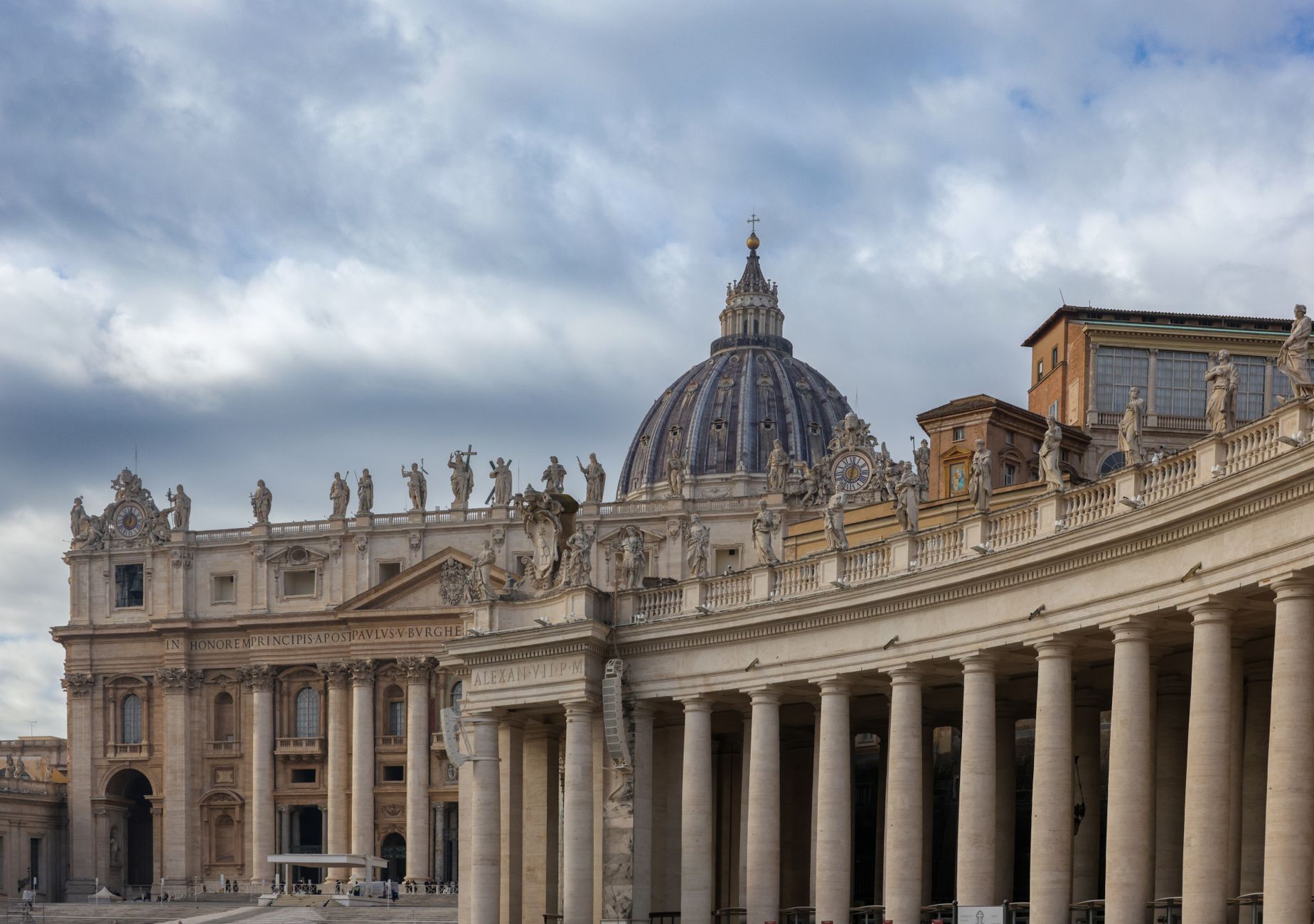
A widening sexual assault scandal has reached the upper echelons of the Catholic Church, forcing one of Pope Francis's closest allies to temporarily relinquish his duties. Canadian Cardinal Gérald Lacroix, the Archbishop of Quebec, stepped aside on Thursday after the Vatican confirmed it had opened a preliminary investigation into allegations brought forward by at least five women, spanning incidents allegedly dating back to the late 1980s.
A global church in the crosshairs: The Vatican's accountability test
The allegations against Cardinal Lacroix represent the most senior-level abuse investigation since the case of former Cardinal Theodore McCarrick, who was defrocked in 2019. The Vatican's Dicastery for the Doctrine of the Faith, which handles the most sensitive disciplinary cases, will lead the preliminary inquiry under direct authorization from Pope Francis. Vatican spokesman Matteo Bruni confirmed the probe would be conducted with 'maximum discretion and rigor,' but offered no timeline for its completion.
The case carries significant weight for the global church's credibility, particularly as Pope Francis approaches what many analysts describe as the twilight of his papacy. Since his election in 2013, the pontiff has repeatedly promised a 'zero tolerance' approach to clerical abuse. Yet advocacy groups argue that enforcement remains inconsistent, with bishops and cardinals often receiving preferential treatment compared to lower-ranking priests. The Lacroix investigation will serve as a litmus test for whether the Vatican is truly willing to hold its most powerful figures accountable.
Canada's reckoning with institutional abuse
The allegations emerge against the backdrop of Canada's painful national reckoning with the Catholic Church's role in the residential school system. Since 2021, the discovery of unmarked graves at former school sites across the country has fueled demands for transparency and justice. Pope Francis's historic apology tour in 2022, during which he visited Indigenous communities in Alberta, Quebec, and Nunavut, was seen as a watershed moment for reconciliation. However, for many survivors, symbolic gestures have not translated into meaningful institutional reform.
Quebec, where Cardinal Lacroix has served as Archbishop since 2011, occupies a unique position in this history. The province was once a stronghold of Catholic clerical power, with the church controlling education and healthcare until the Quiet Revolution of the 1960s. The cultural shift away from religious authority was dramatic, but the legacy of unchecked institutional power continues to cast a long shadow. Legal experts note that Quebec's statute of limitations on civil claims for historical abuse cases has been repeatedly challenged, reflecting an ongoing societal demand for accountability.
The cardinal's rebuttal: Conspiracy claims and reform politics
In a statement posted on the Quebec Archdiocese website, Cardinal Lacroix categorically denied all allegations and suggested he was the target of a smear campaign by opponents of church reform. 'I reject these accusations in the strongest possible terms,' the 66-year-old cardinal wrote. 'I am confident that the truth will emerge and my innocence will be established.' He voluntarily stepped down from all administrative and liturgical functions pending the investigation's outcome.
Lacroix's defense strategy has raised eyebrows within Vatican circles. By framing the accusations as politically motivated, the cardinal has implicitly linked his case to the broader ideological battles shaping the contemporary church. He serves on the Vatican's Council for the Economy and has been a vocal advocate for financial transparency measures that have angered conservative factions within the Curia. Italian Vatican analyst Marco Politi noted, 'This case risks becoming a proxy war between reformers and traditionalists. Lacroix is positioning himself as a martyr for the Francis agenda.'
Survivor groups push back against institutional narratives
Victim advocacy organizations have sharply criticized the cardinal's response, arguing that dismissing allegations as part of a conspiracy is a well-worn tactic designed to intimidate survivors. Anne Barrett Doyle, co-director of BishopAccountability.org, stated that the church hierarchy has historically 'weaponized institutional loyalty to protect its own, while survivors are subjected to character assassination.' She called on the Vatican to ensure that the five women who have come forward receive independent legal and psychological support throughout the investigation.
The case has also reignited debate about the adequacy of the Catholic Church's internal justice mechanisms. Unlike civil courts, canonical trials operate under strict secrecy, and victims often have limited rights to legal representation or access to evidence. Pope Francis has introduced reforms aimed at streamlining the process, but critics argue that without full transparency, the system remains fundamentally flawed. The Lacroix investigation will test whether the Vatican is prepared to balance confidentiality with the public's right to know.
Ripple effects across the global Catholic community
The scandal extends beyond Canada and Rome, with implications for how Catholic communities worldwide address abuse allegations within their own hierarchies. In regions where the church wields significant social and political influence—from Latin America to parts of Asia and Africa—the Vatican's handling of this case will send a powerful signal. Local bishops' conferences are watching closely to see whether the principle of accountability applies equally to a prince of the church.
The timing is particularly sensitive for the church in the Global South, where Catholicism is experiencing its fastest growth. In countries like Nigeria, Brazil, and the Philippines, the church often serves as a moral authority in societies grappling with corruption and weak governance. Any perception that the Vatican protects its own at the expense of victims could undermine that moral standing. Conversely, a transparent and just process could strengthen the church's credibility as an institution capable of self-correction.
The hidden cost: Legal liabilities and institutional risk
Beyond the moral dimensions, the Lacroix case carries significant financial implications. The Catholic Church in Canada has already paid hundreds of millions of dollars in settlements related to residential school abuse claims. A new wave of litigation stemming from the Quebec Archdiocese could further strain the church's resources. Insurance providers have increasingly raised premiums for dioceses with histories of abuse claims, and some have exited the market entirely. The Vatican's own financial health, already under scrutiny due to ongoing reforms, faces additional pressure from potential legal exposure.
The case also threatens to disrupt Pope Francis's ambitious agenda for his remaining years in office. The 88-year-old pontiff has signaled plans for further decentralization of church authority and expanded roles for laypeople, including women, in governance. A protracted scandal involving one of his key allies could drain political capital and embolden internal opposition. As the preliminary investigation unfolds, the stakes for the future direction of the Catholic Church have rarely been higher.
