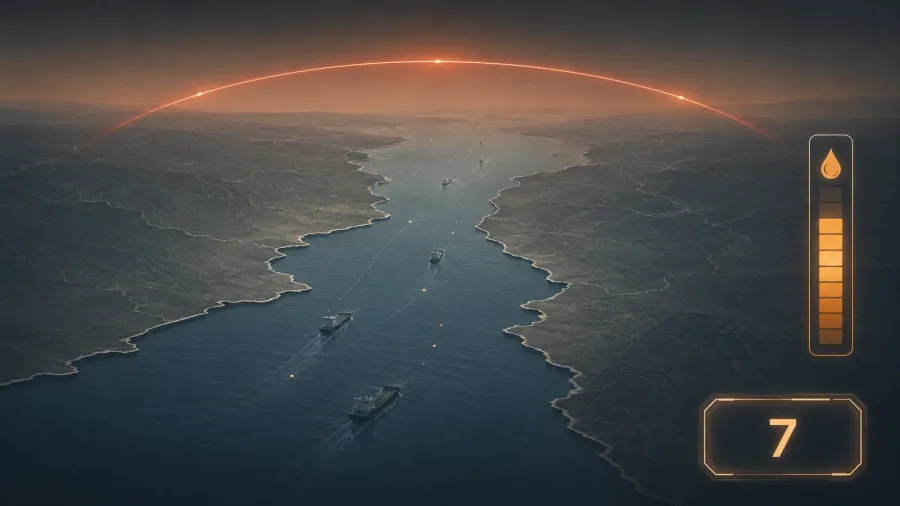
The American air campaign against Iran entered its seventh straight day on Friday, July 18, 2026, marking one of the most sustained bombardments of Iranian territory since the Iran-Iraq War. Overnight strikes targeted bridges spanning the Karun River and water treatment facilities near Isfahan, as the Pentagon expanded its target list to include infrastructure it describes as 'dual-use' — serving both civilian needs and the military apparatus of the Islamic Revolutionary Guard Corps (IRGC).
The Pentagon's infrastructure doctrine and its legal gray zones
The systematic targeting of bridges, power grids, and water plants represents a calculated escalation in US military doctrine. Pentagon spokesperson Brigadier General Patrick Ryder confirmed that the strikes aim to degrade Iran's ability to resupply its proxy forces across the Middle East while crippling the logistical backbone of the country's nuclear and missile programs. However, the legal framework under international humanitarian law remains fiercely contested.
Legal scholars at the International Committee of the Red Cross (ICRC) have raised concerns over the principle of proportionality. A water treatment plant in Shiraz, struck at approximately 3:00 AM local time, served an estimated 1.2 million civilians. The Pentagon argues the facility was a front for heavy water processing linked to the Arak reactor complex. 'When you weaponize civilian infrastructure, you forfeit its protected status,' Ryder stated during a press briefing at the Pentagon. Yet, humanitarian organizations on the ground report that the cumulative effect of these strikes is creating a man-made catastrophe, with the World Health Organization (WHO) warning of imminent cholera outbreaks as summer temperatures soar past 48 degrees Celsius (118 Fahrenheit) in Khuzestan province.
This strategy mirrors the 2025 campaign against Houthi-controlled ports in Yemen, which similarly blurred the lines between military necessity and collective punishment. Critics argue that degrading a nation's water supply during peak summer months constitutes a violation of the Geneva Conventions' Additional Protocol I, regardless of the military advantage gained. The Biden administration, now in its final months, has yet to provide a comprehensive legal memorandum justifying the expanded target set to Congress.
Gulf allies on high alert as spillover threats materialize
The reverberations of the strikes are being felt acutely across the Persian Gulf. Qatar's Al Udeid Air Base, the largest US military installation in the Middle East, has been placed under Force Protection Condition DELTA — the highest threat level — following intelligence reports of planned retaliatory strikes by Iranian-backed Kata'ib Hezbollah militias. Bahrain, home to the US Navy's Fifth Fleet, has activated its Iron Dome and Patriot missile batteries, with the capital Manama experiencing near-constant sonic booms from patrolling fighter jets.
For the Gulf Cooperation Council (GCC) states, the crisis presents an existential dilemma. Qatar, which supplies nearly a quarter of the world's liquefied natural gas (LNG), has seen its Ras Laffan terminal come under indirect threat. LNG spot prices in Asian markets surged 7.5% on Friday morning, the sharpest single-day increase since the outbreak of the Ukraine war in 2022. Saudi Arabia's Eastern Province, the heart of the kingdom's oil production, lies just 200 kilometers from the Iranian coast. Riyadh has publicly called for restraint while privately urging Washington to avoid a full-scale regional war that could engulf its critical Aramco facilities, which were attacked in a dramatic 2019 drone and missile strike.
Tehran's response and the Strait of Hormuz wildcard
Supreme Leader Ayatollah Ali Khamenei, in his Friday sermon broadcast nationwide, accused the United States of 'setting the region ablaze' and warned that 'the enemy has miscalculated gravely.' His speech, the most bellicose since the 2020 assassination of Quds Force commander Qassem Soleimani, was accompanied by a direct threat from IRGC Navy Commander Rear Admiral Ali Reza Tangsiri. 'If we cannot export our oil, no country in the region will export a single barrel,' Tangsiri declared, explicitly invoking the Strait of Hormuz — the narrow chokepoint through which 20% of global crude oil transits.
The threat is not idle. In 2019, Iran seized multiple tankers and downed a US surveillance drone over the strait. In 2026, with its conventional military capabilities degraded but its asymmetric warfare toolkit intact, Tehran could deploy naval mines, drone swarms, and fast-attack craft to disrupt shipping. Insurance premiums for tankers transiting the Gulf have already tripled, and major shipping conglomerates like Maersk have rerouted vessels away from the region. Brent crude prices have climbed 15% since July 12, reaching $112 per barrel, with analysts at Goldman Sachs warning of a potential spike to $150 if the strait is effectively closed.
Diplomatically, Iran is not isolated. President Masoud Pezeshkian held an emergency call with UN Secretary-General António Guterres, demanding an immediate Security Council session. Oman and Iraq have emerged as key mediators, with Muscat attempting to revive the stalled nuclear negotiations that collapsed in Vienna in 2025. China and Russia, both signatories to the 2015 JCPOA nuclear deal, have condemned the US strikes and are preparing a draft resolution at the UN Security Council. Beijing, which imports roughly 30% of Iran's crude exports, has a vested economic interest in de-escalation.
A humanitarian crisis unfolds in the summer heat
On the ground, the human toll is mounting. The destruction of water treatment facilities in Isfahan and Shiraz has left over a million people scrambling for clean drinking water. In Ahvaz, where temperatures routinely hit 50 degrees Celsius in July, electricity grids damaged by secondary explosions have plunged entire neighborhoods into darkness. Iranian Red Crescent Society workers describe chaotic scenes at distribution points, with bottled water being sold on the black market at ten times its normal price.
The United Nations Office for the Coordination of Humanitarian Affairs (OCHA) has issued an urgent flash appeal for $500 million, warning that the combination of water scarcity, extreme heat, and damaged medical infrastructure could lead to a public health disaster. 'We are seeing the early stages of a mass displacement event,' an OCHA official told reporters in Geneva. 'Civilians are fleeing north toward Tehran and west toward the Iraqi border.' The ICRC has called on all parties to respect international humanitarian law and ensure the protection of critical civilian infrastructure, but its pleas have so far gone unheeded as the operational tempo of the strikes shows no sign of slowing.
A fragile global economy braces for the energy shock
The crisis in Iran is sending tremors through an already fragile global economy. The International Energy Agency (IEA) estimates that a full disruption of Iranian oil exports — roughly 1.7 million barrels per day — would create the most severe supply shock since the 1973 Arab Oil Embargo. European Central Bank President Christine Lagarde warned on Friday that soaring energy costs could derail the continent's inflation fight, potentially forcing a new round of interest rate hikes just as the eurozone economy shows signs of recovery.
In Washington, the Biden administration is preparing to release additional barrels from the Strategic Petroleum Reserve (SPR), which has been partially replenished since the 2022 drawdowns. However, the SPR's capacity to stabilize markets is limited. The real buffer lies with OPEC+, where Saudi Arabia and the UAE hold significant spare capacity. Yet, the cartel is deeply divided, with Riyadh reluctant to open the taps without assurances that the US will restrain Israel and prevent a broader regional war.
Asia, the primary destination for Iranian crude, faces its own dilemma. India's External Affairs Minister Subrahmanyam Jaishankar signaled that New Delhi might continue purchasing Iranian oil despite US secondary sanctions, prioritizing energy security over alliance solidarity. China, meanwhile, has accelerated its stockpiling efforts, with satellite imagery showing a surge in tanker traffic toward its strategic petroleum reserves in Zhoushan. The divergence between US strategic objectives and the economic imperatives of its partners is creating fissures in the international coalition that Washington is trying to hold together.
The invisible battlefield of cyber and information warfare
Beyond the kinetic strikes, a parallel war is raging in cyberspace and the information domain. US Cyber Command has confirmed intercepting Iranian retaliatory attempts to compromise water treatment systems in Alabama and Texas, a grim echo of the 2021 Oldsmar incident. Iranian hacking groups, meanwhile, claim to have breached financial institutions in Israel and the United States, leaking what they describe as sensitive transaction data. On social media, a flood of AI-generated deepfake videos showing false flag attacks and exaggerated damage assessments is making it nearly impossible for civilians to discern truth from propaganda. Analysts at the Atlantic Council's Digital Forensic Research Lab note that the 2026 conflict may be the first major war where synthetic media plays a decisive role in shaping public perception and morale.
As the seventh day of strikes draws to a close, the path to de-escalation remains perilously narrow. The European Union's High Representative for Foreign Affairs, Josep Borrell, encapsulated the global mood: 'The Middle East is teetering on the edge of an abyss. If we fail to secure an immediate ceasefire, the consequences will echo for decades.' The summer of 2026 is proving to be not just the hottest on record, but perhaps the most dangerous chapter in modern Middle Eastern history.
