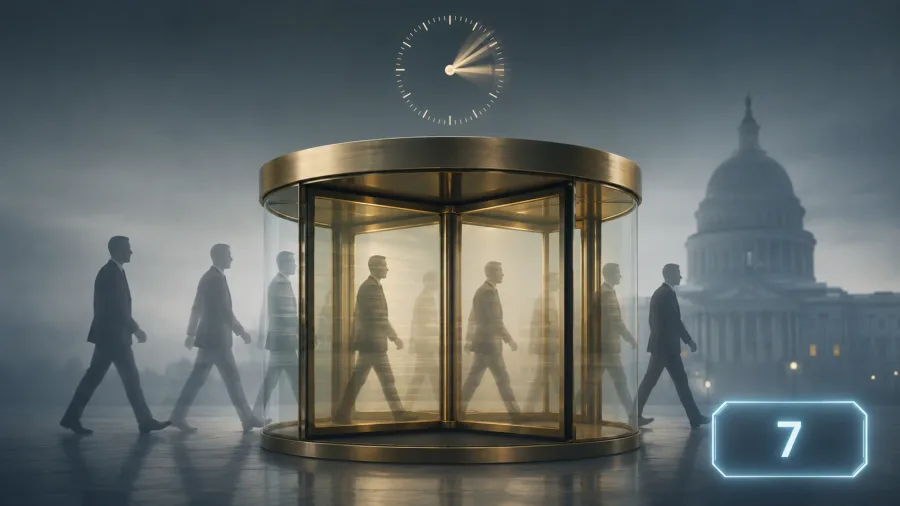
The revolving door at 10 Downing Street has spun faster in the past decade than at any point since the Second World War. As of July 2026, the United Kingdom is preparing to welcome its seventh prime minister since the seismic Brexit referendum of June 2016, a rate of leadership churn that has rattled financial markets, eroded diplomatic capital, and left voters increasingly disillusioned with the political establishment. The impending transition from Labour's Keir Starmer back to a likely Conservative government under Kemi Badenoch marks the latest chapter in a saga of instability that has fundamentally altered Britain's place in the world.
Brexit: The original fault line that shattered consensus
The 2016 referendum did more than sever Britain's 47-year relationship with the European Union; it detonated a political fragmentation that continues to reverberate through Westminster. David Cameron, who had called the vote to settle a long-running internal Conservative debate, resigned within hours of the result, becoming the first prime minister to fall on the Brexit sword. His departure exposed deep ideological fissures within the Conservative Party between hardline Eurosceptics and moderate pro-business Tories, a divide that subsequent leaders have repeatedly failed to bridge.
Theresa May inherited a poisoned chalice in July 2016. Her attempts to negotiate a withdrawal agreement that satisfied both Brussels and the warring factions of her own party proved impossible. The spectacle of a British prime minister repeatedly failing to pass her flagship legislation through Parliament—three times in total—was unprecedented in modern British political history. The paralysis that gripped Westminster between 2017 and 2019 came at a steep economic cost: business investment stalled, the pound experienced sustained depreciation, and London's reputation as a predictable place to do business suffered irreparable damage. When May finally resigned in tears in May 2019, the Brexit wound was still gaping open.
Boris Johnson: Pandemic, partygate, and the implosion of a landslide
Boris Johnson's ascent to power in July 2019 appeared, at first, to break the deadlock. His 'Get Brexit Done' mantra resonated with an exhausted electorate, and the December 2019 general election delivered the Conservative Party its largest majority since Margaret Thatcher's 1987 triumph. Johnson formally took the UK out of the EU on 31 January 2020, fulfilling his core promise. Yet the COVID-19 pandemic that followed exposed a governing style characterized by chaos, cronyism, and a casual relationship with the truth. The 'Partygate' scandal—revelations that Downing Street staff held rule-breaking gatherings while the nation was under strict lockdown—fatally wounded Johnson's moral authority.
Despite surviving a no-confidence vote among his own MPs in June 2022, Johnson's premiership collapsed within weeks as a cascade of ministerial resignations made his position untenable. His departure in July 2022 marked the fourth prime ministerial exit in six years, but the crisis was about to accelerate dramatically. The Conservative Party's internal democracy, designed to choose leaders through a combination of MP ballots and grassroots membership votes, had now produced two prime ministers who were forced out by their own colleagues rather than by the electorate.
The 49-day premiership that crashed the economy
Liz Truss's brief tenure in September and October 2022 represents one of the most extraordinary episodes in British political history. Her government's 'mini-budget,' unveiled by Chancellor Kwasi Kwarteng, contained £45 billion in unfunded tax cuts—the largest package of its kind in half a century—without any accompanying economic forecast from the Office for Budget Responsibility. The reaction from financial markets was swift and brutal. The pound plunged to an all-time low against the US dollar, gilt yields spiked at the fastest rate on record, and the Bank of England was forced into an emergency bond-buying program to prevent the collapse of pension funds.
Truss was gone within 49 days, making her the shortest-serving prime minister in British history. The damage, however, extended far beyond her personal humiliation. The episode shattered the UK's reputation for fiscal credibility, forced mortgage rates sharply higher for millions of homeowners, and embedded a 'moron premium' into British assets that persisted well into 2024. When Rishi Sunak took over in October 2022, his primary task was crisis management rather than ambitious reform. The former Goldman Sachs analyst stabilized the bond markets and restored a degree of competence to government, but the political damage to the Conservative brand proved irreversible.
Starmer's Labour: A brief interlude of calm before renewed storms
Keir Starmer's landslide victory in July 2024 ended 14 years of Conservative rule and was initially greeted with relief by a weary public. His government's emphasis on fiscal discipline and institutional repair represented a deliberate contrast to the drama of his predecessors. However, by early 2026, the Starmer administration found itself confronting the same structural headwinds that had consumed earlier governments: persistently high inflation, a National Health Service in permanent crisis, record immigration numbers, and the unresolved economic consequences of Brexit. Public sector strikes, tax increases, and spending cuts eroded Labour's support among its traditional working-class base, while the Conservatives under Kemi Badenoch's combative leadership began to recover in opinion polls.
As of July 2026, the UK faces the prospect of yet another change at the top. The erosion of Starmer's majority through by-election losses and internal rebellions has made governing increasingly difficult, and Badenoch's calls for an early election have gained momentum. The cycle of instability that began with a referendum called to settle an internal party argument now threatens to become a permanent feature of British political life, with profound implications for the country's ability to make long-term strategic decisions.
The international cost of a distracted Britain
The UK's political turmoil over the past decade has not occurred in a vacuum; it has materially weakened the country's standing on the global stage. Once regarded as a pillar of stability and a reliable NATO ally, Britain is now viewed by international partners with a mixture of sympathy and exasperation. The constant churn of prime ministers has prevented the development of coherent foreign policy strategies at a time of acute geopolitical challenge—from Russia's ongoing war in Ukraine to rising tensions in the South China Sea and the accelerating climate crisis.
The economic consequences of political instability have been equally severe. London's status as Europe's preeminent financial center has eroded, with Amsterdam and Paris capturing significant market share in equity trading and derivatives clearing since Brexit. The European Banking Authority relocated to Paris, and major international banks shifted thousands of jobs and billions in assets to Frankfurt, Dublin, and other EU financial hubs. By mid-2026, the cumulative loss of financial services activity since the 2016 referendum is estimated at over £100 billion, a figure that continues to grow as political uncertainty deters long-term investment decisions.
What next for the Westminster model?
The spectacle of seven prime ministers in ten years has prompted serious reflection about the resilience of Britain's uncodified constitution and its first-past-the-post electoral system. The traditional argument that the Westminster model delivers strong, stable government has been severely tested by the post-Brexit experience. Constitutional reform advocates are increasingly vocal about the need for proportional representation, a written constitution, and stronger checks on executive power. Meanwhile, voter trust in democratic institutions has fallen to historic lows, with turnout declining and support for fringe parties rising. The 2026 election, regardless of its outcome, will not resolve the deeper question facing the United Kingdom: whether its political system can adapt to the challenges of the 21st century, or whether the cycle of instability is destined to continue.
