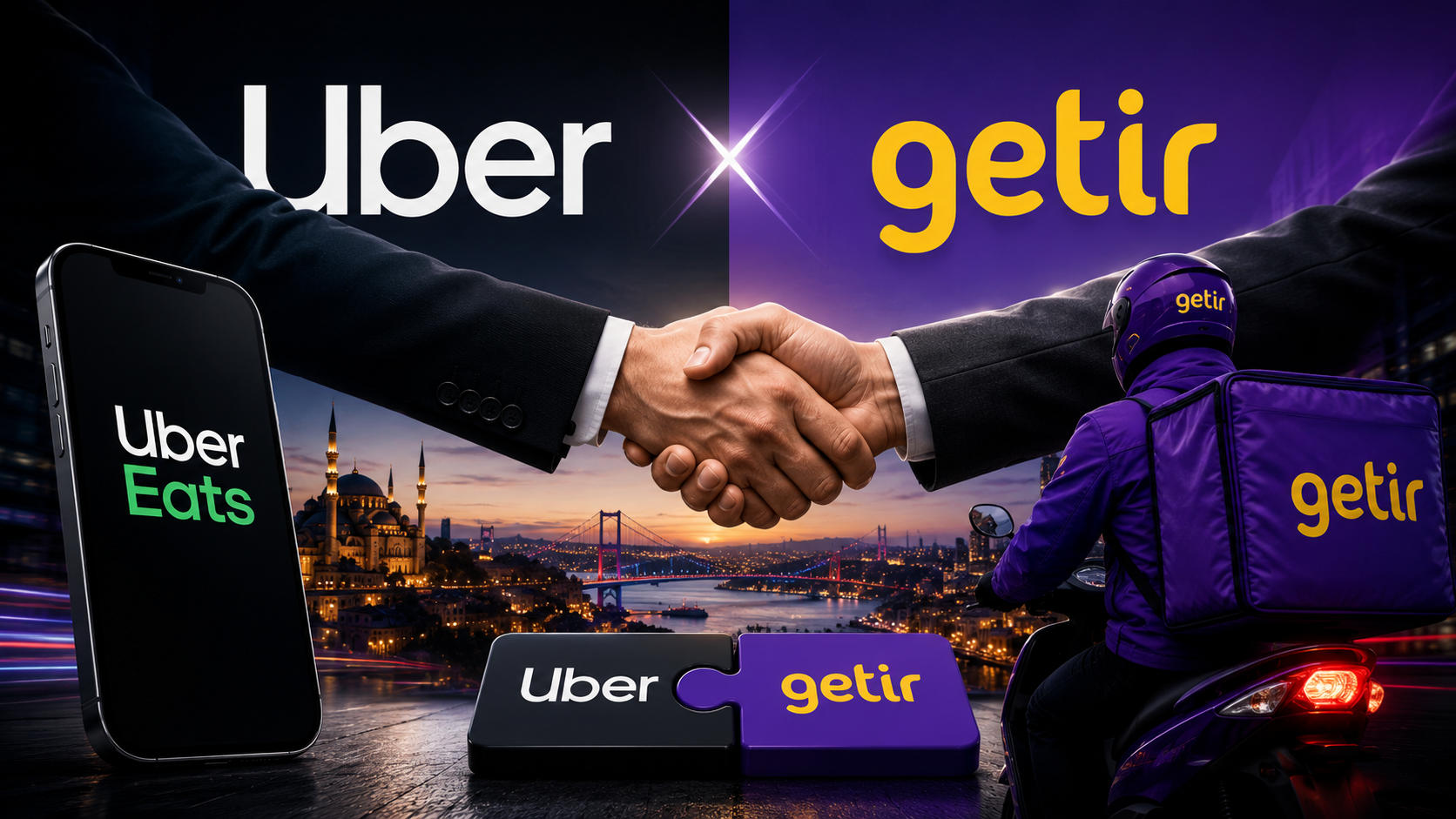
Turkey's startup ecosystem has just witnessed the official closing of its most talked-about acquisition saga. In June 2026, the Turkish Competition Board granted conditional approval for Uber's acquisition of Getir. The iconic Turkish delivery brand, along with Trendyol Go, will now operate under the Uber Eats umbrella. For Getir — which spent 2025 battling financial headwinds and dramatically scaling back its global operations — this sale represents both a lifeline and the end of one of Turkey's most ambitious tech success stories.
What does this mega-merger mean for Turkey's instant delivery and online grocery market? Will consumers benefit, or will reduced competition drive prices higher? Here's a comprehensive breakdown.
The Backstory: Why Getir Was Sold
After riding the pandemic wave to unicorn status in the early 2020s, Getir faced severe financial headwinds in 2024 and 2025. The company struggled to finance its aggressive global expansion strategy as investor appetite for cash-burning delivery startups cooled dramatically. By the final quarter of 2025, major backers including Mubadala and Tiger Global were reportedly pushing for a sale process. Uber emerged early as the strongest suitor, drawn primarily by Getir's powerful brand recognition and deeply entrenched user base in Turkey.
A merger shaped by 2025's dramatic downsizing
Throughout 2025, Getir shut down operations in Spain, Italy, and Portugal, ultimately retreating to its core Turkish market. This contraction significantly depressed the company's valuation. Having reached a peak valuation of $11.8 billion in 2022, Getir's final sale price in 2026 is estimated between $1.2 and $1.5 billion. This staggering value erosion has reignited global debate about the sustainability of growth-at-all-costs startup models — a conversation now reverberating across Istanbul's thriving tech scene.
The Competition Board's Ruling and Conditions
Turkey's Competition Board took a cautious but constructive stance on the Uber-Getir merger. The authority closely scrutinized the risk of diminished competition in Istanbul, Ankara, and Izmir — Turkey's three largest delivery markets. The final ruling imposes structural safeguards: Uber Eats must maintain access for third-party restaurants and grocers in designated zones, refrain from restricting independent courier networks from the platform, and submit to quarterly regulatory reporting for the next 36 months.
Analyzing the decision through historical precedents
Much like its handling of the Trendyol-Migros partnership in 2024, the Competition Board prioritized consumer welfare with carefully calibrated conditions. The authority anticipated risks that Uber might shutter Getir's dark stores or limit access for small businesses, implementing stringent oversight mechanisms accordingly. This approach mirrors the European Commission's 2025 decision on the Delivery Hero-Glovo case. Notably, the Board included specific provisions protecting neighborhood grocery stores' continued presence on the platform — a reflection of Turkey's unique local market dynamics.
Uber Eats' Turkey Strategy in the New Era
As of 2026, Uber will pursue a three-brand strategy in Turkey. Uber Eats, Getir, and Trendyol Go will continue operating as distinct consumer apps in the short term, with gradual integration planned over the medium term. Uber's core motivation is twofold: absorb Getir's 10-minute delivery promise and its associated user habits, and leverage Trendyol Go's integration with e-commerce giant Trendyol. The combined ecosystem positions Uber Eats to dominate not just food delivery but also online grocery and quick commerce across Turkey.
The courier network and logistics revolution: Three companies' combined power
Uber's real prize lies in logistics infrastructure. Getir's network of over 65 dark stores in Istanbul, Trendyol Go's sprawling courier fleet, and Uber Eats' global AI-powered route optimization technology could collectively reduce average delivery times by an estimated 22–28%. Uber's experience from its 2025 UK logistics acquisitions — particularly in machine learning-driven dispatch systems — is expected to transform user experience in the Turkish market. Industry analysts project that the merger could drive up to 40% efficiency gains in Turkey's quick commerce sector by the end of 2027.
What This Means for Consumers and the Industry
At first glance, consumers fear rising prices. Yet the Competition Board's price monitoring mechanisms — combined with Uber's expected continuation of aggressive promotional strategies to cement market share — suggest a consumer-friendly near-term outlook. Meanwhile, the competitive dynamic between Yemeksepeti and Trendyol will evolve dramatically as Uber and Trendyol Go align. Paradoxically, this could strengthen restaurants' negotiating power on commission rates, producing unexpected positive outcomes for the broader ecosystem.
Impact on local entrepreneurs and small businesses
The merger's most debated dimension concerns the future of local merchants on the platform. Getir's model of integrating neighborhood grocers and greengrocers may shift under Uber's ownership. Thanks to the Competition Board's protective clauses, small businesses are unlikely to be excluded entirely — but commission structures and visibility algorithms could increasingly favor Uber's own dark stores. For Turkey's 300,000-plus independent grocery stores, this will be a defining issue in the coming years. And here lies a critical question for consumers: do we possess the collective power to influence algorithms by deliberately choosing local businesses over platform-owned alternatives?
