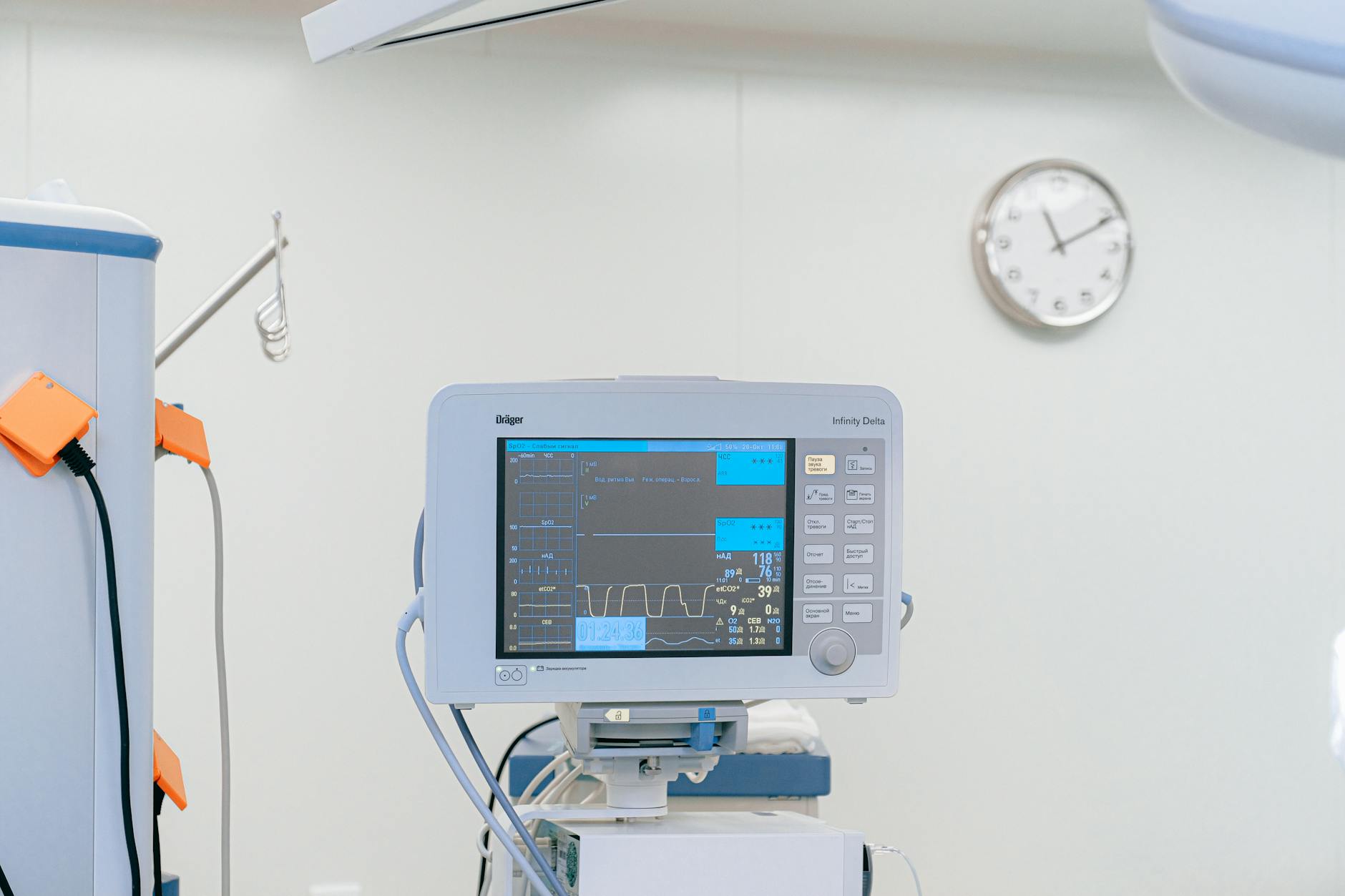
A quiet revolution unfolded in an operating room in Ankara on the morning of July 10, 2026, as Turkish defense giant Aselsan successfully deployed its first domestically manufactured heart-lung machine in a live surgery — a milestone that could reshape the global medical device supply chain.
The LIFELINE HLM, developed over four years by Aselsan engineers originally trained in military electronics, took over the circulatory and respiratory functions of a 58-year-old patient undergoing triple coronary bypass surgery at Ankara Bilkent City Hospital. For 120 minutes, the machine oxygenated blood and pumped it through the patient's body while surgeons worked on a motionless heart — a procedure that until now had always relied on imported German or American equipment in Turkish operating rooms.
Turkey performs approximately 60,000 open-heart surgeries annually, with nearly all heart-lung machines imported at a combined cost exceeding $80 million per year. The LIFELINE HLM's entry into clinical use represents not just a technological achievement but a strategic economic intervention aimed at eliminating this dependency. Aselsan CEO Ahmet Akyol called the device 'the most meaningful civilian application of our defense engineering expertise — proof that Turkey can build life-critical systems from scratch.'
How the LIFELINE HLM performed under surgical conditions
The inaugural procedure was led by Professor Mehmet Aksüt, a cardiovascular surgeon with over 25 years of experience who has worked with virtually every major brand of heart-lung machine on the global market. His verdict after the surgery was unequivocal: the LIFELINE HLM matched the performance of its international competitors 'parameter for parameter,' with no technical glitches during the critical two-hour perfusion window.
Engineering specifications and safety features
The device can deliver up to 7 liters of blood flow per minute and incorporates an integrated heat exchanger capable of precisely controlling patient body temperature within a 0.1-degree Celsius margin. Its most critical component — the oxygenator unit — was developed using Aselsan's proprietary optical sensor technology, a direct transfer of expertise from military electro-optics to medical engineering. The system also features real-time air bubble detection sensors, a redundant safety architecture, and an intuitive touchscreen interface designed in consultation with perfusionists from five major Turkish hospitals.
Professor Aksüt noted that the psychological dimension of using a domestically produced machine was significant. 'For decades, Turkish surgeons have trusted only German and American brands with our patients' lives. Today, that trust was extended to a machine built by our own engineers — and it delivered flawlessly. This changes everything.' The patient was discharged from intensive care within 48 hours and is recovering without complications.
From defense to healthcare: Turkey's dual-use technology strategy
Aselsan's pivot into medical technology is part of a broader strategic diversification that began in 2022, when the company — best known for producing radar systems, electronic warfare suites, and communication equipment for the Turkish military — announced it would leverage its engineering capabilities for civilian applications. The LIFELINE HLM project involved more than 120 engineers and a research and development budget of $45 million, making it one of Turkey's largest single investments in medical device innovation.
Export ambitions and regulatory milestones
The company plans to begin serial production in the second half of 2026, with an initial output of 50 units per year scaling to 200 by 2028. Aselsan is targeting markets across the Middle East, Central Asia, and Africa — regions where healthcare infrastructure is expanding rapidly and price sensitivity favors competitively priced alternatives to established Western brands. Applications for European CE marking and United States Food and Drug Administration (FDA) approval have been submitted, with certification expected by early 2027. If successful, LIFELINE HLM would become the first Turkish-made Class III medical device to enter the regulated Western markets.
Health economist Dr. Ayşe Kaya, speaking to reporters, framed the achievement in terms of supply chain resilience. 'Turkey learned a painful lesson during the COVID-19 pandemic when ventilator shortages exposed the dangers of medical device dependency. The LIFELINE HLM is a direct response to that trauma — a strategic hedge against future disruptions. It's not just about saving money; it's about ensuring that Turkish hospitals can continue performing life-saving surgeries regardless of global supply chain volatility.'
How a defense contractor built a medical supply chain from scratch
One of the project's most significant achievements is the domestic supply ecosystem it created. Of the 2,300-plus components in each LIFELINE HLM unit, 65% are manufactured by Turkish small and medium enterprises (SMEs) and sub-suppliers. Aselsan signed long-term procurement agreements with 14 domestic firms, including a precision plastic injection company from İzmir, a medical-grade silicone specialist from Kocaeli, and a sensor technology startup from Ankara. This network represents a permanent industrial capability that extends far beyond a single product.
Reversing brain drain through high-tech projects
Approximately 30% of the engineers working in Aselsan's health technologies division returned to Turkey specifically for this project after careers abroad. Biomedical engineer Dr. Emre Yılmaz, who left a position at a German medical device firm to join the LIFELINE team, said the project's success validated his decision. 'When I first heard Turkey was attempting to build a heart-lung machine, I was skeptical. Now that machine has saved a life. The motivation of building high technology in your own country is something no salary abroad can match.'
The project has also stimulated domestic education pipelines. According to Turkey's Higher Education Council (YÖK), applications to biomedical engineering programs at Turkish universities increased by 40% over the past two years. Four new university programs were launched in 2026, and existing program capacities were expanded by 25% to meet growing demand for qualified graduates.
Stock market reaction and the road to 2030
Aselsan shares rose 4.2% on the Borsa Istanbul following news of the successful surgery, reflecting investor confidence in the company's diversification strategy. Analysts project that the health technologies segment could account for 5% of Aselsan's total revenue by 2028 — roughly $150 million annually for a company with current revenues of $3 billion. The Turkish Health Ministry reinforced this momentum in March 2026 by introducing preferential procurement rules for domestically produced medical devices in public hospitals, granting a 15% price advantage in tenders.
Building an integrated Turkish intensive care unit
The LIFELINE HLM is just the beginning of Aselsan's healthcare ambitions. The company's Health Technologies Directorate is concurrently developing ventilators, dialysis machines, and robotic surgery systems, with the long-term goal of offering a fully integrated, domestically produced intensive care unit concept by 2030. If successful, this would transform Turkey from a net importer of critical care equipment into a significant exporter — a trajectory that mirrors the country's journey in defense industries over the past two decades.
As the LIFELINE HLM begins its journey from a single successful surgery toward mass production and international certification, it carries with it the weight of a nation's technological aspirations. For a country that once imported nearly all of its advanced medical equipment, the sight of a Turkish-made machine sustaining a human life represents a tangible shift in what is possible — and a signal to global markets that a new competitor has arrived in the high-stakes world of life-support technology.
