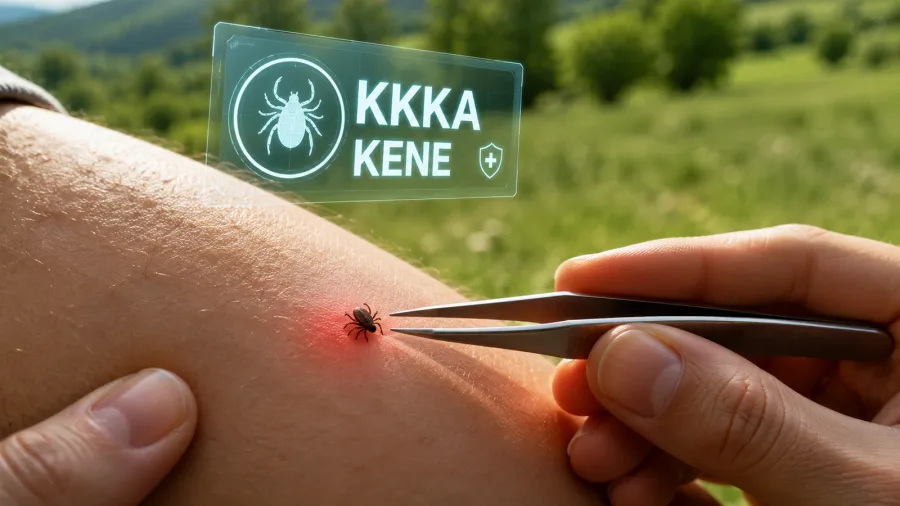
As Turkey swelters under an intense July 2026 heatwave, public health authorities are battling a seasonal surge in Crimean-Congo Hemorrhagic Fever (CCHF), a tick-borne viral disease with a fatality rate that can reach up to 30% in severe cases. Assoc. Prof. Dr. Aslı Haykır, a leading member of the Turkish Society of Clinical Microbiology and Infectious Diseases (EKMUD), has issued an urgent public advisory emphasizing that the speed of tick removal is the single most decisive factor in preventing human transmission.
While the global medical community continues to monitor zoonotic spillovers with heightened vigilance in the post-pandemic era, CCHF remains endemic in a wide geographic belt spanning Africa, the Balkans, the Middle East, and Asia. Turkey, which has reported thousands of cases since the early 2000s, is considered a hotspot due to its climate and agricultural practices. In 2025, the country saw a relative decline in mortality thanks to improved early diagnosis protocols, but the 2026 summer season is proving to be a stern test of the public health infrastructure.
The virology of CCHF and why the World Health Organization keeps it on the watchlist
Crimean-Congo Hemorrhagic Fever is caused by a Nairovirus, primarily transmitted to humans through the bite of infected Hyalomma ticks. What makes this pathogen particularly dangerous, according to Dr. Haykır, is its rapid clinical progression. After an incubation period of 1 to 3 days—sometimes extending to 13 days—patients experience an abrupt onset of high fever, severe myalgia, and dizziness. This non-specific presentation often mimics influenza, leading to dangerous delays in isolation and treatment.
The hemorrhagic phase, characterized by petechiae, epistaxis, and bleeding from venipuncture sites, signals a systemic inflammatory response that can quickly lead to multi-organ failure. 'The virus targets the endothelial lining of blood vessels,' Dr. Haykır explained. 'Once vascular permeability is compromised, the patient can deteriorate within hours. The drop in platelet count is often dramatic.' The World Health Organization (WHO) has listed CCHF as a priority pathogen for research and development, noting the absence of a widely available human vaccine and the limitations of current antiviral therapies like ribavirin, which shows efficacy only in the early stages of the disease.
Debunking field myths: Why gasoline and cigarette methods are lethal
In rural communities across Turkey, traditional folk methods for tick removal often prove catastrophic. Dr. Haykır stressed that applying chemicals such as gasoline, cologne, or pressing a lit cigarette onto the tick are among the worst possible responses. 'These substances agitate the tick and induce a regurgitation reflex. You are essentially injecting a concentrated bolus of the virus directly into the bloodstream,' she warned. This mechanism explains why patients who attempt crude removal methods frequently present with higher viral loads and more aggressive clinical courses.
The only recommended method for field removal, when immediate medical care is unavailable, involves the use of fine-tipped tweezers or a specialized tick removal card. The tick must be grasped as close to the skin's surface as possible and pulled upward with steady, even pressure. The bite area should then be disinfected with alcohol. Dr. Haykır reiterated that the duration of attachment is directly proportional to transmission risk; a tick removed within the first few hours of attachment is significantly less likely to transmit the virus.
The economic fallout: How a microscopic virus threatens Turkey's harvest season
The CCHF threat extends far beyond hospital walls, casting a long shadow over Turkey's agricultural sector. The peak transmission season, spanning July and August, coincides precisely with the harvest period for critical crops such as sugar beets and sunflowers in Central Anatolia. In 2025, several fatal cases among agricultural workers in Sivas and Tokat provinces created a temporary labor vacuum, as seasonal workers hesitated to enter high-risk fields. In 2026, the Turkish Ministry of Agriculture is collaborating with the Ministry of Health to mitigate this economic anxiety by distributing protective gear and educational pamphlets in agrarian communities.
Dr. Haykır emphasized that economic necessity should not override safety protocols. 'Wearing light-colored clothing allows you to spot ticks more easily before they attach. Tucking trousers into socks and using rubber boots creates a physical barrier. After returning from the field, a thorough body check focusing on the armpits, groin, and scalp is non-negotiable,' she advised. The agricultural chambers in affected provinces have also begun scheduling field work during cooler hours to minimize exposure, as ticks are most active during the midday heat.
Turkey's 2026 response: Free tick cards and a push for a domestic vaccine
The Turkish Ministry of Health has intensified its 2026 action plan against CCHF by scaling up the free distribution of tick removal kits in endemic zones and enhancing the capacity of rural family health centers for rapid diagnosis. Crucially, Turkish research universities have advanced their vaccine development programs into early clinical trial phases this year. While no licensed human vaccine exists globally yet, the Turkish candidates are generating cautious optimism within the scientific community.
For now, Dr. Haykır insists that community education remains the bedrock of prevention. 'We cannot eradicate the tick population entirely, but we can change human behavior. A 10-day self-monitoring period following any tick bite is mandatory. If a fever spike occurs, seeking immediate medical attention at an infectious disease unit is not optional—it is the difference between life and death.' As climate change expands the habitat of the Hyalomma tick northward, Turkey's experience in managing this deadly virus is increasingly relevant to European and global health security networks.
