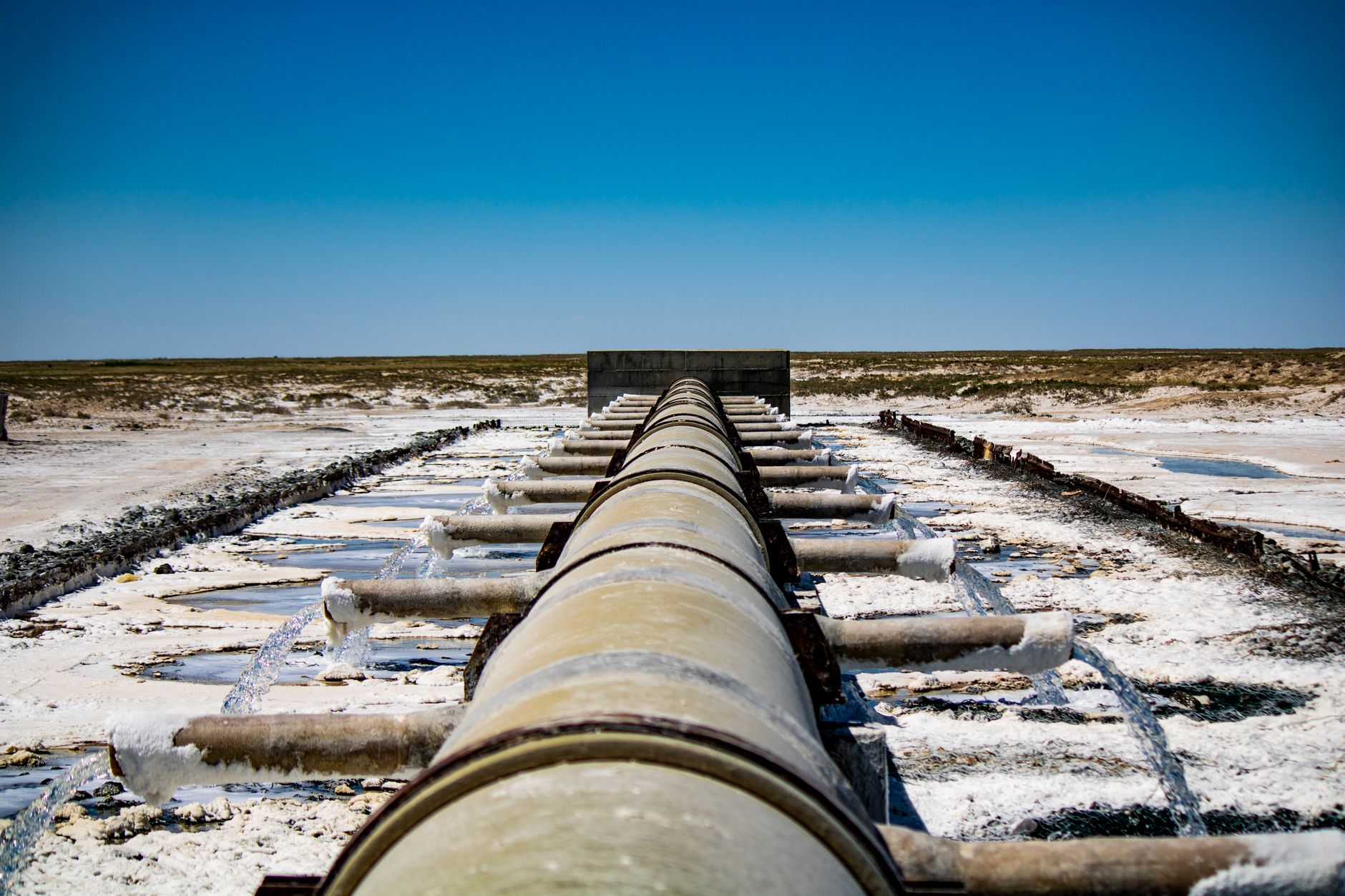
Boca Chica, Texas – In a decisive move to eliminate supply chain bottlenecks, SpaceX has broken ground on a dedicated natural gas pipeline at its Starbase launch complex, a project that underscores the company's relentless push for vertical integration in its quest to reach Mars. As of mid-2026, construction crews are working alongside the colossal Starship launch tower, laying the groundwork for an on-site fuel production facility that will convert raw natural gas into liquid methane—the lifeblood of the world's most powerful rocket.
The initiative marks a significant escalation in Elon Musk's strategy to control every aspect of Starship production and operations. By connecting directly to a major commercial natural gas transmission line running through South Texas, SpaceX aims to bypass third-party suppliers and the logistical nightmare of trucking in millions of cubic feet of gas. The move is reminiscent of Standard Oil's 19th-century pipeline strategy, applied to the 21st-century space race.
Since the successful orbital test flights of Starship in late 2025, the launch cadence has been accelerating dramatically. NASA's Artemis III mission, which depends on a customized Starship variant for its lunar landing, has a tentative 2027 window, and the pressure to deliver is immense. The new pipeline infrastructure, expected to be fully operational by early 2027, is not just about cost savings—it is about mission assurance at a scale never before attempted in the aerospace industry.
The engineering behind the pipeline project
The technical scope of the project is substantial. SpaceX is constructing a lateral pipeline that will tap into a major interstate gas transmission corridor, followed by a network of on-site processing units. These facilities will purify the natural gas, remove impurities, and then supercool it into liquid methane at cryogenic temperatures. The methane will then be stored in massive horizontal tanks adjacent to the orbital launch mount, ready to be pumped into Starship's Raptor engines at a moment's notice.
Industry analysts estimate that a full Starship stack requires approximately 1,000 metric tons of liquid methane per launch. Transporting this volume by truck would require over 50 tanker deliveries per flight, creating a logistical and environmental nightmare. The on-site pipeline and liquefaction plant eliminate this entirely, allowing for a theoretical rapid launch cadence that could see multiple Starships leaving Earth in a single week. This infrastructure is a foundational requirement for Musk's vision of a fleet of thousands of Starships making the six-month journey to Mars during the biennial transfer windows.
Regulatory hurdles and federal oversight
The project has not sailed through without scrutiny. The Federal Energy Regulatory Commission (FERC) and the U.S. Army Corps of Engineers have been heavily involved in the permitting process, given the sensitive wetlands surrounding the Boca Chica facility. Environmental groups, including the Sierra Club and local advocacy organizations, have raised concerns about the impact on the delicate coastal ecosystem, particularly on the nesting grounds of the Kemp's ridley sea turtle, a critically endangered species.
In response, SpaceX has implemented an extensive mitigation plan throughout 2026, including funding for habitat restoration projects and enhanced monitoring systems. The company has also emphasized the environmental trade-off: by eliminating hundreds of diesel truck trips per launch, the pipeline significantly reduces the carbon footprint of ground operations. The debate highlights the complex regulatory landscape that private space companies must navigate as they build out heavy industrial infrastructure in ecologically sensitive zones.
How fuel independence reshapes the commercial space race
SpaceX's pipeline gambit is poised to widen the already significant moat separating it from competitors. While rivals like Blue Origin and United Launch Alliance (ULA) rely on traditional supply chains and contracted gas deliveries, SpaceX is creating a closed-loop system that offers unparalleled cost predictability. In an industry where a single launch delay can cascade into hundreds of millions in lost revenue and contractual penalties, this kind of operational sovereignty is a game-changer.
The financial implications are staggering. Analysts at Morgan Stanley noted in a June 2026 report that SpaceX's internal fuel production could reduce the marginal cost of a Starship launch by as much as 15-20%, pushing the company closer to its stated goal of $10 million per flight. For the Pentagon and commercial satellite operators, who are increasingly booking rides on Starship, this cost efficiency translates directly into more competitive pricing and increased access to space. The pipeline is, in effect, an economic weapon in the burgeoning space economy.
Implications for global spaceports
The Starbase model is sending ripples through the international space community. The European Space Agency (ESA), currently reliant on liquid hydrogen and solid boosters for its Ariane 6 rocket launched from French Guiana, is closely watching the methane-based architecture. The ability to co-locate fuel production with the launch pad could influence the design of next-generation spaceports in regions like Australia, the Middle East, and Asia, where energy infrastructure is a key consideration.
China's rapidly advancing commercial space sector, which has been mirroring SpaceX's strategies, is also likely to adopt similar on-site fuel production for its methane-powered Long March 9 and commercial Zhuque rockets. The concept of a 'gas station at the spaceport' is becoming the new industry standard, and SpaceX, as it often does, is setting the pace.
Turkey's space program and the energy equation
For emerging space nations like Turkey, the Texas pipeline project offers a valuable blueprint. Turkey has been aggressively expanding its space capabilities, marked by the successful launch of the indigenous TÜRKSAT 6A communications satellite and ongoing lunar mission studies under the Turkish Space Agency (TUA). The country's recent discovery of substantial natural gas reserves in the Black Sea adds a fascinating dimension to its long-term space ambitions, potentially providing a domestic fuel source for future launch operations.
Roketsan, Turkey's leading rocket and missile developer, has been making strides in liquid-fuel engine technology, specifically in the development of a 135-ton thrust engine. Combining this propulsion expertise with a strategic, pipeline-fed launch facility—potentially located on the Black Sea coast near Sinop or on the Mediterranean—could transform Turkey from a launch customer into a true spacefaring nation with independent access to orbit. The SpaceX model demonstrates that energy sovereignty and space sovereignty are increasingly intertwined.
A case study for Turkish defence and aerospace
Turkey's defense industry, a champion of the 'national and indigenous' production philosophy, has mastered the art of vertical integration in drones and land systems. Applying this same philosophy to space logistics, by co-locating energy resources with launch infrastructure, could be the next frontier. As of 2026, Turkish companies like Baykar and DeltaV are exploring micro-launcher systems, and the lesson from Texas is clear: controlling the fuel supply chain from wellhead to rocket nozzle is the ultimate strategic advantage.
The geopolitical implications are also significant. A self-sufficient launch capability, powered by domestic energy, would insulate Turkey's space program from the volatile international gas markets and potential supply disruptions. In a region where energy politics often dictate strategic autonomy, a pipeline to a Turkish spaceport could be as valuable as the rockets themselves.
The road to Mars, paved with Texas pipelines
As the Texas sun beats down on the expanding Starbase complex, the new pipeline represents more than just an industrial upgrade. It is the physical manifestation of a multiplanetary ambition. The ability to produce fuel on Earth, at scale and on demand, is the first step toward Musk's ultimate goal of producing fuel on Mars using the Sabatier process—a technology that will rely on the same principles of gas processing and liquefaction being tested today in Boca Chica.
By 2027, when the pipeline is expected to be fully operational, SpaceX aims to have achieved a launch cadence that was once the stuff of science fiction. The journey to Mars, long a distant dream, is being built one piece of infrastructure at a time. And sometimes, that infrastructure looks less like a sleek rocket and more like the humble, industrial gas lines snaking through the Texas brush—quietly fueling the future of humanity among the stars.
