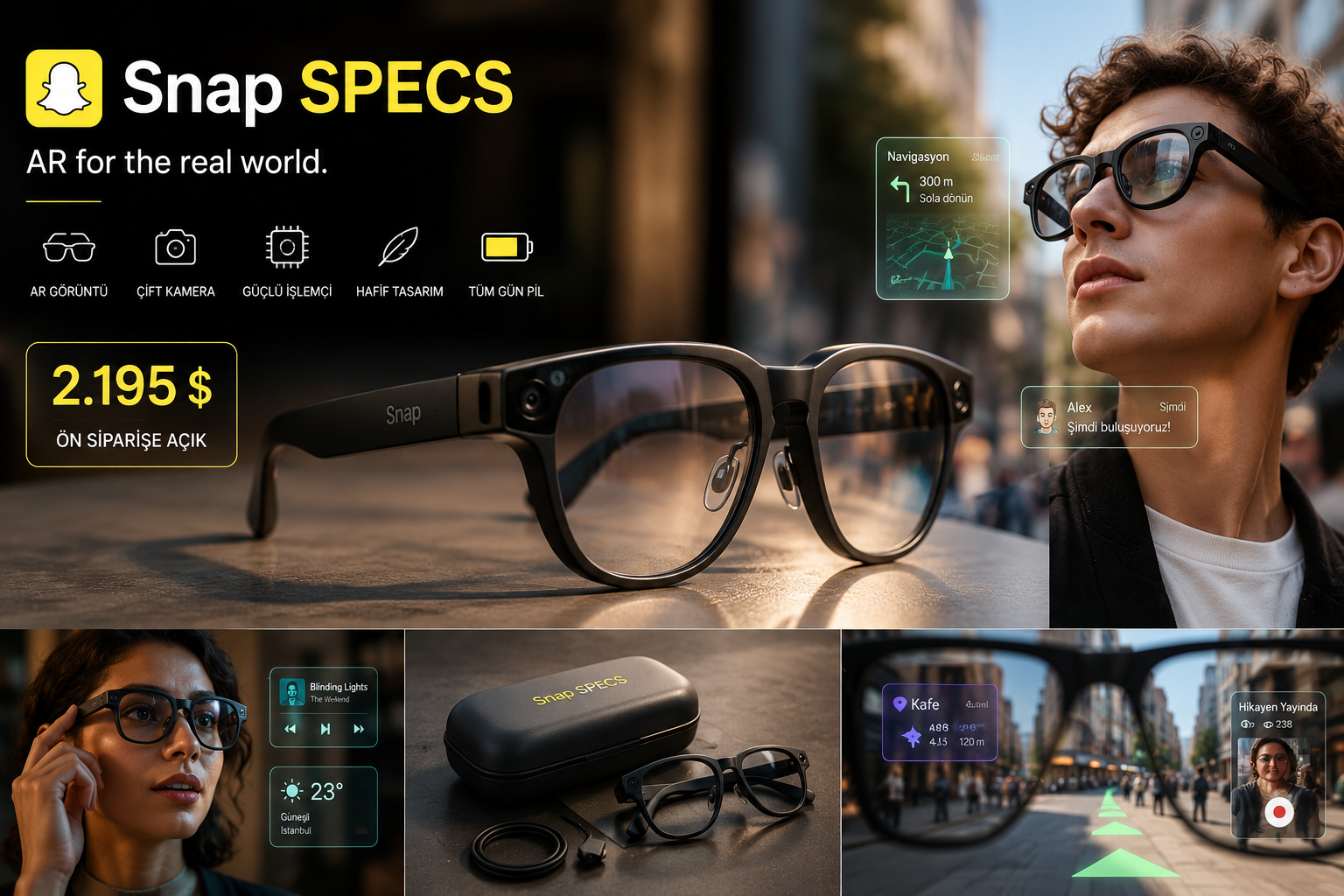
It's been a year since Apple's $3,500 Vision Pro stumbled out of the gate and Meta's Quest headsets remained anchored to living room floors. As of June 18, 2026, Snap Inc. looks poised to alter the trajectory of augmented reality. The company officially launched its first AR glasses built for the general public, Snap SPECS, ditching the bulky developer-first approach entirely. Priced at $2,195, the device isn’t just a piece of tech—it’s a powerful, lightweight, and aesthetically groundbreaking statement that reimagines what a 'social computer' should look like.
The Future-Ready Hardware: Only 140 Grams of Power
What truly sets the Snap SPECS apart from the competition is how it makes technology nearly invisible. Running on Qualcomm’s custom-built Snapdragon XR3 Gen 1 platform, the device packs a serious punch inside an ultra-light magnesium-lithium alloy frame. Weighing in at just 140 grams, the glasses promise a level of comfort indistinguishable from a standard pair of high-end sunglasses. Snap refused to rely on external battery packs or processing units, managing to cram all the hardware into the temples of the glasses. This engineering feat pushes active battery life to a solid 4 hours, clearly distinguishing it from any mixed-reality headset released in 2025.
A Display That Covers Everything the Eye Can See
The Snap SPECS utilizes next-generation waveguide technology to deliver a vivid and bright image. With a 70-degree field of view—quite expansive for standard AR glasses—digital objects blend seamlessly with the physical world. The most critical innovation is the display's peak brightness of 2,000 nits, which means Lenses remain perfectly visible even under direct sunlight, making the device truly optimized for outdoor adventures and social city walks.
Breaking the Developer Mold: The Power of Social Media
The fourth-generation Spectacles introduced last year were sold exclusively to developers, creating a massive roadblock to mainstream adoption. With SPECS, Snap is changing its strategy to directly target its 850 million Snapchat users. The new SnapOS instantly syncs with your Snapchat account. Real-time AI analyzes your surroundings to suggest context-specific AR Lenses instantly. The Niantic collaboration announced at last year’s Snap Partner Summit has also delivered results; a Pokémon GO SPECS version comes pre-loaded, allowing trainers to truly see wild Pokémon while walking through the park.
Navigation That Puts the Map Before Your Eyes
One of the most striking applications of the Snap SPECS is its Snap Map integration. There is no need to pull out your smartphone; the glasses project bright blue arrows onto the ground to guide you to your destination. For urban explorers, this hands-free navigation feels like a superpower, allowing you to see your friends’ real-time Bitmoji avatars standing right in your line of sight.
The $2,195 Price Tag: Competing with a Luxury Phone
The $2,195 launch price of the Snap SPECS might initially raise eyebrows. However, it must be compared to other luxury gadgets on the market. Priced nearly identically to a current Samsung Galaxy Z Fold 6 or an iPhone Fold, the SPECS boldly claims it can replace your smartphone entirely. Unlike the Apple Vision Pro, which massively undersold expectations by moving only 400,000 units in 2025, Snap is hitting the 'accessible luxury' segment. CEO Evan Spiegel stated during the launch, “Our goal is to get people looking at the world, not their phones—without bankrupting them in the process.”
Installment Plans and Carrier Deals for Mass Adoption
An aggressive sales plan supports the widespread adoption of the device. In the U.S., Snap has secured deals with Verizon and T-Mobile to offer the SPECS with 24-month installment plans. This strategy brings the monthly cost down to the level of a standard carrier-subsidized smartphone, significantly lowering the psychological barrier to purchase for the average consumer.
A Fashion Triumph in Tech: A Uniquely Stunning Design
Perhaps the most crucial detail separating the Snap SPECS from every other AR venture is that people won’t be embarrassed to wear them. Learning from the severe social rejection that killed Google Glass, Snap reshaped the design with a fashion-first mantra. Available in matte black, bone white, and transparent frame finishes, the device rivals luxury eyewear brands. There are no physical buttons on the glasses; all controls are managed via touch-sensitive temples and voice commands. The semi-transparent displays never obscure your eye contact, ensuring you don't disconnect from the person standing in front of you during a conversation.
A Creative Revolution for Content Creators
The new dual 12 MP camera system introduces a whole new set of creative tools. Users can now capture spatial photos and videos, sharing their 3D memories directly to Snapchat. In 'Creator Mode,' AR filters can be permanently anchored to the real world; you can instantly turn a blank wall into a massive canvas or leave a dancing Bitmoji on the coffee table for a friend to find.
The Snap SPECS may be remembered not just as a hardware launch, but as the definitive proof that augmented reality has finally arrived. The company firmly believes that technology is at its best only when it is invisible. So, what about you? Instead of escaping into a virtual metaverse, could these lightweight glasses that magically transform our own world finally replace the smartphone of the next decade?
