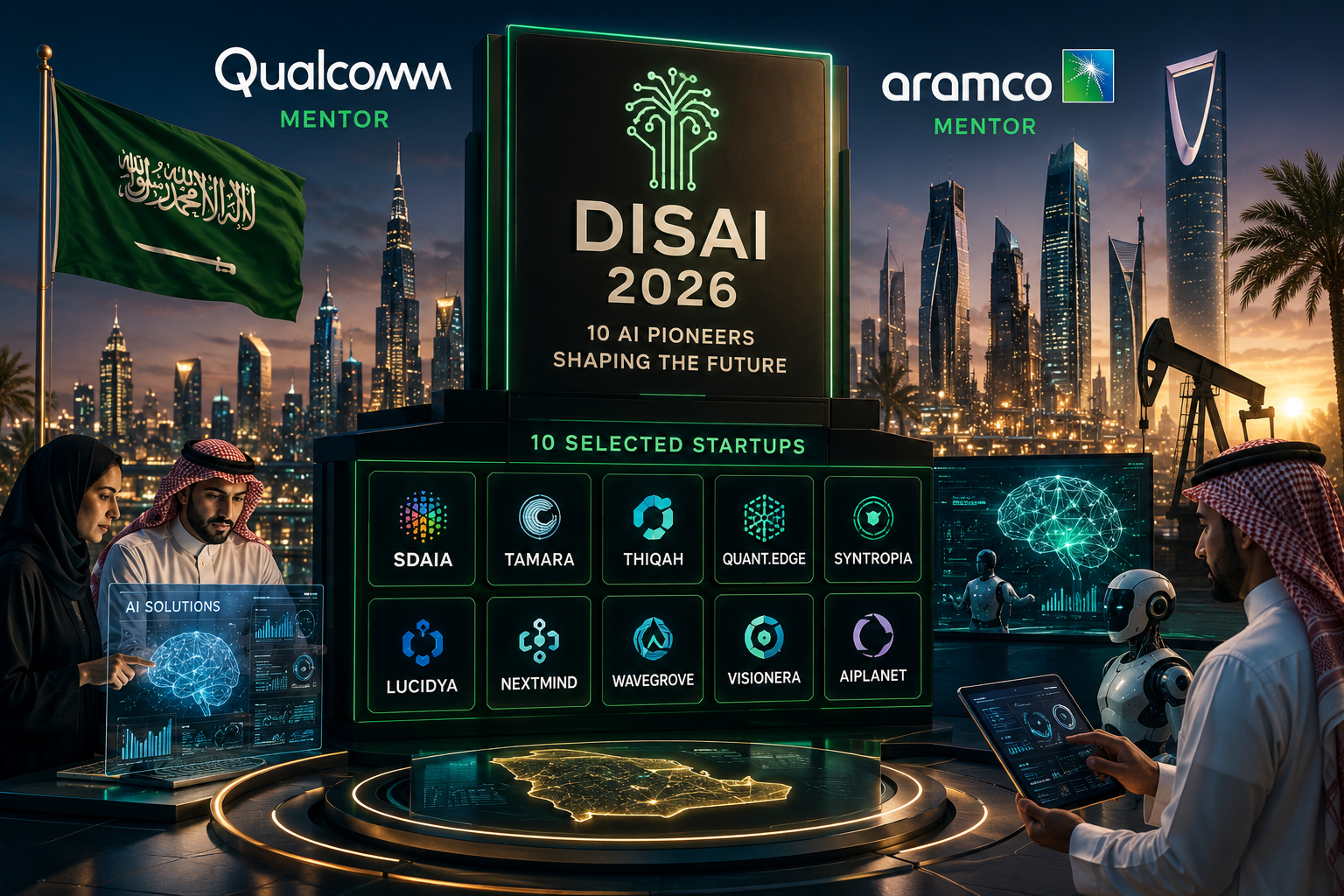
In the race to dominate the artificial intelligence revolution, Saudi Arabia is not just placing bets—it is hand-picking its champions. This morning at the LEAP 2026 tech conference in Riyadh, the Saudi Data and Artificial Intelligence Authority (SDAIA) revealed the 10 startups selected for the highly competitive DISAI 2026 AI Innovation Program. With mentorship from global giants Qualcomm and Aramco, these ventures are poised to reshape industries from healthcare to energy.
A Grueling Selection Process
Out of over 1,200 applications from 68 countries, only 10 startups secured a spot. The DISAI judges spent four months evaluating each candidate based on technical depth, market scalability, and alignment with Saudi Vision 2030’s digital transformation goals. "We were looking for teams that had moved beyond the idea stage and had a functional prototype with real-world validation," explained Dr. Noura Al-Ansari, SDAIA’s Director of Emerging Technologies, during the announcement. The finalists include NabtAI, a computer vision startup that detects crop diseases in arid climates; Medixera, which uses generative AI to personalize cancer treatment plans; and EnergenAI, a predictive maintenance platform for oil field equipment. Other selected startups focus on fintech, logistics, and Arabic natural language processing, showcasing the Kingdom’s ambition to cover diverse AI verticals.
What Makes a Winner?
Beyond technical prowess, startups had to demonstrate a clear pathway to deployment in the MENA region. Preference was given to companies addressing local challenges—such as water scarcity, extreme heat, and industrial safety—while maintaining global export potential. Each finalist also committed to establishing a regional headquarters in Saudi Arabia within two years, guaranteeing that the intellectual property and economic benefits remain in the local ecosystem.
The Power of Partnerships: Qualcomm and Aramco
What sets DISAI 2026 apart is its heavyweight mentorship duo. Qualcomm provides hands-on guidance in edge AI, IoT, and on-device machine learning through its Qualcomm AI Engine. Aramco, the world’s largest energy company, offers startups a sandbox of industrial data and operational challenges. "These startups will not just build in a vacuum; they will test their solutions on real oil rigs, refineries, and smart city infrastructure," said Khalid Al-Bassam, Aramco’s Chief Digital Transformation Officer. Qualcomm’s Vice President of AI Ecosystems, Maria Santos, added that the program gives founders access to premium Snapdragon developer kits and dedicated engineering support, something typically reserved for Tier-1 partners.
Unprecedented Access to Cutting-Edge Tech
Participants receive $120,000 in cloud credits from AWS and Google Cloud, plus unlimited access to Aramco’s digital twin platform—a high-fidelity simulation of an entire oil processing facility. This allows AI startups to stress-test their algorithms on a petabyte-scale industrial dataset without stepping foot on a hazardous site. Qualcomm is also opening its 5G AI test lab in Dhahran, where startups can experiment with ultra-low latency inference for autonomous robots and drone systems.
More Than a Bootcamp: A Launchpad
The 14-week program goes far beyond classroom sessions. Each startup is paired with a senior executive coach from Aramco or Qualcomm and a dedicated product manager. Milestones include a pilot-ready deployment within the first eight weeks and a live demonstration at the Global AI Summit in Riyadh this September. Two of last year’s DISAI 2025 graduates, HealthEquity AI and DesertChain Logistics, have since raised over $50 million in Series A funding combined, and both are now operational in three Gulf countries.
Real-World Testbeds in Weeks, Not Months
One standout candidate, EnergenAI, will connect its vibration-analysis algorithms to actual pipeline sensors at Aramco’s Abqaiq facility by week six. Medixera will train its cancer treatment model on de-identified patient records from King Faisal Specialist Hospital, with ethical approvals fast-tracked under a new AI regulatory sandbox. This speed-to-impact model is what differentiates DISAI from generic accelerators.
A Tipping Point for the MENA AI Ecosystem
Saudi Arabia’s AI market is projected to contribute $135 billion to the economy by 2030, according to a 2025 PwC report. Programs like DISAI are catalysts, attracting international talent and spurring local venture capital activity. In 2026 alone, the Kingdom has launched three new AI-focused funds totaling $780 million. "We are building an AI flywheel," said Eng. Abdullah Al-Swaha, Minister of Communications and Information Technology, at today’s event. "Every startup that succeeds here becomes a magnet for the next wave of innovators."
2026: The Year the Gulf Becomes an AI Hub
With NEOM’s cognitive city Linq reaching its first phase, the opening of the Riyadh AI Ethics Observatory, and the rapid digitization of government services, 2026 is shaping up as a definitive year for AI in the Gulf. The DISAI program, now in its second iteration, has already drawn interest from governments in Bahrain and the UAE looking to replicate the model. Analysts predict the region could produce its first AI decacorn by 2028.
As these 10 startups embark on a journey that could reshape global AI, the world watches. Will one of them become the next OpenAI of the Middle East? Share your predictions in the comments or follow our ongoing coverage of DISAI 2026.
