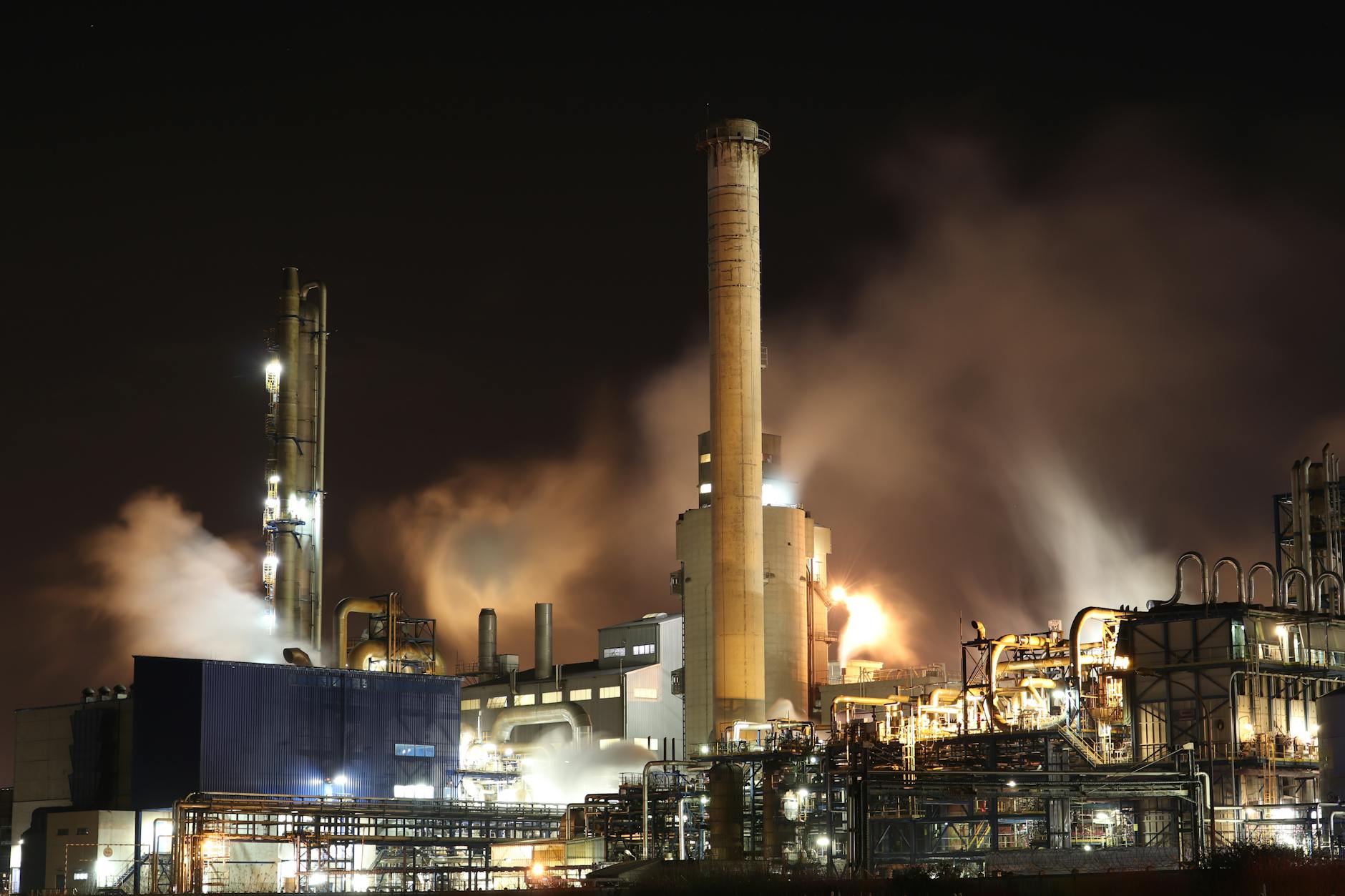
A coordinated assault on critical energy infrastructure across the Persian Gulf has sent Brent crude oil prices soaring past $90 per barrel in July 2026, triggering the most severe global market shock since the pandemic-era supply chain crisis. The attacks, which targeted major processing facilities and offshore platforms in Saudi Arabia and the United Arab Emirates, have disrupted an estimated 5 million barrels per day of crude supply — nearly 5% of global production — reigniting fears of a prolonged inflationary spiral across developed and emerging economies alike.
Within hours of the first explosions at Saudi Arabia's Abqaiq facility, the world's largest crude oil processing plant, international benchmark Brent crude jumped more than 8% to reach $94 per barrel. West Texas Intermediate (WTI), the US benchmark, climbed to $89. The scale and sophistication of the operation have drawn comparisons to the 2019 Abqaiq-Khurais attacks, but the current disruption appears far more extensive, with additional strikes reported at the Fujairah oil terminal in the UAE and several offshore loading buoys in the Strait of Hormuz.
The immediate market reaction reflects deep-seated anxiety about the vulnerability of global energy supply chains. Shipping insurance premiums for Gulf-bound tankers have tripled overnight, and several major shipping companies have suspended transit through the Bab el-Mandeb strait. The International Energy Agency (IEA) has convened an emergency meeting to discuss the potential release of strategic petroleum reserves, though analysts warn that such measures may prove insufficient if the supply disruption persists beyond a few weeks.
The global inflation specter returns to haunt central banks
For central bankers who spent 2025 cautiously easing interest rates after taming the post-pandemic inflation surge, the oil price shock presents a nightmarish policy dilemma. The US Federal Reserve and the European Central Bank, both of which had signaled further rate cuts in the second half of 2026, now face the prospect of having to reverse course. Energy costs permeate every sector of the economy, from manufacturing and transportation to agriculture, and sustained high oil prices could push core inflation well above target levels across advanced economies.
The transmission mechanism is already visible. US gasoline futures surged 12% in after-hours trading, pointing to an imminent spike in consumer fuel prices. In Europe, where natural gas prices remain elevated following the energy realignment of recent years, higher oil prices compound an already difficult cost-of-living situation. The Bank of England and the ECB, which had been projecting inflation to return to their 2% targets by late 2026, are now scrambling to revise their forecasts. A prolonged energy crisis could force them to not only pause rate cuts but potentially hike rates again — a scenario that would severely strain household budgets and corporate balance sheets.
Emerging markets face the sharpest adjustment
Developing economies, particularly those with large energy import bills and current account deficits, are bearing the brunt of the market turmoil. Countries like India, which imports over 85% of its crude oil needs, and South Africa, already grappling with sluggish growth, face a toxic combination of rising import costs and weakening currencies. The MSCI Emerging Markets Index dropped 3.2% on the day, its steepest single-day decline since October 2025. Currency markets saw sharp selloffs in the Indian rupee, Turkish lira, and South African rand, as investors fled to safe-haven assets like the US dollar and Japanese yen.
The International Monetary Fund (IMF), which had projected global growth of 3.1% for 2026, has warned that a sustained oil price above $90 could shave 0.4 to 0.6 percentage points off that figure. For the world's poorest nations, many of which are still recovering from the debt crises of the early 2020s, the energy shock threatens to reverse years of fragile progress. The World Bank has already begun emergency assessments of the impact on food security in sub-Saharan Africa and South Asia, where fuel costs account for a significant share of agricultural production and distribution expenses.
Geopolitical ramifications and the security of maritime chokepoints
The attacks have thrust the security of the Strait of Hormuz — the narrow waterway through which roughly 20% of the world's oil passes — back to the center of international security concerns. Naval forces from the United States, the United Kingdom, and France have increased patrols in the region, while Gulf Cooperation Council (GCC) states have placed their armed forces on high alert. The United Nations Security Council has scheduled an emergency session, though the absence of a clear attribution for the attacks complicates the diplomatic response.
Energy security analysts are drawing urgent lessons from the incident. The concentration of critical processing infrastructure in a geographically compact and politically volatile region has long been identified as a systemic risk, but previous warnings failed to spur sufficient diversification. Now, governments from Tokyo to Berlin are revisiting their strategic energy policies. Japan's Ministry of Economy, Trade and Industry has announced an immediate review of its strategic stockpile requirements, while the European Commission is accelerating its REPowerEU initiatives aimed at reducing fossil fuel dependency.
Structural shifts in energy markets and investment flows
Beyond the immediate price spike, the attacks are accelerating structural changes in global energy markets. Renewable energy stocks rallied sharply, with the S&P Global Clean Energy Index gaining 4.7% as investors bet on accelerated green transitions. Solar and wind energy companies, as well as nuclear power operators, saw significant inflows. The crisis has given fresh ammunition to advocates of energy independence through renewables, with policymakers in Europe and Asia citing the Gulf disruption as definitive proof that the transition away from fossil fuels is not merely an environmental imperative but a national security necessity.
In commodity markets, the backwardation in Brent futures — where spot prices exceed forward prices — has steepened dramatically, signaling extreme near-term supply tightness. Hedge funds and commodity trading advisors have increased their net long positions in crude oil to levels not seen since the 2022 energy crisis. The options market shows a sharp increase in demand for out-of-the-money call options at $100 and even $110 strike prices, suggesting that sophisticated investors are hedging against a further escalation scenario that could push oil into triple-digit territory for the first time since 2022.
The policy response: fiscal buffers and monetary tightening dilemmas
Governments around the world are activating contingency plans. Several Asian nations, including India and South Korea, have announced fuel subsidy increases to shield consumers from the immediate impact, though such measures strain already-stretched fiscal budgets. In Europe, discussions are underway about windfall taxes on energy companies, echoing the measures implemented during the 2022 energy crisis. The political pressure to intervene is immense, particularly in countries facing elections in the coming months, but the fiscal space to do so is far more limited than it was four years ago.
For the global financial system, the oil shock represents the first major stress test since the banking turbulence of 2023-2024. Credit default swap spreads for energy-intensive industries have widened, and corporate bond markets are pricing in higher default risk for airlines, shipping companies, and petrochemical manufacturers. Central banks, which had been steadily rebuilding their credibility after the inflation overshoots of the early 2020s, now face a communications challenge of the highest order: how to acknowledge the inflationary impact of energy prices without triggering a de-anchoring of inflation expectations that would necessitate even more painful policy tightening down the road.
As July 2026 draws to a close, the global economy stands at a precarious juncture. The Gulf attacks have exposed the enduring fragility of fossil fuel-dependent energy systems and the speed with which geopolitical shocks can cascade through interconnected markets. Whether this crisis proves to be a temporary disruption or the catalyst for a broader economic downturn depends on the duration of the supply outage, the effectiveness of the diplomatic and military response, and the agility of policymakers navigating yet another round of conflicting economic pressures. One thing is certain: the era of cheap, geopolitically secure energy is over, and the world must now confront the consequences.
