The Bridge That Turns Promises Into Markets
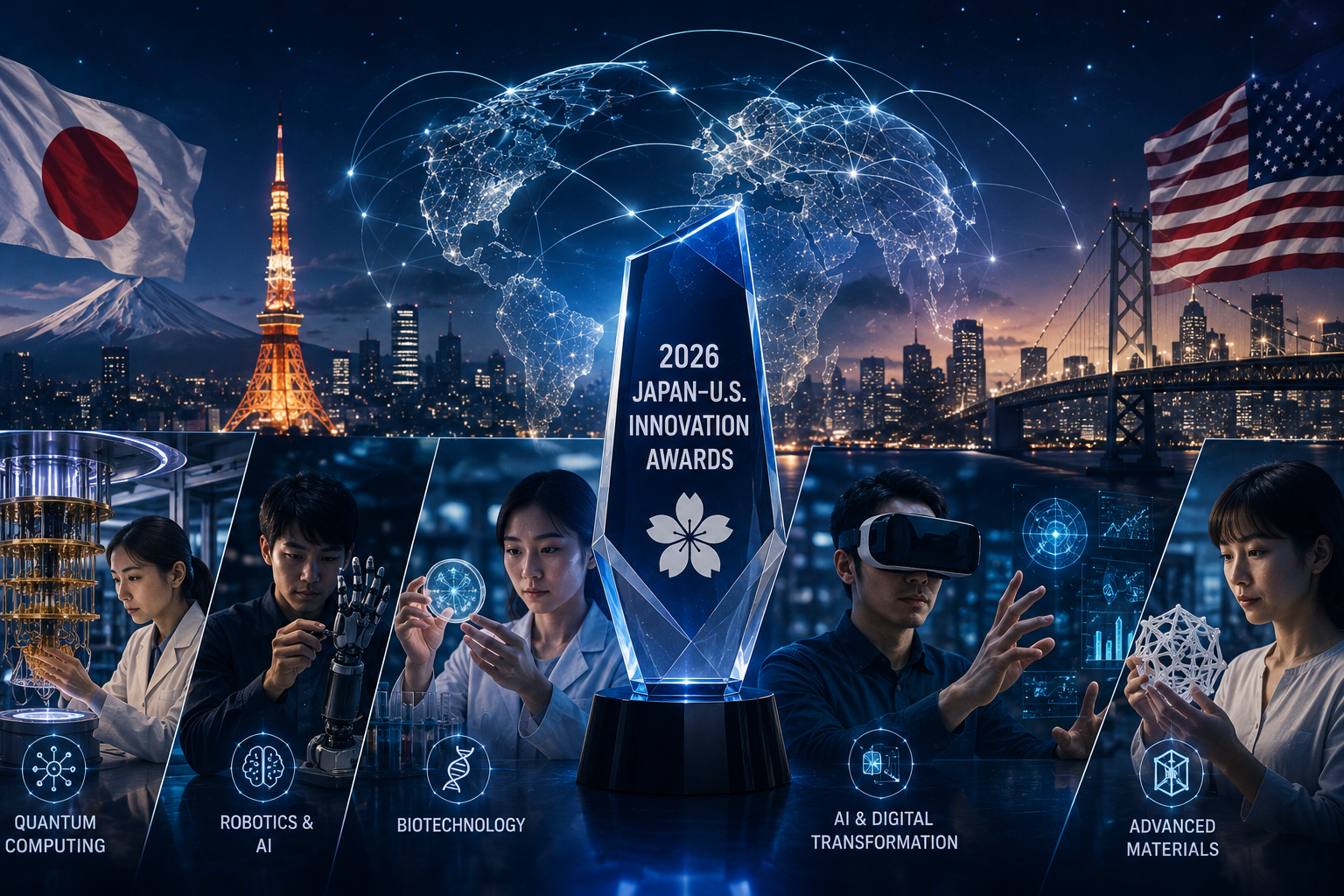
For over a decade, the Japan–U.S. innovation corridor has been fueled by cross-border capital and joint R&D. But the Japan Society of Northern California’s Innovation Awards elevate this synergy to a high-stakes showcase. The 2026 edition shattered records: 2,200 startups applied, a 22% surge from last year’s 1,800. This leap mirrors the explosion of Japan’s entrepreneurial ecosystem, spurred by the government’s “Startup City Project Japan.” The jury, composed of Silicon Valley veterans and Japanese tech leaders, sifted through applications by evaluating technological novelty, market readiness, and U.S. expansion potential. The five chosen startups now gain not just a trophy, but an average 1,200 hours of mentorship and direct access to strategic partnerships in the Valley—essentially a launchpad disguised as an award ceremony.
A Record Pool of Deep Tech Contenders
This year’s applicant pool wasn't just bigger; it was deeper. Deep tech submissions made up 40% of the total, with AI, clean energy, and biotechnology dominating. The surge reflects a maturation of Japan's startup infrastructure, where national labs and corporate venture arms now actively spin out cutting-edge intellectual property. For context, the selection rate was a brutal 0.23%, making it harder to get into than an Ivy League university. The finalists underwent an eight-week due diligence marathon involving customer validations and live technology demos before the final nod. This rigor ensures that “Innovation Showcase” is more than a buzzword—it’s a benchmark for investable disruption.
Five Visionaries Redefining Tomorrow
The five winners are each attacking a trillion-dollar problem from a unique angle. QuanTech Systems has developed error-correction algorithms that bring fault-tolerant quantum computing within three years of commercial reality; it already runs pilots with two major Japanese securities firms for portfolio optimization. BioFusion Labs reprogrammes somatic cells to reverse age-related macular degeneration, achieving a 30% higher efficacy in Phase I trials compared to U.S. biotech averages. AeroSynth Robotics deploys fully autonomous drone swarms for last-mile medical delivery in mountainous regions, slashing logistics costs by 70%. CyberNova Security’s zero-trust mesh architecture neutralized a simulated ransomware attack on a Japanese smart city grid in under 4 seconds. NeoMaterial Inc. replaces heavy battery enclosures with carbon-nanotube composites, promising a 40% weight reduction that could double EV range without altering cell chemistry.
Challenging Global Giants Head-On
What sets this cohort apart is their readiness to compete with—not just learn from—global incumbents. QuanTech’s roadmap directly challenges IBM’s quantum milestones, while BioFusion’s pre-clinical data has already triggered partnership requests from two top-10 pharma firms. CyberNova’s architecture outperformed three established U.S. cybersecurity tools in independent red-team exercises. Investors are taking note: informal talks at the gala suggested that three of the five startups could close Series A rounds above $50 million by Q3 2026. This is no longer a “Japan catching up” narrative; it’s a passing of the baton in several frontier technologies.
Proven Playground: Alumni That Built Empires
Since the Showcase’s inception in 2018, its 38 alumni have collectively raised over $2.5 billion in venture capital. Two reached unicorn status—one in 2022 (a smart sensor platform) and another in 2025 (a surgical robotics firm). The direct economic impact is tangible: alumni have created more than 4,200 high-skilled jobs and contributed an estimated $1.8 billion to Japan’s GDP. These numbers are quietly rewriting Japan’s image from industrial titan to knowledge-economy powerhouse. In 2025 alone, alumni startups filed over 600 international patents, many co-developed with U.S. universities.
The Investor Stamp of Approval
Venture capitalists treat the Showcase as a quality signal. A finalist from last year raised $120 million just 90 days after the ceremony. One jury member noted, “These five startups embody how Japan’s innovation perception has flipped—from a sleepy giant to a lab of lean, globally minded teams.” The stamp carries weight because it blends Japanese precision with American go-to-market agility. With supply-chain resilience and semiconductor self-reliance dominating policy agendas, the U.S.-Japan tech alliance finds its most visible expression in these startups.
2026 and Beyond: A Rebalanced Innovation Map
The 2026 Showcase is not just a celebration of five firms; it signals a repositioning of the Asia-Pacific innovation axis. Despite aggressive plays from South Korea and China, Japan still leads Asia in deep tech patent filings per capita. The winners demonstrate that this intellectual capital is finally being commercialized at speed. Global headwinds—like tightening AI regulations and escalating cyber threats—only amplify the value of solutions these startups offer. Analysts predict that at least three of the program’s graduates will reach IPO or strategic acquisition within five years. As these five entrepreneurs prepare to scale, they carry more than business plans; they carry a mandate to solve humanity’s pressing challenges with Japanese ingenuity.
Which One Will You Be Using in 2030?
Forecasting the next unicorn is a risky game, but the clues are already visible. Will quantum computing become your daily driver, or will drone-delivered medicine become mundane? As 2026 unfolds, these five startups will be racing to turn prototypes into products. The only question left for the global audience is: are you paying close enough attention?
