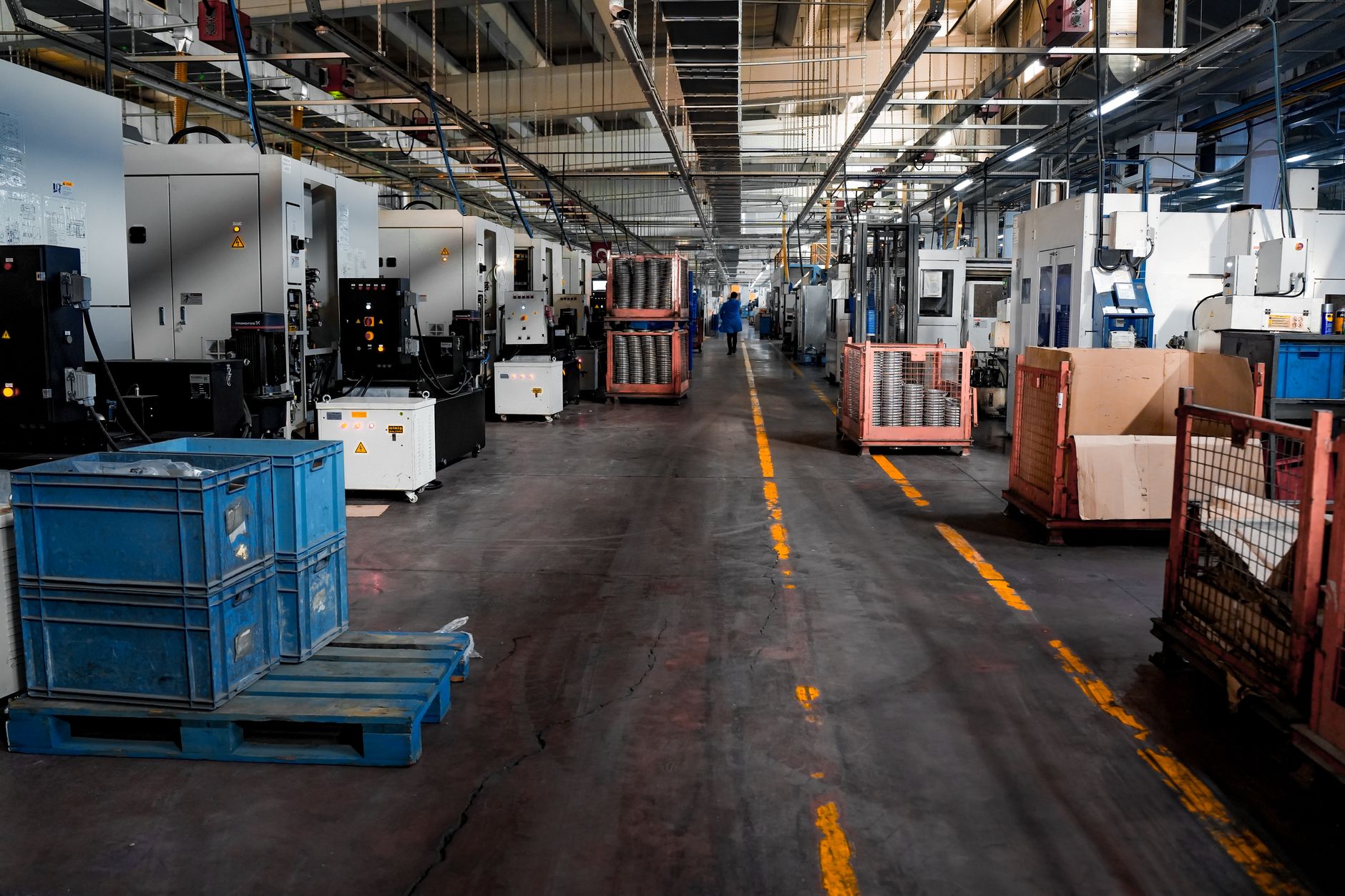
In an unmarked industrial facility in southern Germany, protected by layers of physical security and corporate secrecy, a new chapter in modern warfare is being written at breakneck speed. Helsing SE, Europe's most prominent defense technology startup, has built a production line that churns out thousands of artificial intelligence-powered attack drones destined for the front lines of Ukraine. Unlike the decade-long development cycles of traditional fighter jets or main battle tanks, this factory represents a fundamental disruption in how militaries procure and deploy lethal force—favoring software agility and mass production over exquisite, gold-plated platforms.
The Economic Model Disrupting Defense Procurement
The core of Helsing's strategy lies in its radical departure from the cost structures that have defined military hardware for generations. Traditional defense contractors operate on programs that span decades and cost billions, producing small numbers of extraordinarily complex systems. Helsing has inverted this model entirely. Its HX-2 strike drones are designed for manufacturability first, leveraging commercial supply chains and components originally developed for the automotive and consumer electronics industries. The result is a unit cost measured in tens of thousands of dollars rather than millions, enabling Ukrainian forces to deploy these systems in swarms against high-value Russian assets.
Scaling Production in Wartime Europe
By mid-2026, the facility's monthly output has reached several thousand units, with plans to double capacity before year-end. This scaling capability is itself a weapon. Russia's defense industrial base, while formidable, cannot easily match the iteration speed of a company built on Silicon Valley principles. Helsing's engineers continuously update the drones' software based on battlefield feedback from Ukrainian operators, sometimes pushing updates that improve target recognition algorithms within days of identifying a new Russian countermeasure. This software-defined approach means the physical hardware becomes a platform for constant capability enhancement, a concept alien to traditional defense manufacturing but second nature to the technology sector.
AI That Functions When Communications Fail
The defining technical achievement of Helsing's drones is their ability to operate effectively in environments saturated with Russian electronic warfare. The battlefield in eastern Ukraine is among the most electromagnetically contested in history, with GPS spoofing, communication jamming, and signal interception occurring at unprecedented scale. Helsing's onboard AI systems process visual and infrared sensor data in real time, allowing the drones to navigate and identify targets without relying on external positioning signals. This capability has proven decisive in countering Russian EW systems that previously rendered many Western precision weapons ineffective.
The Human Role in Autonomous Engagement
Despite the advanced autonomy, Helsing maintains that a human operator remains in the decision loop for lethal engagements. The company's architecture is built around what it calls 'meaningful human control,' where the AI recommends targets and flight paths but the final authorization rests with a trained operator. However, the nature of this human role is evolving rapidly. Operators increasingly function as mission commanders rather than pilots, overseeing multiple drones simultaneously and intervening only when the AI encounters ambiguity. This model raises profound questions about accountability and the legal frameworks governing autonomous weapons, questions that NATO and European Union bodies are actively grappling with in 2026.
Reshaping Europe's Defense Industrial Landscape
Helsing's meteoric rise—from a 2021 founding to a multi-billion-dollar valuation—signals a structural shift in Europe's approach to defense technology. The company has attracted investment from Spotify founder Daniel Ek and major European venture funds, bringing startup velocity to a sector historically dominated by state-owned or publicly traded industrial conglomerates. Its success has forced established players like Airbus Defence and Space, Rheinmetall, and BAE Systems to accelerate their own AI and unmanned systems programs, triggering a wave of investment and acquisition activity across the continent's defense sector.
Strategic Autonomy from US and Israeli Suppliers
For European NATO members, Helsing represents a path toward reduced dependence on American and Israeli drone technology. The war in Ukraine has exposed vulnerabilities in supply chains that rely on components subject to export controls or political restrictions. Helsing's entirely European supply chain and software stack offer a sovereign alternative that is increasingly attractive to defense ministries in Berlin, Warsaw, and the Baltic capitals. By 2026, the company has secured framework agreements with multiple NATO members beyond Ukraine, positioning itself as a cornerstone of European defense autonomy in the unmanned systems domain.
Battlefield Impact and the Road Ahead
Ukrainian operational data from 2025 and early 2026 demonstrates the tangible effect of Helsing's systems on the conflict. The drones have been credited with successful strikes against Russian Black Sea Fleet vessels, S-400 air defense batteries in Crimea, and logistics convoys deep behind the front lines. The combination of low cost, electronic warfare resistance, and precision has allowed Ukrainian planners to conduct operations at a tempo and scale previously unsustainable with expensive Western missiles. As the war grinds through its third year, Helsing's production output has become a critical variable in Ukraine's defensive and offensive planning.
The Russian Counter-Adaptation
Moscow has not remained passive in the face of this technological challenge. Russian forces have deployed new generations of electronic warfare systems specifically designed to counter AI-guided drones, while simultaneously ramping up domestic production of Lancet and Shahed-class unmanned systems with enhanced autonomy features. The technological contest between Helsing's software-driven approach and Russia's industrial-scale adaptation represents a new kind of arms race—one fought not over platform specifications but over algorithmic superiority and manufacturing throughput. How this competition evolves through the remainder of 2026 will likely influence not just the outcome in Ukraine but the future character of warfare globally.
