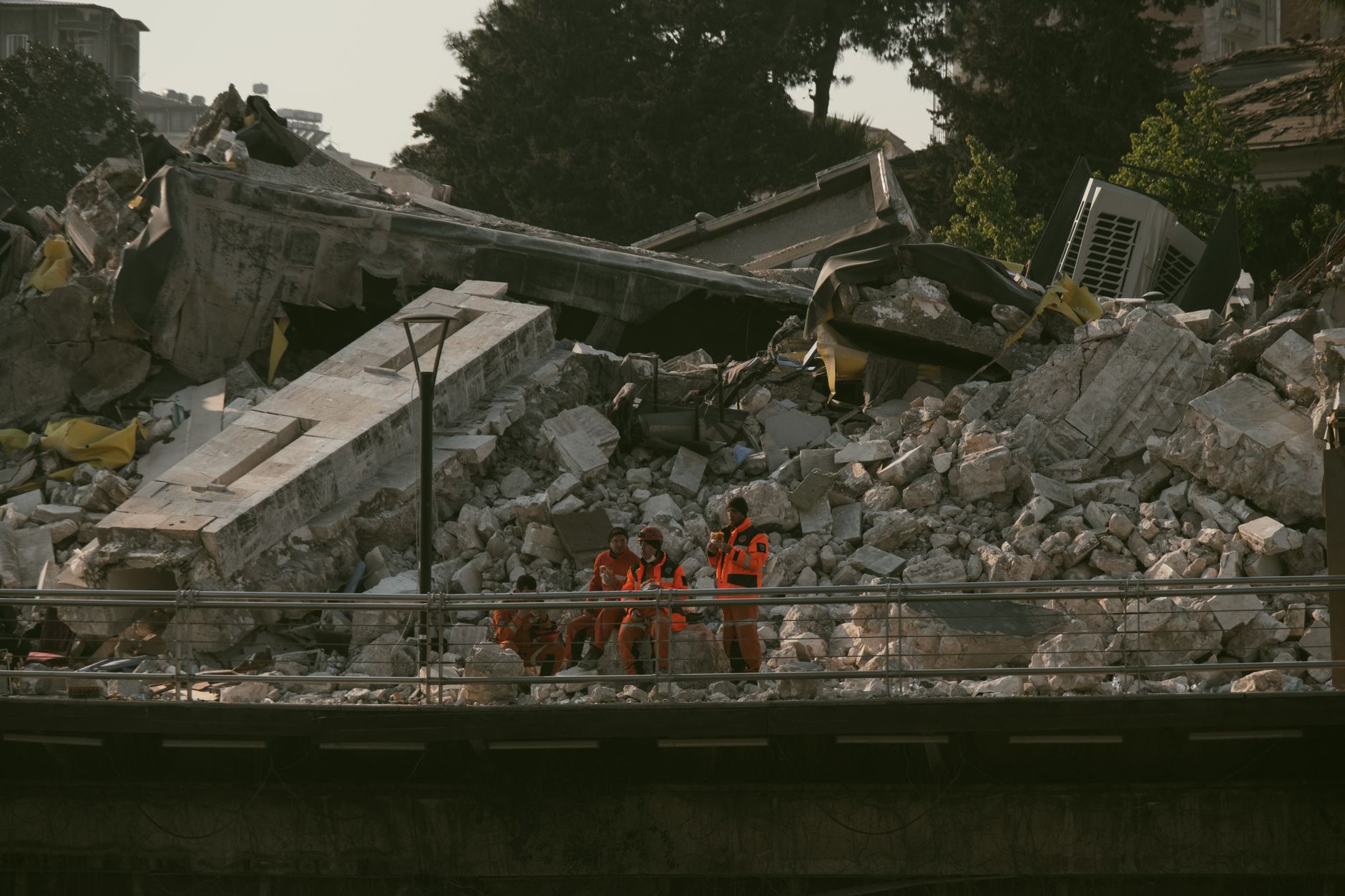
The faint tapping sound detected by a Mexican rescue dog named Frida at 2:30 a.m. on June 30 led to one of the most dramatic rescues in Venezuela's modern disaster history. After 96 hours trapped beneath the pancaked floors of a five-story apartment building in Maracaibo, 42-year-old construction worker Miguel Hernández and his 12-year-old son Santiago were extracted alive by international rescue teams. The operation, which unfolded as the official death toll climbed to 1,480 and hopes of finding survivors had all but vanished, prompted President Nicolás Maduro to declare in a televised address: 'We always hold onto hope — and today, hope has been rewarded.'
The collapse and the 22-hour race against time
The Hernández family's apartment building, located in Maracaibo's densely populated La Limpia district, was among the first structures to crumble when the 7.3-magnitude earthquake struck at 8:14 a.m. local time on June 26, 2026. The building's reinforced concrete frame, weakened by years of poor maintenance and unauthorized modifications, collapsed vertically in what engineers describe as a progressive pancake failure. Rescue teams from Venezuela's Civil Defense, joined by specialized urban search-and-rescue (USAR) units from Mexico, Cuba, and Turkey, began working on the site within hours of the main shock. However, the compacted layers of concrete slabs and twisted rebar presented an almost impenetrable barrier, forcing rescuers to tunnel horizontally from an adjacent building's basement.
Colonel Ricardo Fuentes, who commanded the operation, told reporters that Frida the rescue dog's alert was the first concrete sign of life detected at the site in over three days. 'We deployed fiber-optic cameras through a narrow borehole and saw movement — a hand, weakly waving,' Fuentes said. The subsequent extraction required 22 hours of continuous, high-risk work. Rescuers used hydraulic spreaders, concrete saws, and pneumatic lifting bags to create a rescue shaft, all while monitoring the unstable debris with laser sensors for any sign of further collapse. The father and son were found in a small void created when a concrete beam, falling diagonally, wedged against a collapsed stairwell wall. Miguel Hernández later told doctors from his hospital bed that he kept his son conscious by telling him stories from his own childhood and collecting rainwater that seeped through the debris using a piece of torn clothing.
Crush syndrome and dehydration: The medical battle after rescue
Dr. Elena Rojas, chief of emergency medicine at Maracaibo University Hospital, confirmed that both patients were in serious but stable condition. The primary medical concern, she explained, was crush syndrome — a life-threatening condition that occurs when compressed muscle tissue releases toxins into the bloodstream after the pressure is removed. 'The father has significant soft tissue damage in his left leg, and the son has a fractured right arm and multiple rib cracks. Both are showing elevated creatine kinase levels, which puts them at high risk for acute kidney failure. We are administering aggressive intravenous fluid resuscitation and closely monitoring their renal function,' Dr. Rojas said. The hospital's nephrology team has been placed on standby for possible emergency dialysis. Psychological support teams have also been deployed, as both survivors will need extensive trauma counseling, particularly given reports that other family members may have perished in the collapse.
A disaster foretold: Venezuela's building crisis and economic collapse
The catastrophic scale of destruction in Maracaibo, Barquisimeto, and Mérida cannot be attributed solely to the earthquake's magnitude. Venezuela's prolonged economic crisis, marked by hyperinflation that reached 180% in 2026 and a GDP that has contracted by over 75% since 2014, has systematically eroded the country's infrastructure and regulatory capacity. Building codes dating back to the 1980s were rarely updated or enforced, and successive governments issued construction amnesties that legalized thousands of informally built structures. A 2025 report by the Venezuelan Society of Structural Engineers found that 62% of buildings in Maracaibo's urban core would likely collapse in a major seismic event — a prediction that proved tragically accurate.
The political dimension of the disaster has intensified the already fractious national discourse. Opposition leader Juan Guaidó, addressing international media via video link, called the earthquake 'a negligence catastrophe, not a natural disaster.' He pointed to the Maduro government's 2023 decision to slash the budget of the National Seismic Protection Agency by 40% and to redirect funds from infrastructure maintenance to debt servicing. The Maduro administration, in turn, has blamed U.S. and European Union sanctions for hampering the import of construction materials and medical supplies. The United Nations Office for the Coordination of Humanitarian Affairs (OCHA) has called for unimpeded humanitarian access, noting that sanctions-related banking restrictions have delayed the transfer of aid funds by an average of 18 days.
The global rescue effort: Which nations stepped up and what they provided
The international response to the Venezuela earthquake has been swift but logistically complex. Mexico dispatched its elite 'Topos' (Moles) rescue team, veterans of the 1985 Mexico City and 2017 Puebla earthquakes, along with 12 search dogs and 15 tons of equipment. Cuba sent 200 medical personnel and a field hospital. Turkey's AFAD and AKUT teams, drawing on extensive experience from the 2023 Kahramanmaraş earthquakes, arrived on June 28 with advanced listening devices and concrete-cutting equipment. The Turkish Red Crescent established a tent camp with 2,000 shelters and mobile kitchens capable of serving 20,000 meals daily. Brazil and Colombia provided helicopter support for reaching remote Andean villages cut off by landslides. The United Nations launched a $150 million flash appeal, though as of June 30, only 22% of that target had been pledged by member states.
The science of the quake: Boconó Fault and the tectonic time bomb
The U.S. Geological Survey (USGS) confirmed that the June 26 earthquake originated on the Boconó Fault, a major right-lateral strike-slip fault that marks the boundary between the South American Plate and the Caribbean Plate. The main shock, with a moment magnitude of 7.3, occurred at a shallow depth of 10 kilometers, maximizing surface shaking intensity. In the 96 hours following the main shock, the USGS recorded 47 aftershocks of magnitude 4.0 or greater, including a 6.1 event on June 28 that collapsed already weakened structures and killed an additional 120 people. Seismologists note that the Boconó Fault segment that ruptured had been accumulating strain for approximately 80 years, since the last major earthquake in the region in 1944.
Dr. Carlos Mendoza of the Venezuelan Foundation for Seismological Research (FUNVISIS), speaking from Caracas, explained that the fault's proximity to major population centers — Maracaibo alone has 2 million residents, and the broader affected region is home to over 8 million people — made this earthquake particularly deadly. 'The Boconó Fault is to Venezuela what the North Anatolian Fault is to Turkey: a major plate-boundary fault that passes directly through densely populated areas. The difference is that Turkey has invested heavily in seismic retrofitting and early warning systems since the 1999 İzmit earthquake. Venezuela has not,' Mendoza said. The comparison has resonated strongly in Turkey, where media coverage of the Venezuela disaster has drawn explicit parallels to the country's own seismic vulnerability, particularly in Istanbul, where an estimated 200,000 buildings remain at high risk of collapse.
Why Maracaibo suffered disproportionately: The role of soil amplification
Geotechnical engineers have identified soil amplification as a key factor in the disproportionate destruction in Maracaibo. Much of the city is built on soft lacustrine sediments from Lake Maracaibo, which can amplify seismic waves by a factor of two to three times compared to bedrock sites. This phenomenon, known as site effect, was infamously observed during the 1985 Mexico City earthquake and the 2017 Puebla earthquake, where lakebed sediments turned moderate shaking into catastrophic ground motion. A preliminary analysis by the University of the Andes in Mérida suggests that peak ground acceleration in parts of Maracaibo may have reached 0.6g — enough to cause severe damage even to well-engineered structures, let alone the unreinforced masonry buildings that dominate the city's informal settlements.
Beyond the 72-hour window: The psychology of prolonged entrapment
Disaster medicine protocols worldwide operate on the assumption that the probability of finding survivors drops precipitously after 72 hours — the so-called 'golden window' for rescue. The Hernández rescue, occurring at the 96-hour mark, joins a small but significant catalog of cases that challenge this orthodoxy. Dr. María González, a disaster psychology specialist with the Pan American Health Organization (PAHO), explained that survival beyond 72 hours depends on a combination of physical factors — access to even minimal water, absence of crush injuries, favorable ambient temperature — and psychological resilience. 'The father's strategy of keeping his son engaged through storytelling was not just emotionally comforting; it was neurologically protective. Maintaining cognitive engagement helps prevent the dissociative states that can lead to fatal passivity in entrapment situations,' Dr. González said.
The psychological impact of such rescues extends far beyond the survivors themselves. For the hundreds of rescue workers who have labored for days amid scenes of devastation and death, a single successful extraction can provide the emotional fuel needed to continue. 'Every rescuer on this site has pulled out bodies — many of them children. Finding a living child after four days, that changes everything. It reminds us why we do this work,' said Mehmet Yılmaz, a team leader with Turkey's AKUT. The Venezuelan Red Cross has established 45 psychosocial support units across the disaster zone, serving both affected families and rescue personnel. UNICEF has launched a family tracing and reunification program, as initial assessments suggest over 3,000 children may have been separated from their parents or orphaned by the earthquake.
What to do if trapped: Evidence-based survival strategies from disaster experts
Drawing on lessons from the Venezuela rescue and decades of disaster response experience, international USAR teams have reiterated key survival guidelines for anyone trapped in collapsed structures: conserve energy and avoid panic-driven hyperventilation; do not shout continuously, as this wastes energy and causes dust inhalation — instead, tap rhythmically on pipes or structural elements when rescuers are heard nearby; protect the mouth and nose with clothing to filter dust; and if water is available, ration it carefully, drinking small amounts at regular intervals. Experts emphasize that the single most important factor in survival is maintaining a sense of agency and purpose — the belief that rescue is possible and that one's actions can influence the outcome.
Rebuilding Venezuela: The $8 billion question and the path forward
As the search-and-rescue phase gradually transitions to recovery and reconstruction, Venezuela faces a staggering financial and logistical challenge. The International Monetary Fund (IMF) estimates that the earthquake caused between $7 billion and $9 billion in direct physical damage — equivalent to roughly 15% of Venezuela's projected 2026 GDP. With the economy expected to grow by only 1.2% this year and inflation still running at triple digits, the government's capacity to finance reconstruction independently is virtually nonexistent. The World Bank and the Organization of American States (OAS) have proposed long-term reconstruction loans tied to governance reforms and transparent procurement processes, conditions that the Maduro government has historically resisted.
Urban planners and architects are advocating for a reconstruction strategy that goes beyond simply replacing what was lost. The Japan International Cooperation Agency (JICA) has proposed a comprehensive master plan for Maracaibo that includes seismic base isolation for critical buildings, upgraded building codes aligned with International Building Code (IBC) standards, and an earthquake early warning system. However, the immediate reality on the ground is far removed from such long-term visions. As of June 30, 2026, an estimated 250,000 people remain in temporary shelters, with limited access to clean water and sanitation. The World Health Organization has warned of elevated risks of cholera and typhoid outbreaks, urging accelerated vaccination campaigns. For the people of Venezuela, the true challenge is only beginning: not just clearing the rubble, but rebuilding lives, communities, and a more resilient future from the ruins of a preventable catastrophe.
