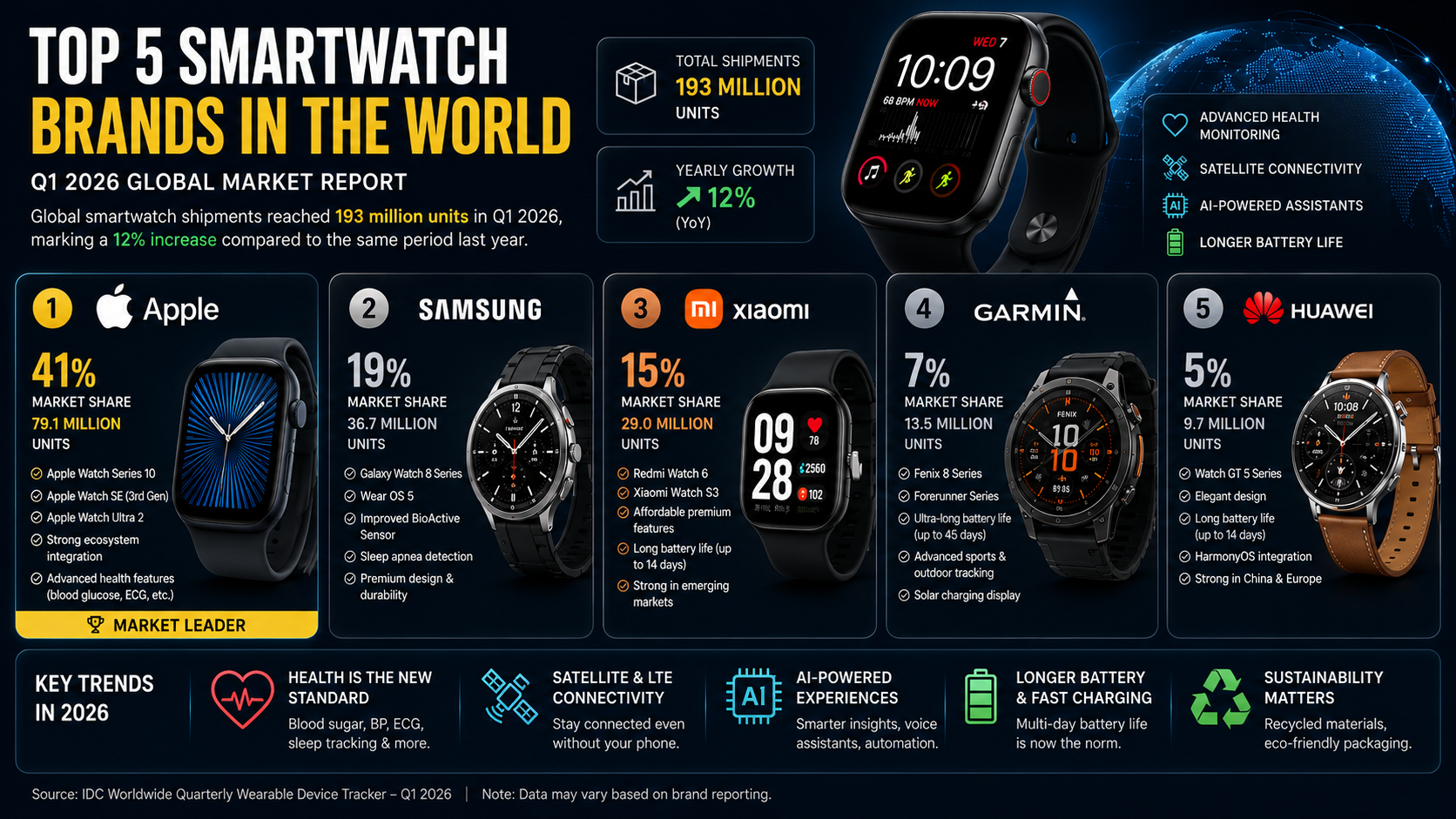
The first-half shipment reports of 2026 have sent shockwaves through the tech industry. According to data released by international market research firms, global smartwatch shipments increased by 12% compared to the same period last year, reaching a staggering 193 million units. With health tracking, satellite connectivity, and AI assistants becoming standard features, consumer demand for wrist-worn technology has never been higher.
So, who grabbed the largest slice of this massive pie? According to the latest data, while the name at the top didn't surprise consumers, the volatility within the top five provides crucial clues about the future of the sector. The rise of affordable premium models and the popularization of hybrid devices with classic watch designs have forced brands to overhaul their strategies completely.
Apple Watch: The Crown Remains Unchallenged
Tech giant Apple continued its dominance in the smartwatch market during the first half of 2026. Official reports indicate that the company alone controlled 41% of the total market share. The Apple Watch Series 10 and the 3rd generation SE models faced no real competition, especially in North American and European markets.
The biggest driving force behind Apple's success is ecosystem dependency. The high loyalty rate of iPhone users directly fuels the brand's wearable technology sales. The non-invasive blood glucose tracking feature introduced this year put the device on the radar of millions of diabetic patients, making it absolutely essential for health-conscious consumers.
New Health Sensors Trigger Upgrade Wave
Following the groundwork laid by the Apple Watch Ultra 2 launched last year, the new generation of sensors arriving in 2026 created a massive upgrade wave. Users migrated from aging Series 6 and 7 models to the newest generation, driving market growth. According to CFO Luca Maestri's statements during the recent earnings call, wearables revenue surged past $48 billion, marking an 8% year-over-year increase.
Samsung's Galaxy Ecosystem Offensive
As expected, South Korean giant Samsung secured the second spot, holding 19% of the market. The brand drew attention specifically with its Galaxy Watch 8 series, cementing its leadership among Android users thanks to the Wear OS 5 operating system and the advanced BioActive sensor.
Samsung's biggest trump card was the Galaxy Watch 8 Classic model, which brilliantly merges traditional watch aesthetics with modern tech. The physical rotating bezel and titanium case options managed to lure even mechanical watch enthusiasts into the smartwatch ecosystem. Furthermore, FDA-cleared health features like sleep apnea detection elevated the device to the status of a medical assistant.
Flexibility in Pricing Strategy
For the first time this year, Samsung attracted attention with aggressive trade-in programs and carrier promotions. Discounts of up to 30% offered to consumers trading in an old Galaxy Watch not only increased brand loyalty but also accelerated new customer acquisition. The company's strategy rests on bridging the gap between expensive premium models and affordable Fan Edition devices.
Xiaomi and the Economic Revolution
The biggest surprise, however, occurred in third place. Chinese tech giant Xiaomi claimed a 15% market share, leaving behind established rivals such as Huawei and Garmin. The Redmi Watch 6 and Xiaomi Watch S3 models sold like hotcakes in developing markets. Rising to become the undisputed market leader in India, Southeast Asia, and Latin America, Xiaomi is known for its aggressive pricing strategy.
The secret to Xiaomi's success lies in its ability to offer flagship features at mid-range prices. Despite a sub-$150 price tag, offering an AMOLED display, an SpO2 sensor, and up to 14 days of battery life leaves price-performance-oriented consumers with no alternative. This success proves that the smartwatch market is no longer just a luxury segment but is undergoing massive commoditization.
Dominance in India and Asia Pacific
According to 2026 reports, Xiaomi managed to overtake Apple in the Asia Pacific region. The digital hunger of the region's young population and the brand's extensive retail network were the main drivers of this victory. The company plans to transform its watches into a control hub for smart home devices through HyperOS integration in the upcoming quarter.
Garmin: The Athlete's Indispensable Tool
In fourth place is Garmin, a giant within a niche domain. Reaching a 7% global market share with its Fenix 8 and Forerunner series designed for professional athletes and outdoor enthusiasts, Garmin stands out as the brand with the highest profit margin per unit. The company maintains profitability by focusing on high-priced, ultra-durable, and long-lasting devices instead of the mass market.
The infinite solar charging display technology introduced this year gained cult status among ultra-marathon runners and mountaineers. Garmin's strategy relies on selling a professional coaching tool rather than just a smartwatch.
Unrivaled Battery Life
In a world where competitors still struggle with weekly charging cycles, the 45-day battery life of Garmin models stands out as the single greatest purchase motivator. According to data disclosed at the brand's 2026 user conference, 70% of users do not replace their devices for at least two years, a loyalty rate that is double the market average.
What to Consider When Buying a Smartwatch in 2026
With the market this dynamic, there are several critical points consumers must evaluate before making a decision. Displaying notifications is no longer enough; a smartwatch must act as your health coach, navigation guide, and mobile payment tool. Satellite connectivity and LTE support stand out as the most important features to look for in 2026 models. A cellular-enabled watch grants you the freedom to leave your phone at home.
Moreover, operating system compatibility is more critical than ever. While options outside of the Apple Watch remain limited for iOS users, there is a stark battery life difference between Wear OS and proprietary operating systems on the Android side. Scrutinizing data privacy policies has also become one of the hottest topics on the 2026 agenda.
The Rise of the Refurbished Market
Growing by 22% in 2025, the refurbished smartwatch market continues to gain momentum in 2026. Specifically, Apple Certified Refurbished products sell for 40% below the retail price, forming a popular alternative among high school and university students. Experts predict that access to premium brands will become even easier as quality standards in the second-hand market continue to rise.
Do you think this ranking will change by the end of 2026? Or will Apple's domination continue unchallenged, just like in the tablet market? Share your views with us, and let's evaluate the next quarterly reports together.
