A Seismic Swarm in Anatolia: Decoding the Eastern Turkey Tremors
The eastern Turkish province of Malatya experienced a significant seismic swarm in late June 2026, with dozens of tremors rattling the region over a 72-hour period. The Disaster and Emergency Management Authority (AFAD) and Bogazici University's Kandilli Observatory reported that the strongest of these earthquakes, a magnitude 4.7 tremor, struck near the Battalgazi district in the early hours of June 26. The shallow depth of the quakes, ranging between 5 and 15 kilometers, made them distinctly felt by the local population, triggering a wave of concern across a region still recovering from the devastating 2023 Kahramanmaraş earthquakes. Authorities confirmed that while there were no immediate reports of casualties, the psychological toll on residents was palpable.
Geologists analyzing the 2026 data note that this activity is concentrated along the East Anatolian Fault, a major strike-slip fault line that has been increasingly active since the doublet earthquakes of February 2023. The current swarm is interpreted as a stress adjustment process, where the Earth's crust is reacting to the massive energy release of previous years. Unlike the catastrophic events of 2023, the 2026 tremors appear to be a classic case of creeping fault movement rather than a sudden, locked-segment rupture. However, the frequency of these mid-range quakes keeps seismologists on high alert, as the region's complex fault network remains capable of producing larger, damaging events. The Kandilli Observatory reported a 40% increase in micro-seismic activity in the first half of 2026 compared to the same period in 2025, highlighting a trend of persistent unrest.
The East Anatolian Fault: A Historical Perspective on Current Risks
The East Anatolian Fault has historically been one of Turkey's most dangerous tectonic structures. The 2026 Malatya tremors serve as a stark reminder that the fault is still very much alive. Professor Ziyadin Çakır from Istanbul Technical University (ITU) explained that the current series of events is a textbook example of an aftershock sequence that has evolved into a broader seismic swarm. "We are observing energy release at multiple points along the fault segment. While this might reduce the immediate risk of a mega-thrust event in the very short term, it doesn't eliminate the danger. The fault is adjusting, and we must be prepared for fluctuations in activity," Çakır stated. The data from AFAD's 1,200 seismic monitoring stations across Turkey has been crucial in mapping these stress transfers in real-time.
International seismology centers, including the European-Mediterranean Seismological Centre (EMSC), have also been tracking the Malatya swarm. The shallow nature of the quakes has made them a subject of study for understanding ground motion amplification in alluvial basins, a phenomenon that significantly increases structural damage risk. The city of Malatya, largely built on such a basin, remains vulnerable. The 2026 events have prompted a renewed review of building codes and urban transformation projects initiated after the 2023 disaster, with engineers focusing on soil-structure interaction to prevent future collapses during moderate shaking.
Unexpected Shaking in the Black Sea: The Bartın Earthquake
In a surprising geological twist, the seismic activity on June 26, 2026, was not confined to Eastern Turkey. A magnitude 3.5 earthquake was recorded off the coast of Bartın in the Black Sea, a region typically known for its tectonic stability. The Kandilli Observatory classified this as a shallow, isolated event. The Black Sea basin is generally considered an aseismic zone compared to the highly active North and East Anatolian Faults, making this tremor a statistical anomaly. Experts from the Mineral Research and Exploration General Directorate (MTA) suggested that the quake likely resulted from minor adjustments within the Eurasian plate, far from the main plate boundaries that usually threaten Turkey.
While a 3.5 magnitude quake is considered minor and rarely causes damage, its unexpected location sparked significant scientific curiosity. "It's a wake-up call that intraplate seismicity exists and can surprise us," an MTA geologist commented. For the residents of Bartın, the tremor was a brief, gentle shake, but it served as a reminder that no region is entirely immune to the Earth's movements. The event did not trigger any tsunami warnings, and life in the coastal city continued as normal. However, AFAD utilized the event to reinforce its message of nationwide preparedness, emphasizing that the "Deprem Önlem ve Müdahale" mobile application should be installed by every citizen, regardless of their geographic location. The Black Sea quake adds a new data point to Turkey's comprehensive seismic catalog for 2026.
How Mobile Technology is Mitigating Earthquake Panic in 2026
In the digital landscape of 2026, the immediate aftermath of an earthquake is shaped by instant notifications. AFAD's mobile application has become a critical tool, sending alerts seconds before shaking reaches users in nearby areas. During the Malatya swarm, the app successfully notified thousands of residents, allowing them precious moments to take cover. This early warning system, combined with the real-time data transparency provided by the Kandilli Observatory's website, has significantly reduced the spread of misinformation. The question "Did an earthquake just happen?" is now answered definitively within seconds, curbing the panic that used to spread through social media rumors.
The integration of AI-driven analysis tools in 2026 has also improved the speed of damage assessment. By cross-referencing seismic data with population density maps, AFAD can instantly predict which areas are most likely affected and dispatch rescue teams accordingly. During the June 26 events, this system allowed the Malatya Governor's office to quickly confirm that no major structural collapses occurred, issuing a statement within minutes to calm the public. The psychological benefit of this rapid information flow is immense, particularly for a population traumatized by the slow information flow during the 2023 disaster. Technology in 2026 is not just about prediction; it is about managing the human response to natural disasters.
Rebuilding Malatya: The 2026 Urban Transformation Progress Report
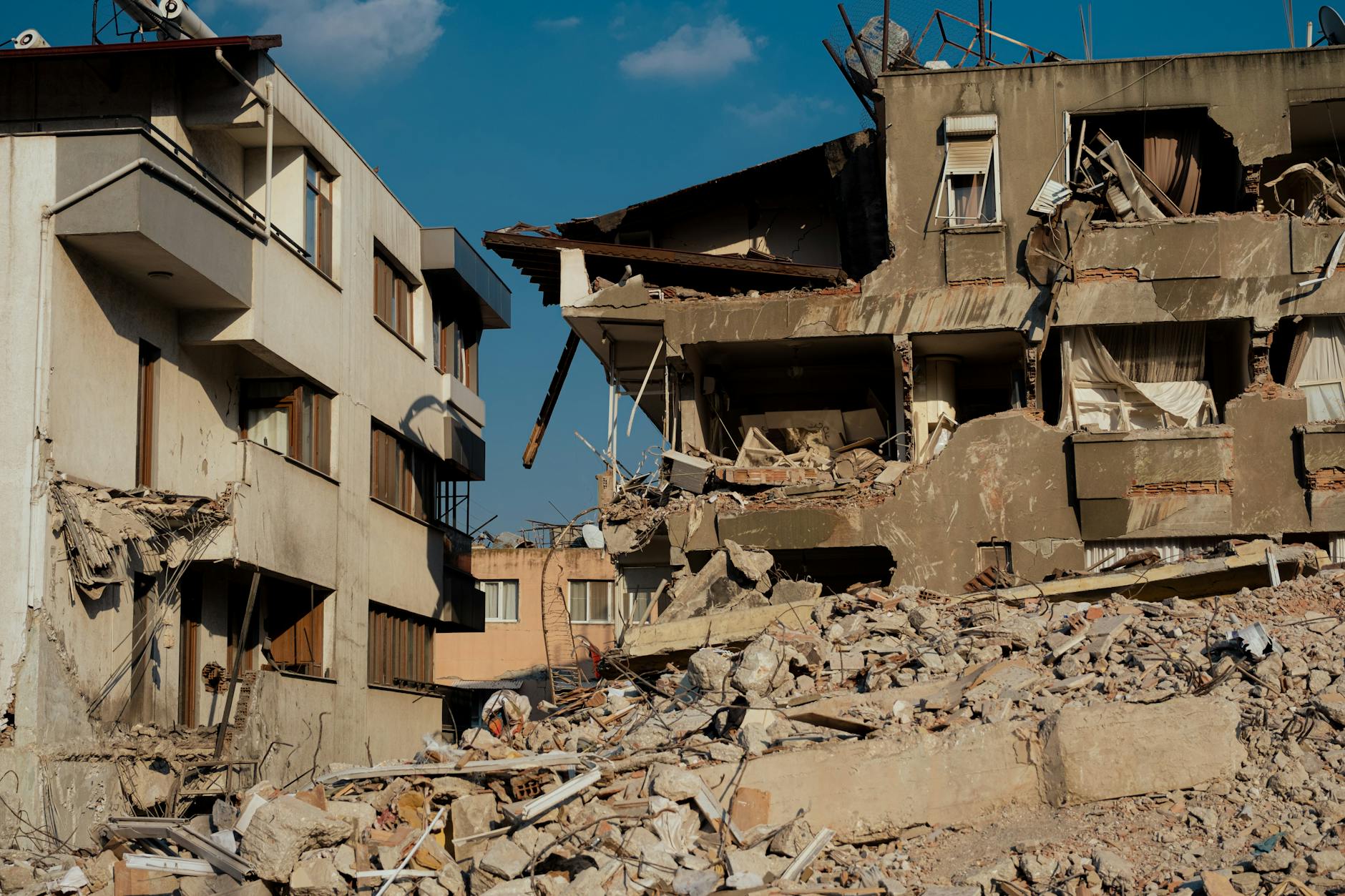
As tremors continue to shake Malatya in 2026, the city's skyline tells a story of destruction and renewal. Following the catastrophic earthquakes of 2023, Malatya became a focal point for Turkey's ambitious urban transformation campaign. As of June 2026, the Ministry of Environment, Urbanization and Climate Change reports that over 12,000 severely damaged buildings have been demolished, and construction of 10,000 new, earthquake-resistant housing units is underway in designated reserve areas. The recent tremors have provided an inadvertent stress test for these newly built structures, and early reports indicate they performed flawlessly, with no structural damage detected.
Minister Mehmet Özhaseki announced in May 2026 that the government aims to deliver 20,000 new homes to beneficiaries in Malatya by the end of the year. The new constructions adhere strictly to the updated Turkish Building Earthquake Code, featuring raft foundations and tunnel formwork systems designed to absorb seismic energy. However, challenges remain in rural outskirts where traditional adobe and masonry houses are still prevalent. The 2026 swarm has re-energized the debate on rural transformation, with civil engineers calling for accelerated demolition of high-risk village structures. The contrast between the unscathed new developments and the cracked plaster of older buildings serves as the most compelling argument for the continuation of the urban renewal drive.
Turkey's Seismic Reality in a Global Context
Turkey's ongoing struggle with seismic events in 2026 places it at the center of global discussions on disaster resilience. Situated at the collision zone of the Eurasian, Arabian, and African tectonic plates, the country experiences some of the most complex seismicity on the planet. The Malatya swarm is being studied by international teams from the U.S. Geological Survey (USGS) and Japanese disaster prevention agencies, who see the East Anatolian Fault as a natural laboratory for understanding fault interactions. The data gathered here in 2026 will contribute to global earthquake forecasting models, potentially saving lives in other seismically active regions like California and Japan.
As Turkey navigates the summer of 2026, the message from authorities is clear: the ground will continue to move, but resilience is built through science and engineering. The psychological scars of 2023 are still fresh, and every new tremor tests the nation's collective nerve. Yet, the rapid response, transparent data sharing, and visible progress in reconstruction observed in June 2026 offer a blueprint for living with seismic risk. The Earth's crust in Eastern Turkey is adjusting, and while the shaking may persist, the country's capacity to withstand it is demonstrably improving, one earthquake-resistant building at a time.
