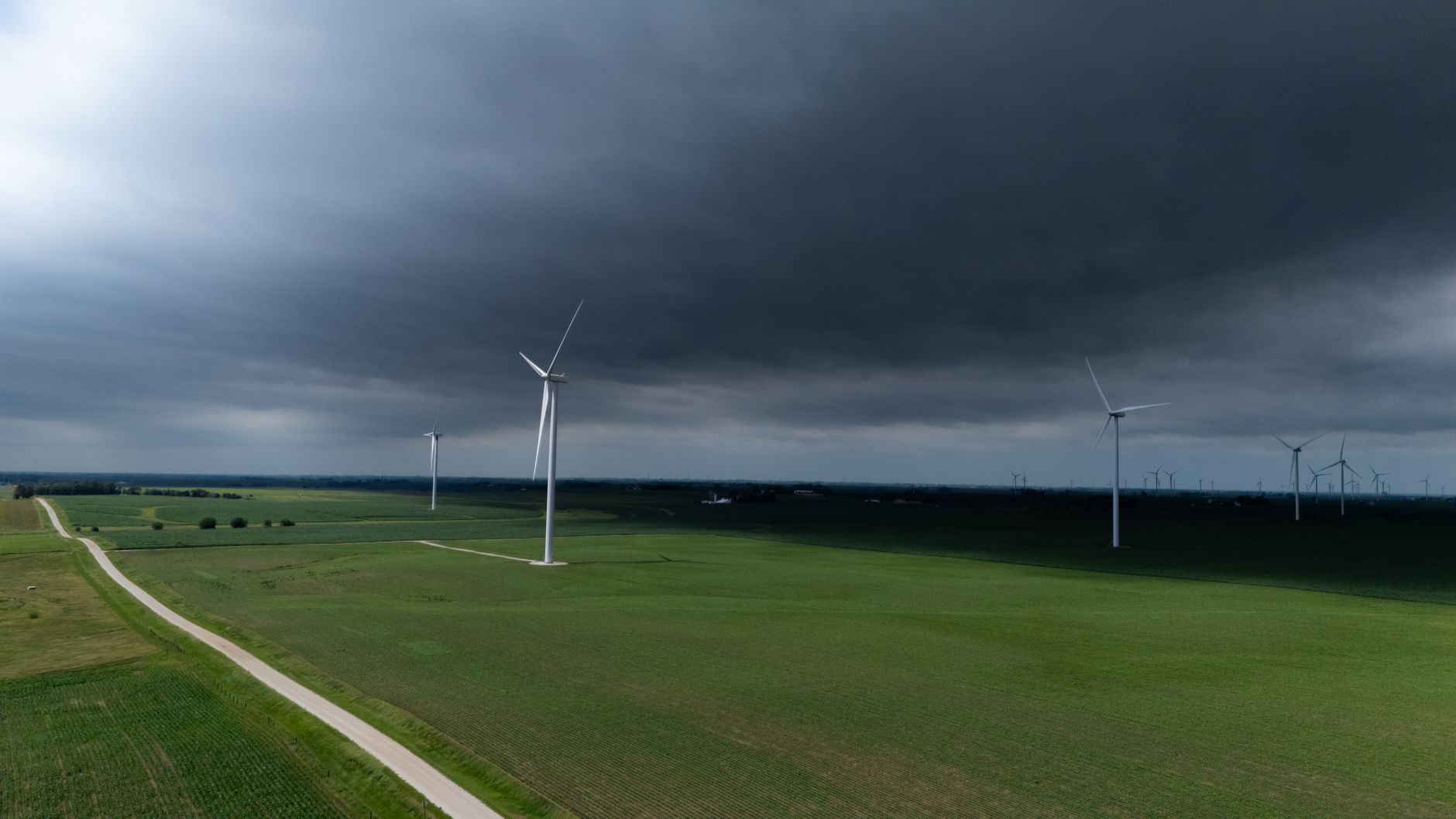
The global race to decarbonize is no longer about setting distant targets—it is about executing grand engineering projects at breakneck speed. China, the world's largest polluter and the leading manufacturer of clean energy hardware, has laid out a comprehensive six-part strategy that aims to dismantle the fossil fuel era within the next decade. Dubbed the 'Air, Water, and Electricity' trinity, the plan represents Beijing's most aggressive attempt yet to weaponize green technology for economic and geopolitical supremacy in a post-oil world.
The strategic architecture of China's energy shift
Unlike Western roadmaps that often rely heavily on carbon pricing and market incentives, China's approach is a centrally orchestrated industrial policy. The plan dissects the economy into six distinct layers, each with a specific technological mandate. The first layer targets the power grid itself, aiming to create a 'super grid' capable of transmitting renewable energy from resource-rich western deserts to the industrial powerhouses of the east with minimal loss. By 2026, the State Grid Corporation of China (SGCC) has successfully deployed ultra-high-voltage direct current (UHVDC) lines that span over 40,000 kilometers, a feat unmatched by any other nation.
The second and third layers focus on the electrification of transport, but with a twist that goes beyond standard electric vehicles (EVs). While BYD and NIO dominate the global EV conversation, the plan accelerates the shift to synthetic fuels for aviation and green methanol for maritime shipping. The fourth layer is perhaps the most critical: decarbonizing heavy industry. Here, China is betting big on green hydrogen to replace coking coal in steel mills and natural gas in chemical plants. The final two layers encompass 'Air' technologies—direct carbon capture and atmospheric water generation—and 'Water' technologies, which integrate desalination with pumped hydro storage to create a closed-loop water-energy nexus.
From importer to grid superpower
For decades, China's foreign policy was shaped by the 'Malacca Dilemma'—the fear that a naval blockade could choke off oil supplies. The new plan effectively solves this strategic vulnerability. By 2026, China's renewable capacity has surpassed 1,500 gigawatts, making it less susceptible to volatile oil and gas markets. This shift is not just domestic; Beijing is exporting its grid architecture through the Belt and Road Initiative, hooking neighboring countries onto its energy standards and creating a sphere of electrical influence that rivals the petrodollar system.
Green hydrogen: the backbone of industrial decarbonization
While solar panels and wind turbines grab headlines, green hydrogen is the silent workhorse of China's plan. The country has installed massive electrolyzer capacity in the Inner Mongolia and Xinjiang regions, areas blessed with abundant solar and wind resources. These facilities split water molecules to produce hydrogen without any carbon emissions, provided the electricity source is renewable. The International Energy Agency (IEA) noted in its mid-2026 report that China now accounts for over 60% of the world's electrolyzer manufacturing capacity, giving it a chokehold on the global supply chain for this critical technology.
The economic logic is ruthless. By driving down the cost of electrolyzers through mass manufacturing, China has slashed the price of green hydrogen to under $2 per kilogram in optimal regions, breaching the cost-parity threshold with grey hydrogen derived from natural gas. This has profound implications for industries like steelmaking. China's Baowu Steel, the world's largest steel producer, has already commenced operations at a hydrogen-based direct reduced iron (DRI) plant in 2026, signaling the beginning of the end for blast furnaces. This transition not only cuts emissions but also shields Chinese exporters from the European Union's Carbon Border Adjustment Mechanism (CBAM) tariffs.
The water-energy nexus in hydrogen production
A critical bottleneck for green hydrogen is water scarcity, especially in the arid regions where solar potential is highest. China's plan addresses this by coupling electrolysis plants with advanced desalination facilities along the coast and developing water recycling systems inland. The waste heat from electrolysis is captured and funneled into district heating networks or used to boost the efficiency of desalination, creating a symbiotic industrial ecosystem. This integrated design thinking, treating air, water, and electricity as a single thermodynamic system, is what makes the plan technically formidable.
Air power and the next frontier of aviation
The 'Air' component of the plan extends beyond carbon capture to the literal conquest of the skies. China is aggressively pursuing the electrification of aviation, a sector that has lagged behind road transport in the green transition. Battery giant CATL unveiled a condensed battery with an energy density of 500 Wh/kg in 2025, a breakthrough that has matured into commercial applications by 2026. This energy density makes regional electric flight viable, and Chinese airlines have placed orders for hundreds of electric commuter aircraft to service the country's vast network of smaller cities.
For longer flights where batteries remain too heavy, China is investing in power-to-liquid (PtL) technologies. Direct air capture (DAC) machines, which suck carbon dioxide from the atmosphere, are being combined with green hydrogen to synthesize jet fuel. While Western DAC companies like Climeworks have pioneered the field, China's state-backed approach is scaling these facilities at an industrial pace. A mega-plant in the Gobi Desert, operational since early 2026, is producing synthetic kerosene at costs approaching $2 per liter, a price point that challenges traditional fossil jet fuel when carbon taxes are factored in.
The low-altitude economy and urban logistics
Below the realm of commercial jets, China is building a 'low-altitude economy' based on electric vertical take-off and landing (eVTOL) vehicles and delivery drones. Cities like Shenzhen have designated air corridors where autonomous cargo drones zip between warehouses, bypassing congested streets. This is not a futuristic concept; it is a logistics reality in 2026. The integration of 5G-Advanced networks with air traffic control systems allows for the safe management of thousands of low-altitude flights, creating a three-dimensional transport grid that reduces the need for petroleum-based delivery vans.
Geopolitical ripples of a post-oil China
The implications of China's energy transformation ripple far beyond its borders. As the world's largest oil importer begins to structurally reduce its demand, global crude prices face a long-term bearish pressure that OPEC+ struggles to manage. By 2026, China's oil import growth has flatlined, a trend that analysts attribute directly to the rapid electrification of its vehicle fleet and the substitution of petrochemical feedstocks with green hydrogen. This shift is redrawing the map of energy geopolitics, diminishing the strategic relevance of the Strait of Hormuz while elevating the importance of lithium reserves and rare earth processing capabilities.
For the Global South, China offers a new model of energy dependency. Instead of selling fuel, Beijing is exporting turnkey energy systems—solar farms, grid infrastructure, and hydrogen hubs—locking recipient nations into Chinese technological standards for decades. This form of soft power is arguably more sticky than the old resource extraction model. For the West, the challenge is stark: match China's state-driven scale and speed or risk losing the commanding heights of the next industrial revolution. The six-part plan is not just an environmental document; it is a declaration of intent to lead the global economy in the age of air, water, and electricity.
As the summer of 2026 draws to a close, China's experiment is entering its most critical phase. The technological pieces are in place, but the challenge of integrating them into a seamless, resilient system remains monumental. The success or failure of this plan will determine not only the trajectory of global carbon emissions but also the balance of economic power for the rest of the 21st century. The age of oil is not over yet, but for the first time, its end is visible on the engineering blueprints coming out of Beijing.
