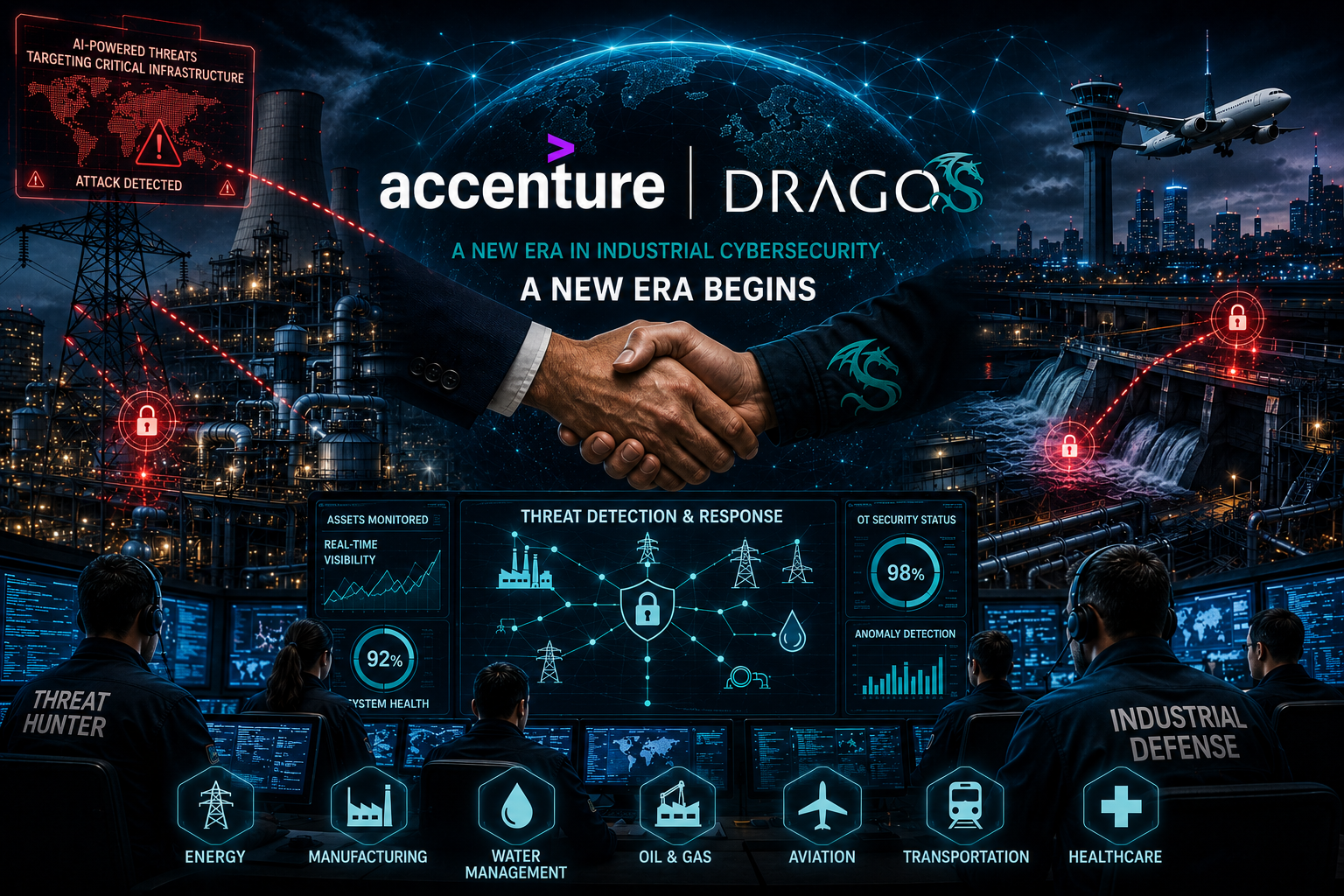
Imagine waking up on June 19, 2026, to a collapsed power grid, disabled water treatment plants, and paralyzed air traffic control systems. This isn't a dystopian movie script — it's the stark reality of a world where AI-amplified cyberattacks on critical infrastructure surged by 73% in the energy sector alone in 2025. Today, Accenture is making a historic move to counter this nightmare by acquiring a majority stake in industrial cybersecurity powerhouse Dragos.
The New Battlefield: Critical Infrastructure Under Siege
Over the past year, nation-state-backed hacking groups have unleashed relentless assaults on everything from power plants to oil pipelines. In the first half of 2026, ransomware gangs using generative AI have slashed zero-day exploit weaponization times to under 12 hours. The adversary on the cyber front now learns and adapts faster than human reflexes can cope. Accenture’s move comes at the most critical juncture in the battle to redefine infrastructure defense against these next-generation threats.
Geopolitical turmoil is pouring fuel on the fire. A massive cyber-physical attack on Ukraine's energy infrastructure in autumn 2025 put NATO countries on high alert. Simultaneously, suspected operations targeting undersea communication cables in the Asia-Pacific exposed the fragility of global digital connectivity. In this climate, protecting operational technology (OT) — the systems that manage physical processes, not just IT networks — has become a national security imperative, not just a corporate checkbox.
From Blackouts to Close Calls: Real-World Incidents in 2025-2026
The numbers paint a clear picture: Dragos’ own report shows an 87% increase in attacks on industrial control systems in 2025. In March 2026, a Northern European country narrowly avoided a catastrophic pressure explosion at a natural gas compressor station, all because manipulated sensor data fooled the safety system. Experts agree that as such incidents multiply, investments in OT security have never been more existential.
Accenture's Strategic Play: The Dragos Acquisition
With this deal, Accenture aims to turn its already colossal $10 billion cybersecurity business into an end-to-end platform. Dragos brings unmatched expertise in threat hunting and incident response for the world’s most complex industrial environments — chemical facilities, transmission grids, smart city ecosystems. The proprietary Dragos Platform is designed to detect anomalies in OT networks in real time and neutralize cyber intrusions within milliseconds of their first signal.
The combined solution promises an integrated shield covering the entire attack surface, from enterprise IT to the sensors in the field. Combined with Accenture’s global consulting muscle and managed security services, the platform becomes instantly deployable for everyone from energy giants to municipal utilities. Analysts peg the deal value above $2 billion, making it one of the largest acquisitions in OT cybersecurity history.
Inside Dragos: Why Industrial Control System Security Matters Now
What makes Dragos unique is the pedigree of its founding team, with roots in the NSA and U.S. Cyber Command. The company has reverse-engineered history’s most sophisticated OT attacks, from Stuxnet to Industroyer2. That experience is priceless for finding vulnerabilities in protocols like DNP3 or Modbus used in power grids. By acquiring these capabilities, Accenture could secure a technological lead of at least 3-5 years over competitors.
The AI and Geopolitical Nexus
The 2026 threat landscape is shaped by AI's dual-use nature. Attackers use large language models to automate convincing phishing campaigns and even generate custom malware targeting PLCs (Programmable Logic Controllers) in seconds. On the defense side, Dragos’ machine learning algorithms learn the language of industrial protocols to distinguish malicious signals from normal operational noise. Accenture plans to integrate these with its own Generative AI labs to cut threat hunters’ workload by 40%.
Geopolitical risk is the other half of the equation. The U.S. Cybersecurity and Infrastructure Security Agency (CISA) has allocated 30% of its 2026 budget to private-sector information sharing. Meanwhile, the EU’s newly enforced NIS2 directive imposes heavy penalties on energy, transport, and healthcare sectors. The Accenture-Dragos partnership is positioning itself as perhaps the only comprehensive commercial solution ready to meet this regulatory wave.
How AI Is Reshaping Both Offense and Defense in Cyberspace
Consider this: in 2025, a ransomware gang used AI to seize control of a water treatment plant’s chlorine dosage system, manipulating values until the ransom was paid. In a similar scenario, the Dragos platform would detect micro-fluctuations in chlorine levels and trigger an automatic shutdown protocol 8 minutes before any human could intervene. That’s exactly the difference Accenture wants to scale at an industrial level.
What It Means for the Future of Global Security
This acquisition is the loudest signal yet of a consolidation wave in the cybersecurity industry. Protecting office networks is no longer enough; a new firewall is rising at the convergence of the physical and digital worlds. Accenture’s Fortune 500 and government clients can leapfrog their OT maturity levels overnight. Rivals like CrowdStrike and Palo Alto Networks will be forced into similar acquisitions to beef up their own OT portfolios.
In the long run, critical infrastructure security is becoming not a cost center but a geopolitical trump card. With this position, Accenture ensures it has a seat at the table in tomorrow’s digital sovereignty battles. But the real question lingers: can a single company’s platform truly provide end-to-end protection against state-sponsored attacks? The answer may lie not just in technology, but in international cooperation and regulation.
Preparing for the Unthinkable: A Call to Action for CEOs
According to Dragos data, 89% of OT environments harbor at least one critical vulnerability, and the average detection time is 287 days. With Accenture's platform, the goal is to bring that down to 24 hours. The question every boardroom must ask today is: How many minutes can your infrastructure withstand the next AI-powered attack? Don’t wait for the answer — the attackers aren’t waiting.
