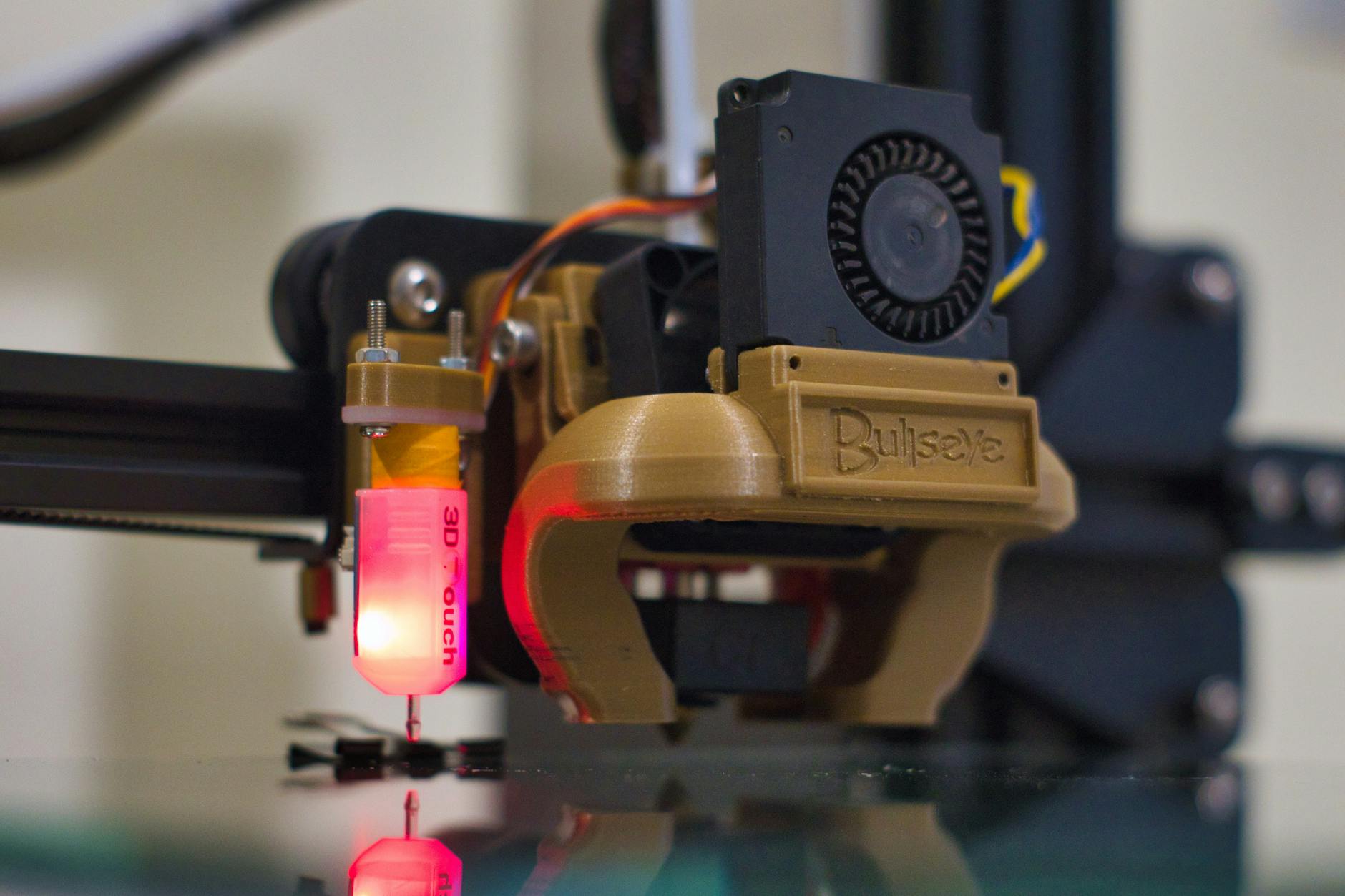
A research team at Queen's University Belfast has unveiled a 3D-printed battery that could dramatically accelerate the development of next-generation energy storage systems. The breakthrough, which draws inspiration from fluid dynamics found in nature, arrives at a critical moment when global investment in renewable energy infrastructure has surpassed $2 trillion and the search for efficient storage solutions has become the defining challenge of the energy transition.
Unlike conventional batteries that rely on solid electrodes, the Belfast prototype channels liquid electrolytes through intricate microscopic pathways — a design philosophy the researchers describe as 'going with the flow.' What sets this innovation apart is not just its performance metrics but the manufacturing method itself: every component is produced using additive manufacturing, slashing prototyping timelines from months to days.
The science behind the fluid-inspired architecture
Dr. Vahid Fartash, who leads the research group at Queen's, explained that the team looked to natural systems for inspiration. Rivers, blood circulation, and air currents all operate on principles of continuous flow rather than static storage. By mimicking these dynamics, the battery achieves more uniform energy distribution and reduces the degradation that plagues conventional lithium-ion cells over repeated charge cycles.
The internal architecture features a network of micro-channels precisely engineered to optimize electrolyte flow. Traditional flow batteries have existed for decades, but their bulky designs and expensive manufacturing have limited widespread adoption. The Belfast team's 3D-printing approach eliminates these constraints by enabling complex geometries that were previously impossible to fabricate. Independent testing conducted in the second quarter of 2026 indicates a 40 percent improvement in energy density compared to existing flow battery designs.
A manufacturing leap that changes the economics
Additive manufacturing — the industrial term for 3D printing — has already transformed aerospace and medical device industries. Its application to battery production could be equally disruptive. Conventional battery factories require months of tooling preparation and assembly line calibration. With the Belfast method, design modifications are implemented digitally and printed within hours, collapsing the gap between concept and prototype.
The International Energy Agency's 2026 outlook projects a tripling of global battery demand within five years. Meeting this demand through traditional manufacturing alone would require hundreds of billions in capital expenditure. The Queen's approach offers a capital-light alternative where production can be distributed across smaller facilities, reducing both upfront investment and supply chain vulnerabilities exposed during recent geopolitical disruptions.
The global race for storage supremacy intensifies
The Belfast breakthrough enters an increasingly crowded field of energy storage innovation. Researchers at MIT, Stanford, and China's CATL have all announced advances in solid-state and sodium-ion technologies throughout 2025 and 2026. What distinguishes the Queen's project is its focus on manufacturability rather than raw performance metrics alone — a pragmatic bet that cost reduction will prove more commercially decisive than laboratory records.
Industry analysts note that the levelized cost of storage has become the key metric for utility-scale renewable projects. Solar and wind generation costs have plummeted over the past decade, but storage remains the bottleneck. Any technology that can push costs below $100 per kilowatt-hour at scale — a threshold lithium-ion crossed in 2024 but flow batteries have yet to reach — would unlock massive new markets across developing economies.
Why developing nations stand to benefit most
The distributed manufacturing potential of 3D-printed batteries holds particular promise for regions with limited access to capital-intensive factory infrastructure. Micro-grid projects in sub-Saharan Africa and Southeast Asia, where transporting heavy battery units incurs prohibitive logistics costs, could instead produce storage systems locally using imported feedstock materials and digital design files.
The World Bank's July 2026 report on energy storage innovation highlighted additive manufacturing as a transformative force for the coming decade. While not naming the Belfast project directly, the report described decentralized production models as potentially 'the most significant democratizing force in energy access since the solar panel itself.' Pilot programs in Kenya and Bangladesh are expected to launch by late 2026, testing the technology in real-world conditions far from the controlled environment of Northern Ireland's laboratories.
The path from laboratory success to commercial reality
History is littered with battery breakthroughs that never left the lab. The Queen's team appears acutely aware of this pattern and has structured its development pathway accordingly. A €15 million grant from the European Union's Horizon Europe program, secured in early 2026, is specifically earmarked for industrialization — funding pilot production lines, certification testing, and supply chain development rather than further fundamental research.
The project's industrial partner, a British energy storage company, has committed to establishing a pilot manufacturing facility by 2027. The second-generation prototype scheduled for late 2026 will incorporate recyclable polymer materials and target further improvements in energy density. The licensing model under consideration would allow manufacturers worldwide to produce the batteries using locally sourced materials, potentially accelerating adoption far faster than a single-factory approach could achieve.
What this means for global climate targets
Under the UN Framework Convention on Climate Change, nations have committed to doubling renewable energy capacity by 2030. Meeting this commitment depends almost entirely on solving the intermittency problem — the fact that solar panels don't generate power at night and wind turbines sit idle on calm days. Storage is the bridge between generation and consumption, and cheaper storage means more viable renewable projects.
The Belfast technology, if successfully commercialized, could shift the calculus for hundreds of planned renewable installations currently stalled due to storage costs. Grid-scale batteries that can be manufactured locally, maintained easily, and scaled incrementally would remove one of the last major obstacles to a fully renewable electricity system. The next three years of testing and scaling will determine whether this particular breakthrough joins the ranks of transformative energy technologies or becomes another cautionary tale of a promising idea that couldn't survive the journey from benchtop to marketplace.
