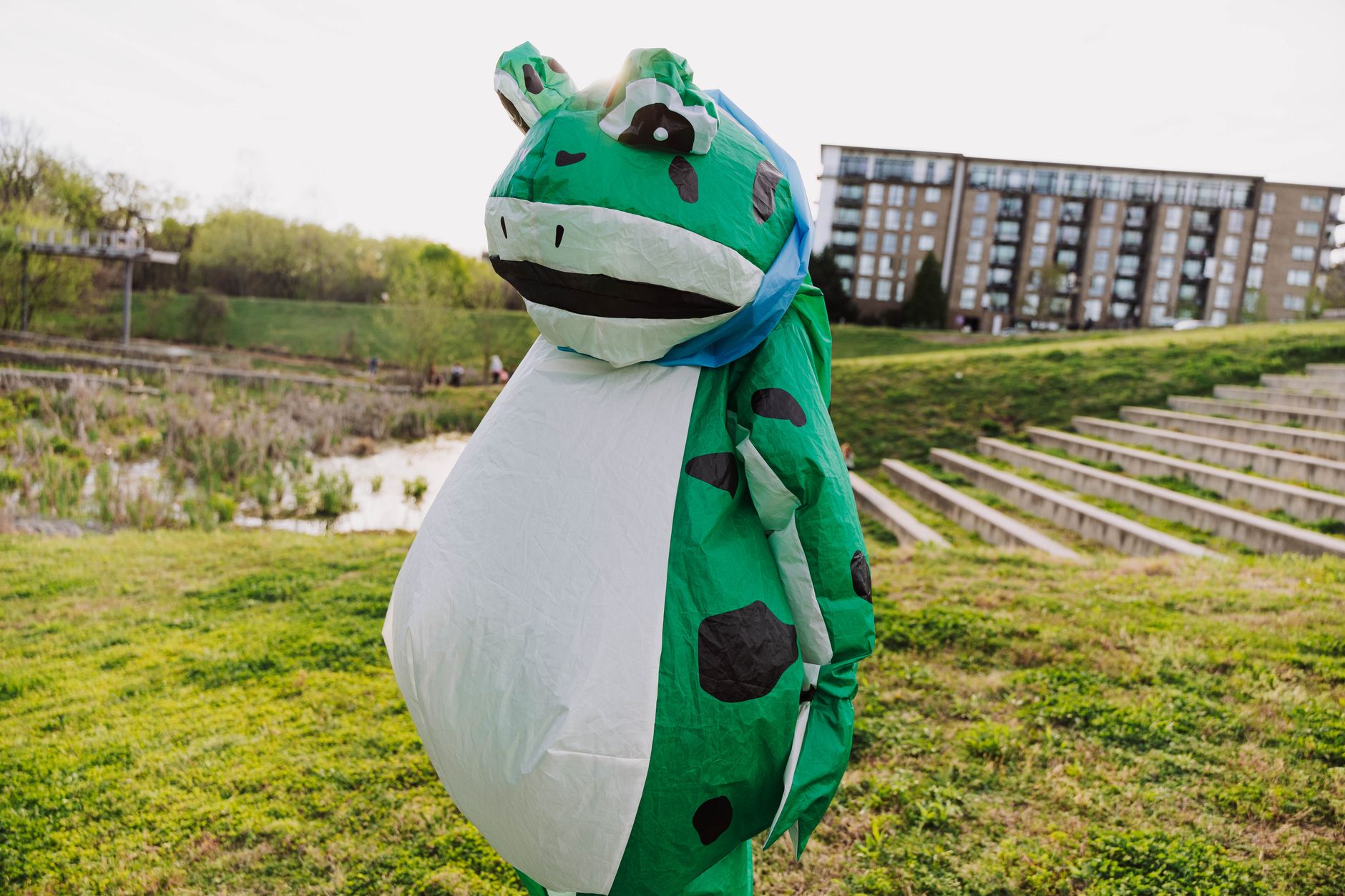
When the official mascots of the 2026 FIFA World Cup — 'Striker' the Andean condor and 'Goalita' the llama-soccer ball hybrid — began dancing through the narrow streets of a Lima neighborhood on June 17, 2026, residents assumed it was just another promotional event ahead of the tournament. What they didn't know was that inside those licensed costumes were two of Peru's most elite narcotics officers, and their target was 34-year-old international drug trafficker Carlos Mendez. The arrest that followed has not only made headlines in Peru but has also redefined 'creative policing' for law enforcement agencies worldwide.
Since the start of 2026, Peru has been swept up in the massive security wave surrounding the first-ever tri-nation World Cup hosted by the USA, Canada, and Mexico. Even though the tournament is not being held in South America, the pressure on the continent's drug trafficking routes has reached unprecedented levels. Police have had to resort to unconventional methods to combat the surge in cocaine shipments, particularly through Lima's port of Callao. This mascot operation was a direct result of that necessity, exposing the dark intersection between global sports celebrations and transnational crime.
The Unusual Strategy Behind the Operation
According to Peru's Ministry of the Interior, the sting was the culmination of an eight-month intelligence operation. Authorities had identified that Carlos Mendez was planning to exploit the surge in tourist traffic triggered by World Cup fever to ship a massive quantity of cocaine to Europe. Mendez's fatal flaw? His 12-year-old son was an obsessive football fan who constantly posted about the 2026 World Cup mascots on social media. This gave the police an unexpected psychological entry point into Mendez's inner circle.
Narcotics Division Chief Commissioner Miguel Torres explained to the press: 'We analyzed our target's vulnerabilities. By organizing a mascot event that the entire family would attend, we aimed to build trust and gather evidence. The 2026 mascot costumes were sourced officially from FIFA's licensed manufacturer following a formal request. Every step of this operation was conducted in full compliance with international law.' The revelation that a government agency had ordered official World Cup merchandise for an undercover operation has sparked both admiration and legal scrutiny.
How the Undercover Officers Trained in Mascot Costumes
Two narcotics agents underwent three weeks of specialized training before the operation. The program was not merely about overcoming the physical challenges of wearing bulky costumes but also mastering the official choreography of 'Striker' and 'Goalita.' Temperatures inside the suits often soared to 40 degrees Celsius, but the agents persevered. They even practiced drawing weapons and applying handcuffs while in full mascot gear, a scenario repeatedly rehearsed with the backing of Peru's Ministry of Sports.
On the day of the operation, the mascot show was presented as a surprise birthday gift for Mendez's son—timed to ensure that all family members were present at home. As the mascots performed their dance routine, a 20-member tactical team positioned outside stormed the residence in just 22 seconds. Mendez was caught completely off guard, and the arrest was executed without a single injury. Videos of the moment, showing 'Striker' lifting the boy's hands in celebration before suddenly revealing a police badge, have since gone viral with millions of views.
Peru's Drug Routes and the World Cup Threat
Peru remains one of the world's largest cocaine producers alongside Colombia and Bolivia. According to a 2025 report by the United Nations Office on Drugs and Crime (UNODC), coca cultivation areas in the country have expanded by 18 percent over the past five years, reaching 75,000 hectares. The port of Callao serves as the critical exit point for cocaine bound for Europe, and the 2026 World Cup has unexpectedly accelerated this traffic. The explosion in tourist numbers traveling across the Americas for the tournament has provided drug cartels with the perfect logistical camouflage.
Police records show that in the first six months of 2026, cocaine seizures in Lima increased by 34 percent compared to the same period in 2025. Authorities believe this spike is directly linked to the World Cup's logistical frenzy. In this context, the mascot operation was more than just the capture of a single suspect—it was a symbolic message sent deep into the global drug network. Commissioner Torres emphasized: 'If the cartels are creative, we have to be even more creative.'
International Security Cooperation During the World Cup
The 2026 World Cup, being the first to be co-hosted by three nations, has necessitated a security apparatus of unprecedented complexity. The joint security commission formed by the USA, Canada, and Mexico has intensified intelligence sharing with transit countries like Peru. The mascot operation's intelligence backbone received critical support from the Lima office of the U.S. Drug Enforcement Administration (DEA).
Law enforcement agencies across the Americas are increasingly adopting proactive strategies. The Peruvian operation has already become a case study in international policing conferences. Experts argue that major sporting events, while presenting massive security challenges, also offer unique opportunities for strategic operations. The Mendez case demonstrates how hyper-local intelligence—in this case, a child's social media activity—can dismantle global criminal networks.
Creative Police Tactics: From Peru to Global Examples
While the mascot sting has captured global headlines, the history of unconventional police operations is extensive. In 2025, Mexican police infiltrated a drug cartel by dressing as Santa Claus; in 2023, Colombian agents disguised as funeral workers uncovered a cocaine shipment hidden in a cemetery. However, the use of licensed World Cup costumes brings a new dimension of legal and ethical complexity to the debate.
FIFA spokesperson Gianni Russo issued a statement: 'We are in consultation with Peruvian authorities regarding the use of our mascot costumes. While we support the fight against crime in principle, the licensing agreement will need to be reviewed.' Legal experts note that the defense could raise procedural questions, though Mendez's lawyer has so far refrained from filing any formal objections. The 6,000-dollar cost of the costumes and the three-week training period were more than justified by the seizure of 45 kilograms of pure cocaine and 2.3 million dollars in cash found at Mendez's residence.
History's Most Intriguing Disguise Operations
Disguises have always been a part of policing, but the 2026 fusion of creativity and technology has reached a new level. In Japan last year, drone-mounted cat-sound emitters helped locate homeless suspects. In Spain, hologram technology was deployed to apprehend a bank robber. Peru's mascot operation stands as the most striking example of how sports organizations can become platforms for crime-fighting.
Security analysts are now weighing the cost-effectiveness of such tactics. The psychological impact on suspects' families, particularly children, remains a controversial subject. Psychologists consulted by Peruvian media have warned that the boy's positive memory of the mascots may be deeply complicated by the trauma of his father's arrest. Yet the Peruvian government stands firmly behind the operation, calling it a necessary evolution in the cat-and-mouse game with organized crime.
The Moment of Arrest and the Legal Aftermath
When the operation's footage leaked to the press, the images went viral almost instantly. The video shows Mendez's son raising his hands in joy as the mascots approach—then, in a flash, the costumes come off, guns are drawn, and the tactical team floods the room. Amid the boy's confusion and his mother's screams, Mendez surrendered without resistance. The entire sequence lasted less than forty seconds.
Carlos Mendez is now being held in a high-security prison in Lima, facing charges of drug trafficking, money laundering, and organized crime membership. His first court hearing is scheduled for June 22, 2026. The prosecution has prepared a 40-page indictment detailing Mendez's connections to cartels in Brazil, Spain, and the Netherlands. In his initial defense statement submitted through his lawyer, Mendez argued: 'Exploiting my family's emotions for an arrest is unacceptable in a state governed by the rule of law.'
The Suspect's Statements and Connections
However, the police are ready to present wiretap recordings in which Mendez described the 2026 World Cup final day as 'the perfect date' for a massive shipment. The intelligence suggests he was planning to exploit the global distraction of the final match to move cocaine through Callao. International connections remain the most critical dimension of the investigation; Mendez is believed to be directly linked to an Amsterdam-based network and the favelas of Rio de Janeiro.
Peruvian authorities have already shared the intelligence gathered during the mascot operation with Brazilian and Dutch counterparts, paving the way for a coordinated international crackdown. This development is being hailed as one of the key security legacies of the 2026 World Cup. The case proves that even in an age of encrypted communications and dark web transactions, the most sophisticated criminals can still be undone by a child's innocent love for a mascot.
The Peruvian police's mascot operation did more than deliver a criminal to justice—it demonstrated to the world that the fight against organized crime can be creative, resolute, and, at times, unexpectedly humane. The boy's reported words after the arrest, 'I really loved the mascots,' remain the most ironic and unforgettable detail of the entire affair. So the question remains: Should police forces continue to push the boundaries of creative tactics, or do such methods risk exploiting the emotions of innocent people? Share your thoughts.