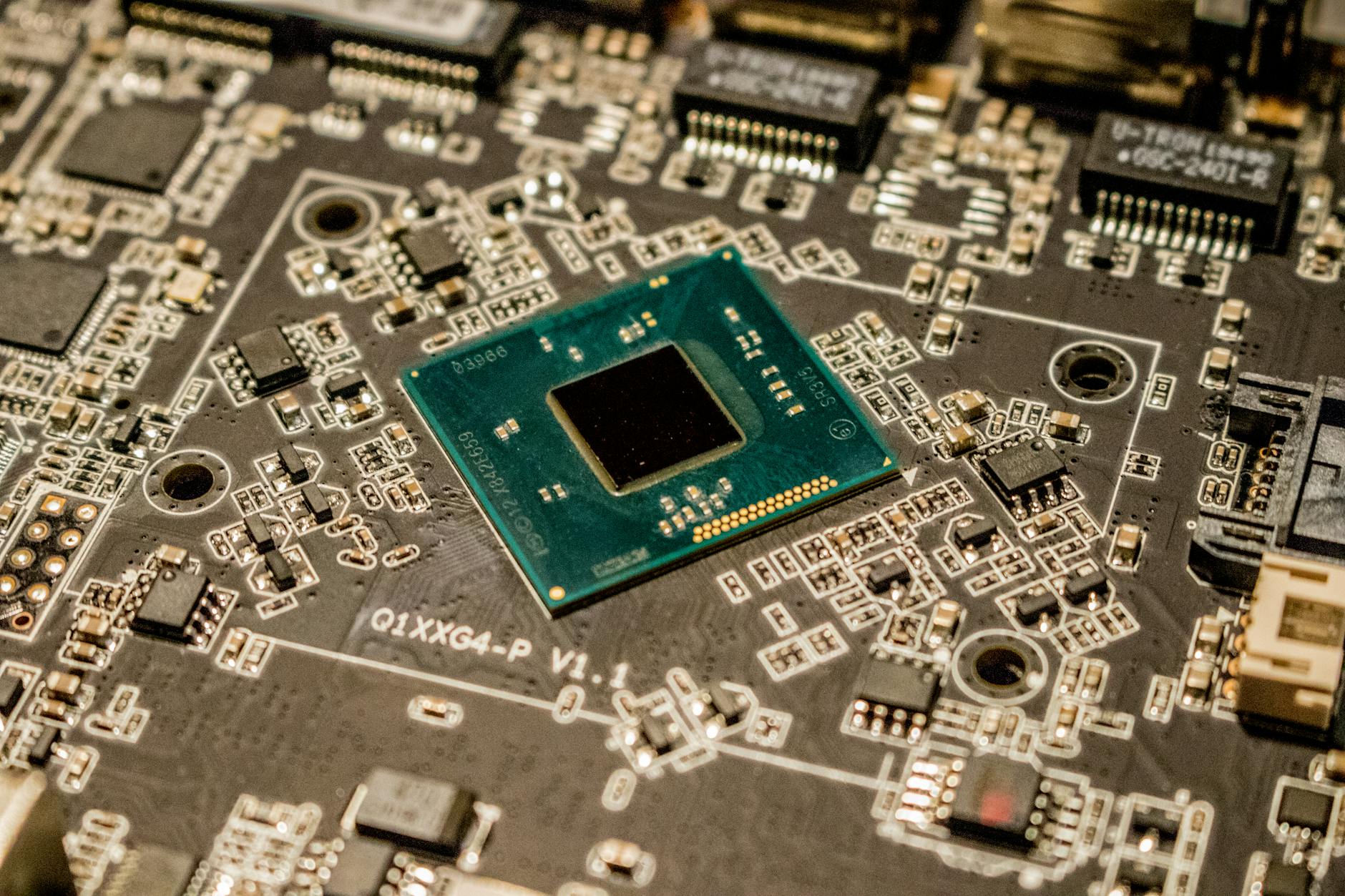
As the second half of 2026 unfolds, a quiet but significant crisis is reshaping the global smartphone industry. Taiwan Semiconductor Manufacturing Company (TSMC), the world's most advanced contract chipmaker, is diverting a substantial portion of its cutting-edge production capacity toward artificial intelligence processors, leaving mobile chip orders squeezed and smartphone manufacturers scrambling to adjust their flagship device specifications for the upcoming launch season.
The ripple effects of this strategic shift are being felt from Cupertino to Seoul, and from Shenzhen to Istanbul. For consumers worldwide, this means the 2026 flagship phones may not deliver the generational performance leap they have come to expect. Instead of faster graphics and more powerful on-device AI, buyers might see incremental updates masked by aggressive software optimization and marketing narratives focused on ecosystem integration rather than raw hardware specs.
TSMC's strategic pivot: Why AI chips are winning the capacity war
TSMC, headquartered in Hsinchu, Taiwan, controls approximately 60% of the global foundry market and an even more dominant share in advanced nodes below 7 nanometers. The company's 3-nanometer process, known as N3 and N3E, is the backbone of today's most powerful mobile processors, including Apple's A18 Pro and Qualcomm's Snapdragon 8 Gen 4. However, since early 2025, the explosive demand for AI accelerators from companies like NVIDIA, AMD, and Amazon Web Services has fundamentally altered TSMC's allocation priorities.
AI chips, such as NVIDIA's H200 and B100 series, are significantly larger in die size compared to smartphone processors. A single AI accelerator wafer consumes several times more production capacity than a wafer dedicated to mobile SoCs. Economically, TSMC generates substantially higher revenue per wafer from AI chip production, creating an irresistible incentive to prioritize these orders. By mid-2026, industry insiders report that mobile chip allocations at TSMC's advanced nodes have been reduced by an estimated 15-20% compared to original projections, forcing smartphone brands to make difficult engineering decisions.
The 3nm bottleneck: Why advanced nodes are stretched to their limits
The N3 node family represents TSMC's most mature advanced technology, but it is also the most oversubscribed. With only a limited number of fabrication lines capable of producing 3nm chips, the competition for slots has become fierce. Apple, traditionally TSMC's largest customer with preferential access, has managed to secure its required volume for the A19 Bionic chip destined for the iPhone 18 series, but even the Cupertino giant is reportedly facing constraints on GPU core count targets. Smaller players, including MediaTek and Google's Tensor team, are feeling the pressure even more acutely, with some forced to delay tape-outs or redesign chips for older, less efficient nodes.
What smartphone features are being sacrificed in 2026?
The most visible impact of TSMC's capacity crunch will manifest in GPU configurations and neural processing unit (NPU) capabilities. Smartphone manufacturers, unable to secure enough advanced-node wafer starts to accommodate their ambitious multi-core GPU designs, are scaling back. Instead of a 20-30% graphics performance uplift that was originally on the roadmap, 2026 flagships may deliver only single-digit improvements over their predecessors. This stagnation is particularly painful for the mobile gaming segment, which has been a key driver of premium smartphone sales in markets across Asia, the Middle East, and Europe.
Beyond graphics, on-device AI capabilities are also taking a hit. The NPU blocks that power real-time translation, computational photography, and generative AI features require substantial die area. With space at a premium, some manufacturers are opting to reduce NPU core counts and rely more heavily on cloud-based AI processing. This trade-off could undermine one of the key selling points of 2026 devices: the promise of private, fast, on-device artificial intelligence that does not require an internet connection.
How Apple and Samsung are navigating the silicon shortage
Apple's iPhone 18, expected in September 2026, is likely to showcase a new A19 Bionic chip manufactured on TSMC's enhanced N3P process. While Apple has secured priority capacity, the company is reportedly adjusting its GPU architecture to fit within tighter die-size constraints. This may result in fewer GPU cores than originally planned, though Apple's vertical integration allows it to compensate through software-hardware co-design optimizations. Samsung's Galaxy S26 series, relying on Qualcomm's Snapdragon 8 Gen 5 for most markets, faces similar headwinds. Qualcomm is rumored to have revised its CPU cluster configuration to reduce die area, potentially sacrificing peak multi-threaded performance.
Global supply chain implications: Is TSMC's monopoly under threat?
The current capacity crisis is intensifying long-simmering concerns about the semiconductor industry's over-reliance on a single supplier for advanced logic chips. TSMC's dominance, while built on technological excellence, represents a systemic risk that governments and corporations are increasingly unwilling to tolerate. The United States CHIPS Act and the European Chips Act have poured billions into domestic semiconductor manufacturing, but the results are still years away from challenging TSMC's position at the cutting edge.
In 2026, TSMC's new fabs in Arizona and Kumamoto, Japan, are operational but limited to older nodes like 4nm and 5nm. The most advanced 3nm and upcoming 2nm production remains concentrated in Taiwan, a geopolitically sensitive location. This has renewed interest in Samsung Foundry's 3nm GAA (Gate-All-Around) technology and Intel's 18A process as potential alternatives. If Samsung can resolve its yield issues, it could capture a meaningful share of mobile chip orders by 2027, easing the pressure on the entire ecosystem.
What this means for consumers: Managing expectations in a transitional year
For the average smartphone buyer in 2026, the practical impact of TSMC's capacity crunch may be subtle but real. Benchmark scores for new flagships may show only marginal improvements over 2025 models. Battery life gains, often driven by process-node shrinks, could be smaller than anticipated. The marketing narrative from manufacturers will likely shift away from raw performance metrics toward software features, camera AI enhancements, and ecosystem integration — areas where hardware limitations can be partially masked by clever engineering.
Looking ahead to 2027: The 2-nanometer promise and market recovery
TSMC's 2-nanometer (N2) process, scheduled for risk production in late 2026 and volume ramp in 2027, represents the industry's best hope for resolving the current capacity tensions. N2 will introduce gate-all-around (GAA) transistors, offering significant improvements in power efficiency and density. However, initial N2 capacity will almost certainly be claimed by AI chip customers willing to pay a premium. Mobile processors may not see meaningful N2 allocation until late 2027 or even early 2028.
This timeline suggests that 2026 is a transitional year for the smartphone industry — a period of consolidation rather than breakthrough. For consumers, the decision to upgrade or wait becomes more nuanced. Those holding 2024 or early 2025 devices may find the 2026 models a worthwhile upgrade for camera and connectivity improvements alone, but those expecting a graphics powerhouse may be disappointed. The real generational leap, powered by 2nm chips and unconstrained by AI chip competition, is likely to arrive in the 2027-2028 product cycles.
