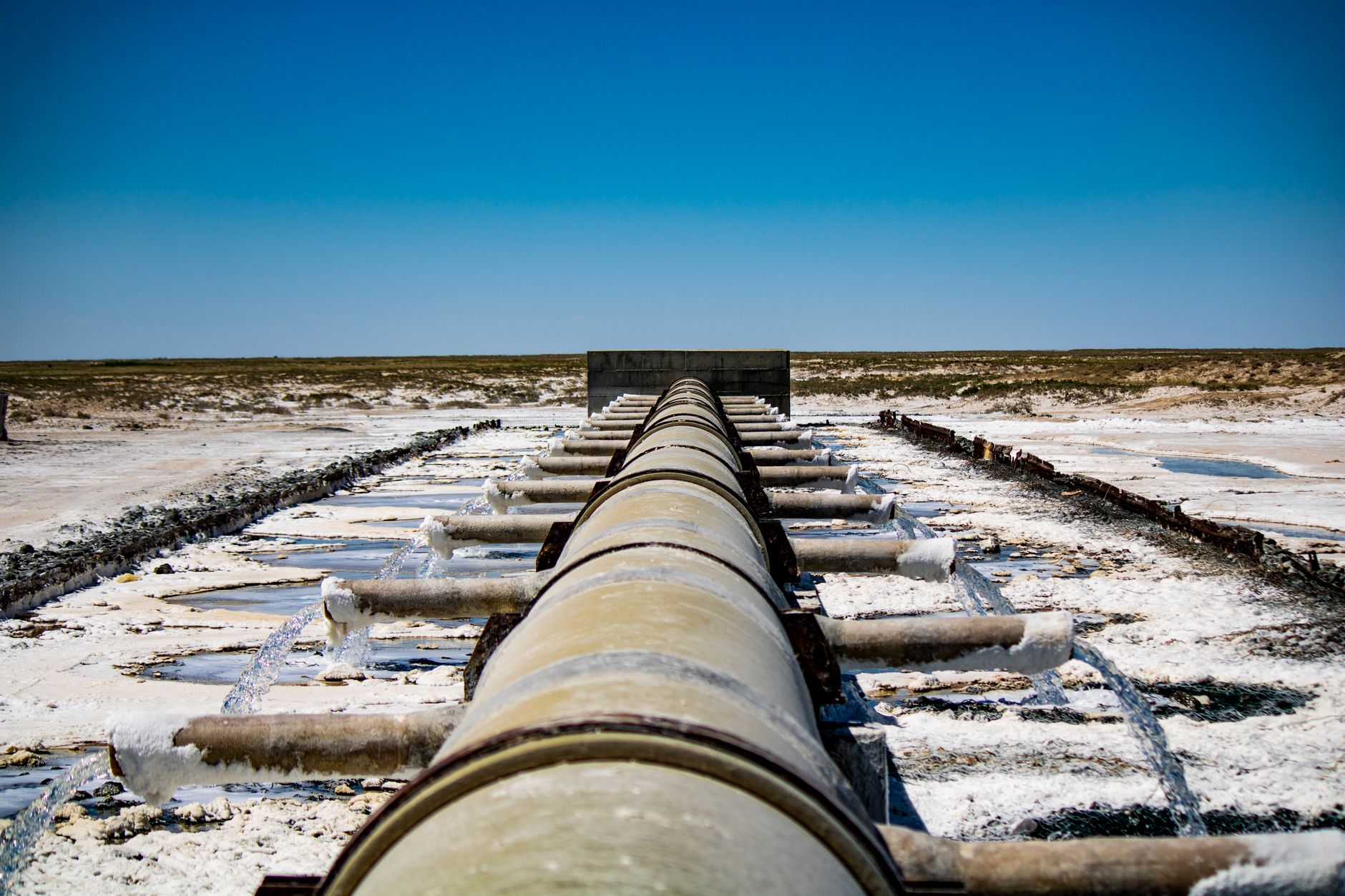
SpaceX is taking its vertical integration strategy to new heights—literally and infrastructurally—by constructing a dedicated natural gas pipeline to fuel its Starship rockets at the Starbase facility in Boca Chica, Texas. As of June 2026, the project is advancing through the regulatory approval process, marking a pivotal shift in how the commercial space industry approaches fuel logistics. Elon Musk's aerospace company, which has already disrupted the satellite internet and launch markets, is now moving to secure one of the most fundamental yet overlooked components of spaceflight: a consistent, cost-effective, and scalable supply of methane propellant.
For years, SpaceX relied on a fleet of tanker trucks to deliver liquefied natural gas to the remote coastal launch site. A single fully stacked Starship and its Super Heavy booster consume roughly 1,000 metric tons of liquid methane per launch. With the company targeting dozens of flights annually—and eventually hundreds for Mars colonization missions—the truck-based logistics model was not just inefficient; it was a fundamental bottleneck that threatened to cap the program's ambitions. The new pipeline, stretching approximately 7 miles (11 kilometers) from an existing commercial gas line, will directly feed the on-site liquefaction plant, slashing costs and environmental impact while enabling a launch cadence previously unimaginable.
Fuel independence as the next frontier in commercial spaceflight
The decision to build a proprietary gas pipeline represents more than an infrastructure upgrade; it signals a philosophical shift in how private space companies view their supply chains. Just as Henry Ford once purchased steel mills and rubber plantations to control every aspect of automobile production, SpaceX is now securing the raw energy inputs that power its interplanetary ambitions. This level of integration is unprecedented in the aerospace sector, where companies have traditionally relied on a complex web of specialized suppliers and government-owned launch ranges.
Industry analysts see this as a direct response to the lessons learned during the global supply chain disruptions of the early 2020s. By 2026, the commercial space industry has matured to a point where launch frequency, not just launch capability, determines market dominance. With NASA's Artemis program relying on a Starship-derived lunar lander, and with the company's Starlink constellation demanding ever more frequent launches for maintenance and expansion, any delay in fuel delivery could cascade into billion-dollar setbacks. The pipeline effectively insures against that risk, transforming Starbase from a launch site into a self-sufficient spaceport.
Navigating the regulatory and environmental landscape
The project has not sailed through without controversy. Environmental groups and local residents in Cameron County have raised concerns about the pipeline's impact on the sensitive Boca Chica ecosystem, home to endangered sea turtles and migratory birds. The memory of the April 2023 Starship launch—which pulverized the concrete launch pad and scattered debris across protected wetlands—remains fresh in the minds of regulators and activists alike. The Federal Energy Regulatory Commission (FERC) and the U.S. Army Corps of Engineers are conducting joint environmental assessments, with a final decision expected by late 2026.
SpaceX has countered these concerns by emphasizing the net environmental benefit of eliminating hundreds of diesel truck trips per launch campaign. The company has also committed to using horizontal directional drilling techniques to minimize surface disruption and has proposed a comprehensive habitat restoration plan for affected areas. Whether these measures will satisfy regulators and local stakeholders remains an open question, but the project's approval is widely seen as a litmus test for the balance between space exploration ambitions and environmental stewardship in the coming decade.
How a Texas pipeline fits into the Mars colonization architecture
The Texas gas pipeline is not merely about launching more rockets from Earth; it is a critical enabler of SpaceX's multiplanetary vision. The Starship architecture requires orbital refueling—multiple tanker flights must rendezvous with a crewed or cargo ship in low Earth orbit to fill its tanks before departing for the Moon or Mars. A single Mars mission could require anywhere from four to eight tanker launches within a tight window of just a few weeks. Without a pipeline-fed, high-cadence launch capability, such a campaign would be logistically impossible.
In 2026, SpaceX is conducting orbital refueling demonstration tests as part of NASA's Human Landing System contract milestones. These tests are the most critical technical hurdle remaining before Artemis III can attempt a crewed lunar landing. The pipeline, once operational, will provide the fuel throughput necessary to validate these technologies at the pace required to meet NASA's 2028 timeline. Looking further ahead, Musk's stated goal of building a self-sustaining city on Mars by 2050 depends entirely on achieving airline-like launch frequencies, which in turn depends on industrial-scale fuel infrastructure on Earth.
Ripple effects across the global space industry
SpaceX's infrastructure gambit is sending shockwaves through the international launch market. Competitors like United Launch Alliance, Arianespace, and China's state-owned launch providers now face a stark reality: competing on price alone may become impossible if they cannot match SpaceX's vertical integration. The European Space Agency's Ariane 6 rocket, which debuted in 2024, was designed to be cost-competitive with the Falcon 9, but it cannot approach the economics of a fully reusable, pipeline-fed Starship system. This is accelerating discussions in Europe and Japan about their own reusable launch vehicles and the infrastructure needed to support them.
For emerging space nations like India, Turkey, and the United Arab Emirates, the implications are more nuanced. On one hand, dramatically lower launch costs open up opportunities for scientific missions and commercial satellite deployments that were previously unaffordable. On the other hand, the concentration of launch infrastructure in the hands of a single private American company raises concerns about strategic autonomy. Turkey's space agency (TUA), for instance, has expressed interest in using commercial launch services for its planned lunar mission, but also recognizes the long-term risk of dependency on foreign launch providers.
Energy geopolitics enters the space age
The Starbase pipeline project is emblematic of a broader shift in how energy resources intersect with technological supremacy. Throughout the 20th century, control over oil and gas pipelines shaped global alliances and conflicts. In the 21st century, that same dynamic is extending beyond Earth's atmosphere. The United States' abundance of cheap natural gas, unlocked by the shale revolution, now provides a direct competitive advantage in the commercial space race. Russia's Roscosmos, once a dominant force in global launch services, has seen its market share erode not only due to geopolitical sanctions but also because its legacy infrastructure cannot match the cost efficiencies SpaceX achieves through energy integration.
As of 2026, the global space launch market is valued at over $20 billion, with projections suggesting it could exceed $40 billion by 2030. Energy security is becoming as critical to spaceport operators as it has always been to nations. Future spaceports in Norway, Scotland, Australia, and elsewhere will need to consider their energy supply chains as carefully as their launch pad designs. SpaceX's Texas pipeline may well be remembered as the first shot in a new kind of resource war—one fought not over the oil beneath the ground, but over the fuel that will carry humanity to the stars.
