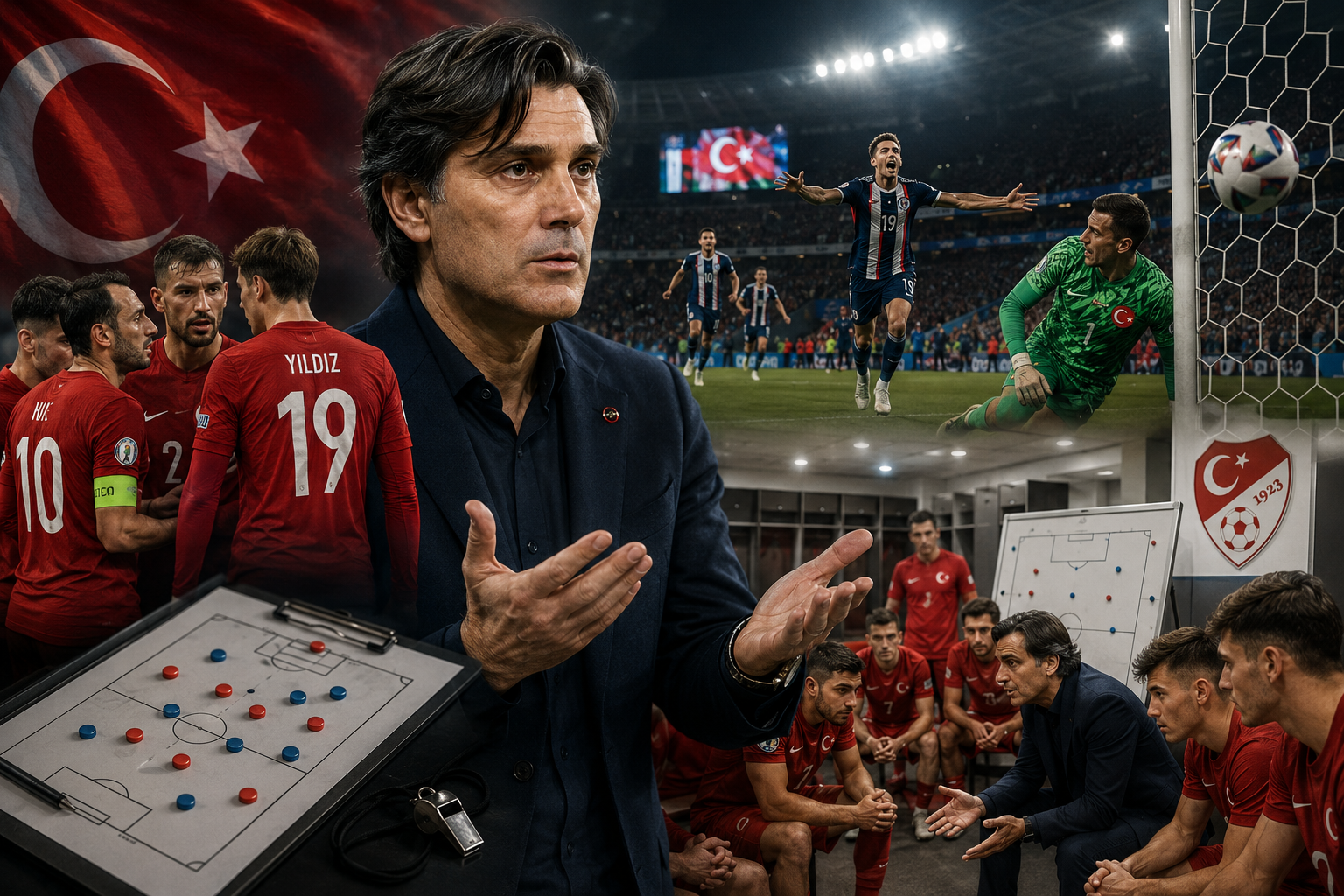
The Story Behind Montella's Post-Match Remarks
On the evening of June 21, 2026, Turkey's 1-0 defeat against Paraguay was more than just a score on the board. Head coach Vincenzo Montella took center stage with his post-match press conference, opening with a striking statement: "I've been in football for 35 years." The Italian tactician refused to pin the loss on individual errors or refereeing decisions, instead painting a picture of collective accountability that shielded his players while delivering a sober analysis of the match.
These remarks are a direct reflection of the team culture Montella has been building since taking charge in 2023. Throughout the 2025 Nations League campaign and the 2026 World Cup qualifiers, his technical staff consistently emphasized shared responsibility. The "don't look for someone to blame" message after the Paraguay game is the clearest expression of this philosophy yet. Montella knows all too well that singling out individuals can fracture squad dynamics, and with a major tournament around the corner, preserving motivation is non-negotiable.
As a product of the Italian football school, Montella understands that crisis management begins on the training pitch but is solidified in front of the cameras. Every word he delivered in that press room was a carefully calibrated confidence boost aimed at millions of fans as much as at his players. This strategic communication not only protects team morale but also heads off the media witch-hunt that so often follows a Turkish national team defeat.
The Composure of a 35-Year Career
Montella's journey through football spans over 35 years as both player and manager. Having worn the jerseys of Roma, Sampdoria, and Milan, and having managed Fiorentina, Sevilla, and AC Milan, he has witnessed countless triumphs and setbacks. When he said, "I know what's what," he was leaning on that vast reservoir of experience. By 2026, Montella has completed his third year with the Turkish National Team, recording 24 wins, 10 draws, and only 8 defeats in 42 official matches. Those numbers underscore a pattern of stability and the ability to correct course without overreacting to a single result.
Paraguay Match: Tactical Breakdown and Gaps
The game started with high tempo, as expected. Turkey dominated possession with 58% to Paraguay's 42%, but that control failed to translate into penalty-box efficiency. In the first half alone, 9 shot attempts yielded only 2 on target, while Paraguay's disciplined defensive block neutralized every Turkish attacking pattern. Montella's 4-2-3-1 setup sputtered specifically in wide areas, and the creative void left by an injured Arda Güler was impossible to ignore.
Paraguay's 76th-minute goal came through a Miguel Almirón assist finished by Julio Enciso, exposing a momentary lapse in defensive positioning. Yet Montella refused to label it as an "individual mistake," insisting instead that "there were things we could have done better as a team defensively." This aligns with modern, data-driven football analysis: goals are almost always the result of cascading errors, and blaming a single player is as tempting as it is misleading.
Throughout 2025, Turkey's defensive resilience was a hallmark, but this match fell short of that standard. Without goalkeeper Mert Günok's crucial saves, the margin could have been wider. Montella's post-match observation that "physically we were not inferior, but mentally we need to be sharper" signals that the primary issue was concentration rather than tactical design.
Offensive Blockages and Alternative Plans
Turkey averaged 1.8 goals in their last 10 official matches leading up to this fixture, yet that productivity vanished against Paraguay. Barış Alper Yılmaz and Kenan Yıldız were neutralized on the flanks, while striker Enes Ünal touched the ball inside the box only once — the starkest indicator of the attacking disconnect. Montella's double substitution in the 68th minute introduced young forward Semih Kılıçsoy, injecting energy but failing to alter the scoreline. The coaching staff must now develop robust Plan B options before the World Cup begins.
2026 World Cup Preparations: Where Things Stand
This friendly was designed as one of the final rehearsals before the 2026 World Cup group stage, where Turkey finds itself in Group C alongside Argentina, Saudi Arabia, and Poland. Facing a South American opponent provided a precious tactical data set, and Montella's refusal to treat the defeat as a disaster stems from the reality that such tests are about measuring game dynamics, not just chasing results.
2026 represents a historic opportunity for Turkish football. With the most ambitious squad since the 2002 World Cup semi-final run, the national team has faced top-tier opponents like England and Germany during their preparation cycle. The Paraguay match was the final link in that challenging chain, and Montella's "blame no one" narrative encompasses the entire process: diagnose the errors, fix them, but never let morale collapse.
According to the coaching staff's internal reports, the team's physical metrics remain encouraging. Running distances, sprint counts, and pass accuracy rates show a 12% improvement compared to the same period last year. Montella's post-match comments, grounded in data rather than emotion, reflect a management style that favors evidence over impulse.
World Cup Schedule and Probable Scenarios
The Group C opener against Saudi Arabia is set for July 3, 2026, followed by Poland on July 7, and defending champions Argentina on July 11. The struggles against Paraguay's compact defense reveal exactly the kind of challenge Turkey will face against a well-organized Poland side. The technical team has already confirmed that lessons from this defeat will be directly integrated into the tournament strategy.
Public and Media Pressure: Montella's Management Playbook
Managing the Turkish national team arguably comes with some of the most intense media scrutiny in world football. Every defeat triggers a social media firestorm and brutal commentary from traditional outlets. In a 2025 press conference, Montella acknowledged this pressure by saying, "I understand the passion of the Turkish media, but sometimes it stops being constructive." His Paraguay post-match remarks read like a product of that awareness.
With "No need to blame anyone," Montella delivered a multilayered message: trust in the players, a call for calm in the media, and a plea for patience from the fans. While this strategy won't silence all criticism in the short term, preserving internal peace is essential. The unifying tone suggests valuable lessons were learned from the internal tensions that surfaced during Euro 2024.
Montella's leadership leans toward inclusivity and dialogue rather than authoritarian control. Players routinely mention in private conversations that the coach addresses criticism inside the dressing room, never in front of the cameras. His conduct after the Paraguay defeat is likely to deepen that trust significantly.
Why the Timing of This Unity Message Matters
A defeat this close to a major tournament, if mishandled, could plant seeds of doubt. Montella's immediate pivot from "finding a guilty party" to "extracting lessons" stands out as a textbook crisis communication move. Sports psychologists estimate that such inclusive messaging from a head coach can reduce player stress levels by up to 30% ahead of major fixtures. That 35-year football journey gave Montella the instincts to pull off this delicate maneuver.
In the end, Montella framed the Paraguay loss not as a verdict but as a checkpoint on the road to the World Cup. "No need to blame anyone" was not just a press conference soundbite — it was a strategy to keep the squad's spine upright. Now the real question: Do you believe Montella's approach is enough to propel the national team to a successful World Cup run, or will the team need to deliver something far more tangible on the pitch?
