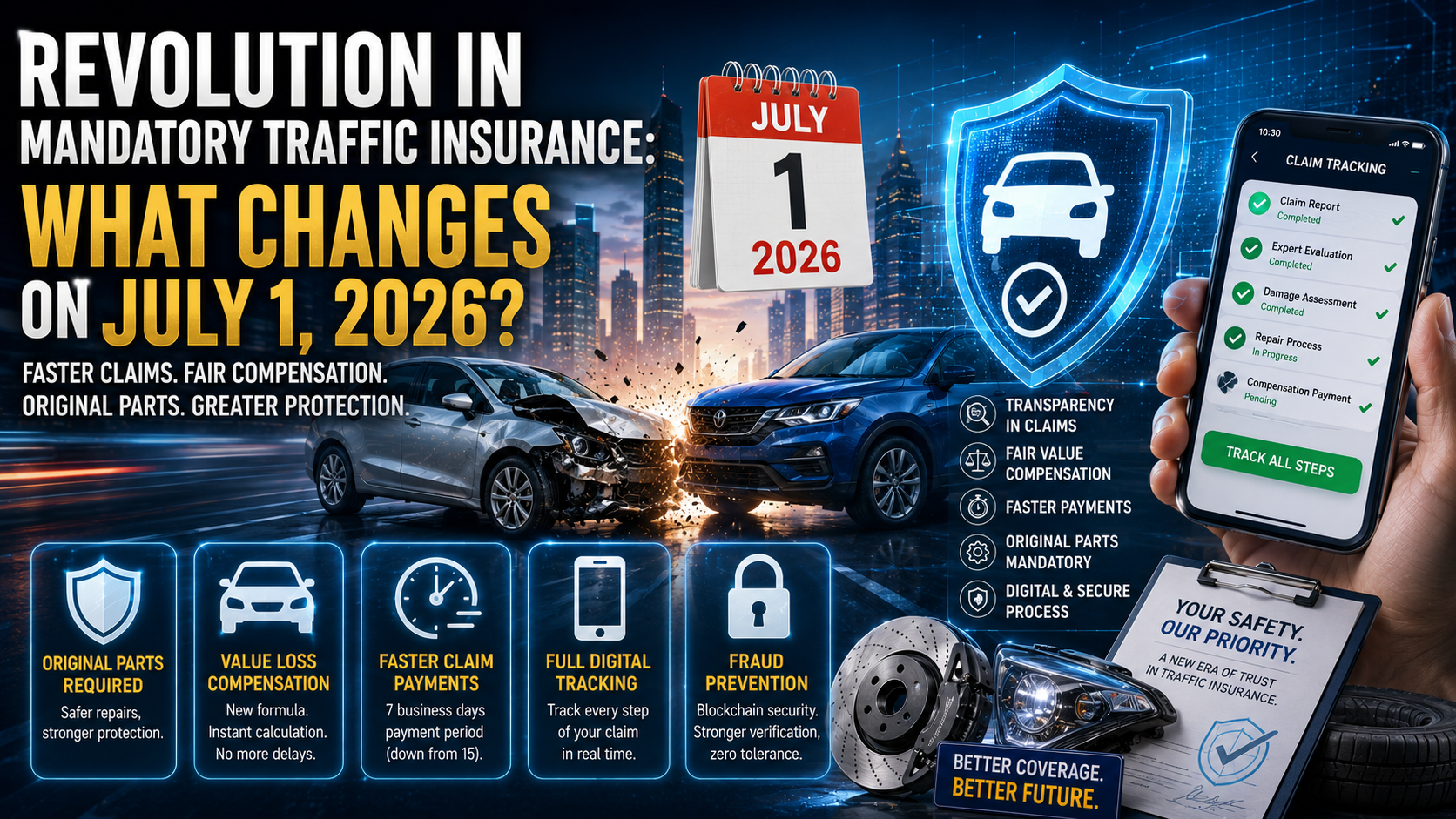
For most drivers, traffic insurance only comes to mind when renewal notices arrive with steep increases. Yet starting July 1, 2026, a set of groundbreaking regulations will challenge that perception head-on. According to early briefings, the overhaul covers "claims, depreciation, genuine parts replacement, and indemnity payments"—reshaping not just insurance companies but the entire ecosystem of repair shops and spare parts manufacturers. What does this 2026-model system promise for drivers, and where will it steer the industry?
Core Pillars of the Reform: Transparency in Claims and Depreciation
The most talked-about insurance reform of 2026 begins with a radical principle of transparency in claims processing. From now on, after an accident, adjuster reports will be transmitted instantly to the vehicle owner’s mobile app. This means drivers can track, down to the last cent, which part is being replaced, the labor cost, and the spare part price. In particular, the ambiguity surrounding depreciation compensation—which plagued 62% of claims in 2025 due to incomplete documentation or miscalculation—will be eliminated by a standardized calculation model. The new system aims to reduce that delay rate to below 10%.
The depreciation formula will deploy an algorithm akin to the international "Branchenindex," simultaneously processing the vehicle’s age, mileage, market value, and damage history to instantly determine the payout. This is seen as the most critical step to curb litigation; in 2025, Istanbul alone saw an average of 14 months for court cases stemming from traffic-accident depreciation disputes.
Mandatory Genuine Parts and the Spare Parts Market Shockwave
Perhaps the most disruptive clause mandates the use of original equipment manufacturer (OEM) parts in repairs. Before July 1, 2026, insurers readily approved equivalent or aftermarket parts, lowering repair costs but risking long-term vehicle safety. The new rules require OEM-certified components for critical safety systems—brakes, steering, suspension—potentially shrinking the ₺4.2 billion aftermarket industry’s share but improving the vehicle safety index by up to 17%.
A New Era for Indemnity Payments: Fast, Digital, and Auditable
A radical timeline has also been set for indemnity payments, long a bottleneck in compulsory insurance. From August 2026, insurers will have just 7 business days—down from 15—to settle a claim after the file is complete. If they exceed this window, a daily 0.5% late fee will be applied to the payout. To keep pace, major players are already investing in AI-driven claims management platforms; one state-backed insurer announced in Q1 2026 that it had hired 1,200 software engineers to build an automatic claims resolution system.
This acceleration also opens a new chapter in combating fraudulent claims. A blockchain-based verification network will cryptographically record every repair operation, from part serial numbers to labor logs. This system aims to prevent repeats of 2025’s insurance fraud cases, which siphoned a total of ₺780 million from the system.
Digitalization and the Driver Experience
At the heart of these processes lies a mobile ecosystem designed for convenience. Dubbed "Pocket Insurance," next-gen apps will allow accident footage from dashcams to be instantly uploaded to an adjuster pool, enabling remote damage assessment. From July 1, 2026, this model will pilot across 230 authorized service centers in all 81 provinces. Users will be able to track their repair progress via a code, much like tracking a package delivery.
Industry Ripple Effects: Premiums, Competition, and Economic Balance
The biggest question on every driver’s mind is how these comprehensive changes will hit policy prices. Short-term, the genuine-parts mandate and rapid settlement infrastructure will likely push premiums up by an estimated 12–15%. However, medium-term gains from fraud reduction and process efficiency are expected to stabilize premiums and could even deliver an 8% drop by late 2027. A February 2026 impact analysis by the Treasury and Finance Ministry projects that the system will generate ₺2.5 billion in savings for the traffic insurance pool within three years.
On the competition front, a gap will widen between insurers that adapt quickly and those that lag. Companies offering telematics (black-box) insurance, which measures real-time driver risk scores for personalized premiums, stand to gain the most. Telematics policies, which held only a 7% market share in 2025, are forecast to reach 22% by the end of 2027.
Impact on Wallets and Road Safety
Ultimately, vehicle owners will be the real winners. A car repaired with OEM parts retains on average 14% higher resale value compared to one fixed with aftermarket parts, and it posts 22% better results in braking distance tests. This reform is not just an economic measure—it is a direct intervention for traffic safety. The new era beginning July 1, 2026, promises to be a holistic reform that protects both driver wallets and lives. Now the question remains: Are you ready for the new traffic insurance regulations, or will you wait until the final day to renew your policy?
