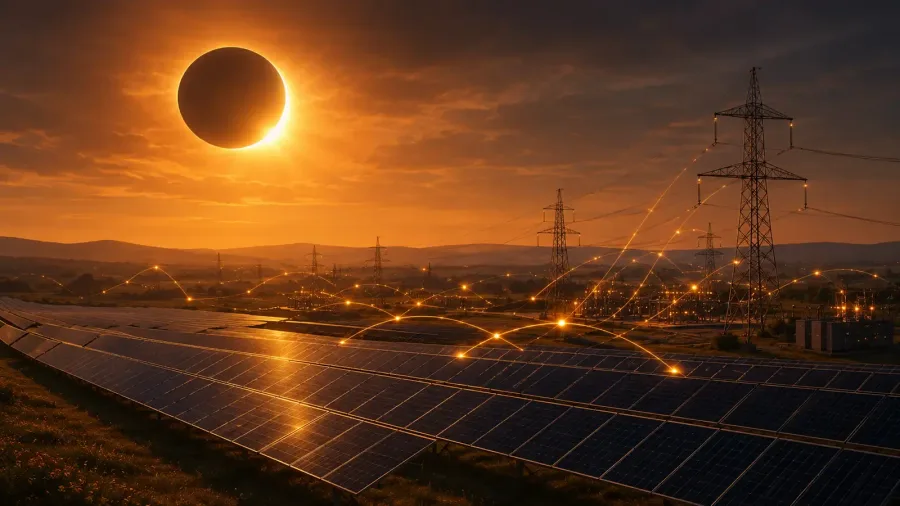
European grids prepare for the solar eclipse
European transmission system operators have prepared coordinated measures for the rapid change in solar generation expected during the August 12, 2026 solar eclipse. According to an official statement published by the European Network of Transmission System Operators for Electricity, or ENTSO-E, on August 7, photovoltaic output across Europe could fall by as much as 9.7 gigawatts. The event is predictable, but its concentration within a short period creates an unusual balancing task.
ENTSO-E expects the most relevant generation changes to occur roughly between 19:15 and 21:30 Central European Summer Time. Its official assessment says transmission system operators analysed the event in advance and are coordinating to preserve secure system operation. Visibility of the eclipse and the geographic distribution of solar farms vary between countries, so the effect will not be uniform across the continent.
What a 9.7-gigawatt drop means
Photovoltaic generation decreases when solar radiation reaching panels is reduced, then rises again as the shadow moves away. For system operators, the challenge is not only the amount of missing power but also the speed of the decline and recovery. Electricity supply and demand must remain balanced continuously, requiring operators to use other generators, storage, flexible demand and cross-border exchanges to manage short changes.
ENTSO-E's 9.7-gigawatt figure is an upper estimate rather than a guaranteed outcome. The actual reduction will depend on weather conditions, especially cloud cover, and on the level of solar production that would otherwise be available at the time. Officials are therefore preparing for a range of outcomes instead of declaring one certain loss. The gigawatt figure also measures power at a point in time, not the total energy lost during the event.
Why coordination matters
Europe's electricity system consists of interconnected national grids. A generation change in one country can alter flows in neighbouring systems, making shared forecasts and intervention timing important. ENTSO-E said the preparations were designed to preserve secure system operation throughout the eclipse and that national transmission system operators were coordinating their work.
In a separate assessment published on August 11, the European Commission said Europe's electricity system had remained stable during summer conditions that included high temperatures and elevated demand. That statement is not a forecast for the eclipse itself, but it provides a broader view of the system's current operating environment. Eclipse preparations add a short and predictable test to those seasonal conditions.
What consumers should expect
The official statements do not forecast widespread outages. The purpose of the preparations is to manage the temporary production drop without disrupting everyday electricity service. Grid security decisions still depend on real-time generation, demand and weather, so operators will update their actions as new measurements arrive during the event.
The August 12 eclipse will provide a visible test of the growing role of solar power in Europe's generation mix. ENTSO-E's calculations show that even a known astronomical event requires detailed planning when photovoltaic capacity is substantial. The operational results should provide additional data for forecasting, reserve procurement and cross-border coordination ahead of future eclipses and other rapid changes in renewable output.
