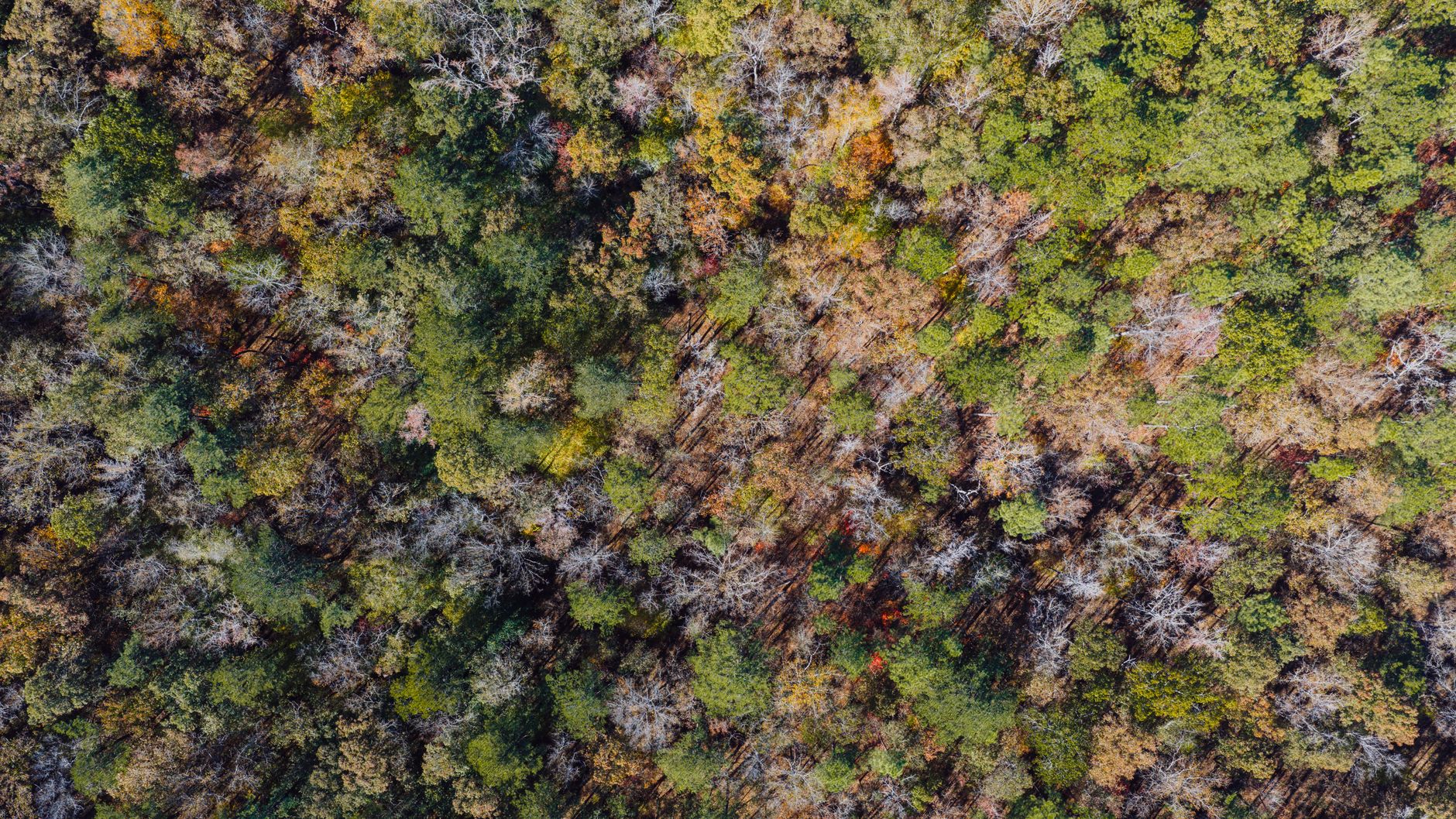
When China launched its ambitious 'Three-North Shelterbelt Program' in 1978, few could have predicted that nearly five decades later, the 66 billion trees planted would become a scientific sensation. A groundbreaking study released in July 2026 has revealed that these human-planted forests are growing significantly faster than natural woodlands, challenging long-held assumptions about afforestation and its role in combating climate change. The findings, based on satellite imagery and field measurements spanning decades, could fundamentally alter how nations calculate their carbon sequestration potential.
The Great Green Wall: China's half-century experiment in ecological engineering
Stretching 4,800 kilometers across northern China, from the northwestern Xinjiang region to the northeastern Heilongjiang province, the Three-North Shelterbelt Program represents the largest human-made forest project in planetary history. Conceived as a barrier against the encroaching Gobi Desert, the initiative has transformed barren landscapes into wooded terrain covering an area roughly the size of France. By 2026, the program has surpassed the 66 billion tree milestone, with total investment exceeding $100 billion over its 48-year lifespan.
The project's sheer scale has long made it a subject of both admiration and criticism. Environmental groups have repeatedly questioned the ecological wisdom of monoculture plantations, pointing to biodiversity loss and water depletion in arid regions. Chinese authorities have acknowledged these concerns, and the 2025 policy revision shifted focus toward mixed-species forests and native vegetation. The new research provides a powerful counterargument to critics: whatever the ecological trade-offs, these forests are outperforming nature itself when it comes to growth speed and carbon capture efficiency.
How artificial intelligence and Landsat data revealed the unexpected
The international research team, led by scientists from Beijing Forestry University and the University of Copenhagen, employed machine learning algorithms to analyze four decades of Landsat satellite imagery. This approach allowed researchers to track individual tree growth patterns across millions of hectares, comparing planted forests with natural woodlands under similar climatic conditions. The results were striking: planted trees demonstrated an average 12% higher annual carbon sequestration rate and up to 18% greater biomass accumulation than their naturally occurring counterparts.
Professor Liang Chen, the study's lead author, attributes this accelerated growth to several factors. Reduced competition between trees in managed plantations, regular maintenance protocols, and the strategic selection of fast-growing species like poplar, pine, and acacia all contribute to the performance gap. 'These forests are not perfect replicas of natural ecosystems,' Chen acknowledged in an interview with Nature Climate Change, 'but their carbon capture performance is impressive enough to warrant updating our climate models.' The research team is now expanding its analysis to similar afforestation projects in India and Brazil for comparative data.
Carbon credit markets face potential recalibration
The study's findings carry profound implications for the global carbon credit market, which surpassed $50 billion in annual trading volume in early 2026. Afforestation and reforestation projects constitute the largest category of nature-based carbon credits, and their valuation depends heavily on accurate growth rate assumptions. If human-planted forests systematically outperform natural ones, current pricing models may be significantly undervaluing these projects, potentially triggering a major market correction.
For developing nations investing heavily in afforestation, the Chinese data offers a compelling argument for increased carbon credit allocations. Countries like Turkey, which has planted over 500 million saplings since launching its National Afforestation Campaign in 2025, could see their carbon offset claims strengthened by the new methodology. The European Union's Carbon Border Adjustment Mechanism (CBAM), fully implemented in 2026, may need to incorporate these updated growth metrics into its compliance calculations, affecting everything from industrial tariffs to corporate sustainability reporting.
Turkey's afforestation strategy in light of Chinese findings
Turkey has emerged as one of Europe's most active afforestation nations, planting an average of 300 million trees annually across its Anatolian steppes. The Turkish Ministry of Agriculture and Forestry announced in June 2026 that it would allocate 200 million Turkish lira (approximately $6 million) to satellite-based forest monitoring systems, directly inspired by the Chinese research methodology. Professor Ahmet Yılmaz from Istanbul University's Forestry Faculty noted that 'the Chinese example demonstrates that with proper species selection and post-planting care, even challenging steppe ecosystems can deliver impressive carbon capture results.'
However, Turkish environmental scientists caution against uncritically adopting the Chinese model. The water-intensive poplar plantations that proved successful in parts of China may not be suitable for Turkey's semi-arid central regions. Instead, researchers advocate for a hybrid approach combining fast-growing species with native drought-resistant varieties, a strategy currently being tested in pilot projects across Konya and Şanlıurfa provinces.
The biodiversity question: Can fast growth and ecological health coexist?
Despite the encouraging carbon data, ecologists remain deeply divided over the long-term sustainability of plantation-style afforestation. The World Wildlife Fund's 2026 global forest assessment documented significant groundwater depletion in several Chinese provinces where fast-growing poplar plantations have been established, threatening local agricultural communities. The report argues that carbon sequestration metrics alone cannot capture the full ecological value—or cost—of large-scale tree planting programs.
Chinese policymakers appear to be listening. The second phase of the Three-North program, launched in 2025, explicitly prioritizes mixed-species forests and native vegetation over monoculture plantations. Water-efficient species selection has become mandatory for new projects, and local communities are being integrated into forest management planning. These reforms reflect a growing recognition that the initial focus on sheer tree count and growth speed must evolve toward a more holistic understanding of forest ecosystem services.
IPCC climate models may require revision
The Intergovernmental Panel on Climate Change (IPCC) currently bases its afforestation carbon capture estimates on natural forest growth rates. The Chinese findings suggest these models may be systematically underestimating the climate mitigation potential of planted forests. Dr. Maria Schmidt from the Potsdam Institute for Climate Impact Research warned that 'if human-planted forests consistently outperform natural growth benchmarks, our global carbon budget calculations will need substantial revision ahead of the 2027 IPCC assessment report.'
With over 2 billion hectares identified as suitable for afforestation worldwide, the stakes of getting these calculations right are enormous. The Chinese experience provides an invaluable 48-year dataset that can inform global strategy. As nations prepare their updated Nationally Determined Contributions under the Paris Agreement framework, the message from China's Great Green Wall is clear: well-managed afforestation can deliver climate benefits faster than previously thought possible—but only if ecological constraints are respected alongside carbon accounting goals.
The path to 2050: Completing the world's largest green infrastructure project
China aims to complete the Three-North Shelterbelt Program by 2050, with an additional $150 billion in planned investment over the remaining 24 years. The project is central to China's pledge to achieve carbon neutrality by 2060, serving as a natural complement to the country's massive renewable energy expansion. The newly documented accelerated growth rates suggest the return on this century-scale investment may exceed initial projections, potentially sequestering an additional 5 to 8 gigatons of carbon dioxide by mid-century.
For the international community, China's 66 billion trees offer both inspiration and a cautionary tale. As global carbon emissions reached record levels in 2026, nature-based solutions have never been more critical. The Great Green Wall demonstrates humanity's capacity to reshape landscapes on a planetary scale—but also underscores the responsibility to do so with ecological intelligence rather than industrial logic. The coming decades will reveal whether the world can learn from China's half-century experiment and apply those lessons to the broader challenge of living within planetary boundaries.
