Why the Week of June 21 Could Make History
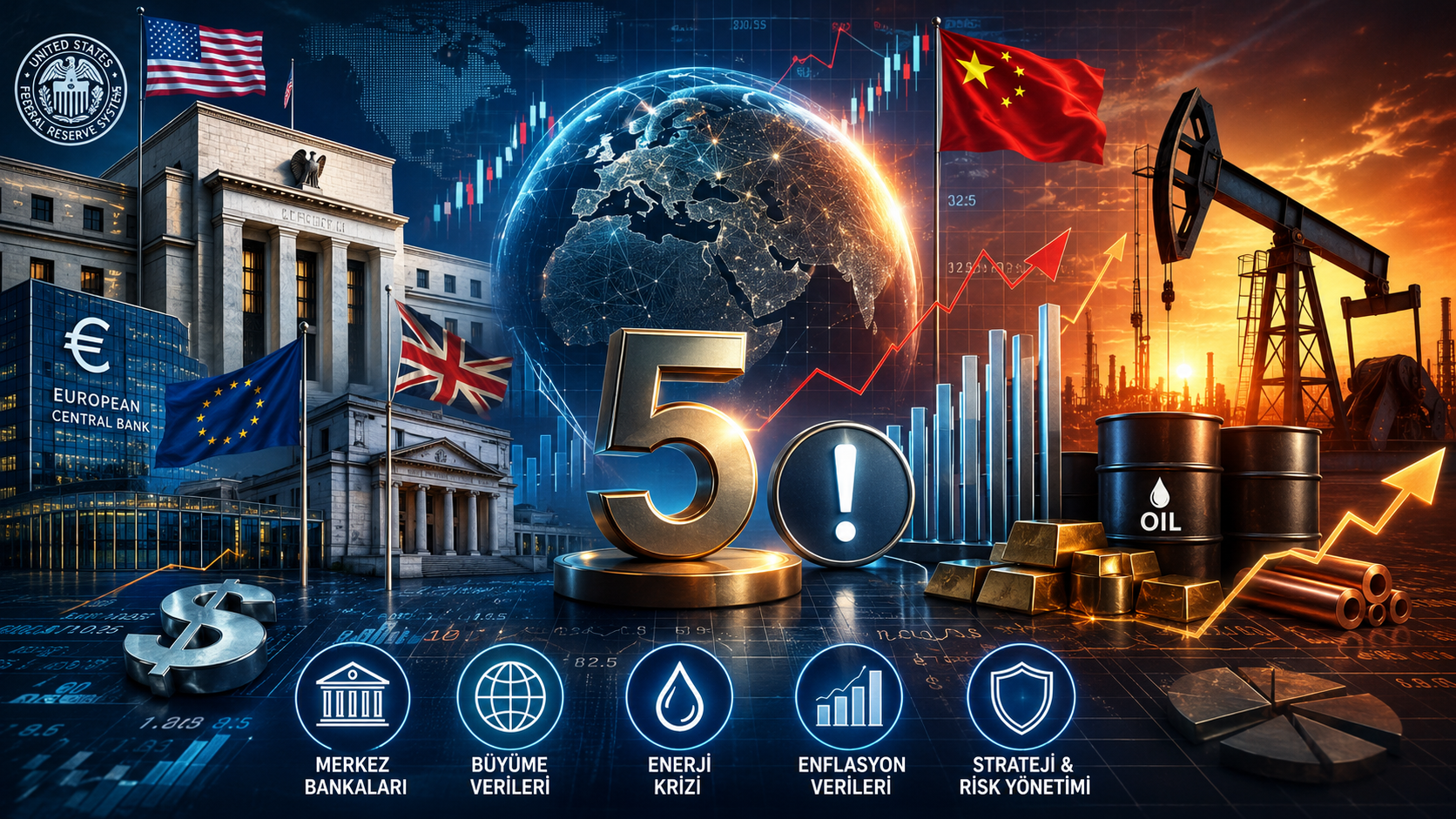
As of June 21, 2026, the global economy is facing three interconnected litmus tests: central bank interest rate decisions, unexpected growth data, and escalating geopolitical risks. Deloitte's independent team of economists warns that this week could be one of the most defining periods of the year for markets. After 2025's sluggish recovery, investors, corporate leaders, and policymakers now confront a radically different macro landscape. Within just five trading days, signals from the Fed, ECB, and Bank of England; a potential PMI shock from China; core US inflation data; and a renewed surge in energy markets could reshape global asset prices. Here are five critical themes you cannot afford to ignore during June 21–27.
Central Banks Unleash a Flurry of Critical Decisions
The Fed-ECB Growth-Inflation Dilemma
The most anticipated event is the two-day Federal Open Market Committee meeting ending on Wednesday. After delivering a total of 75 basis points in rate cuts throughout 2025, the Fed is all but certain to hold its policy rate at 5.50%. The real bomb, however, will be detonated at Chair Jerome Powell's press conference. Deloitte's chief economist Dr. Sarah Kemble notes that sticky services inflation and a core PCE reading that ticked up to 3.1% in Q4 2025 have forced the Fed into a "cautious wait-and-see" posture. Markets may rapidly unwind the 50 basis points of cuts currently priced for end-2026, potentially propelling the US dollar to 1.20 against the euro – a level not seen since early 2024.
Thursday brings the European Central Bank into the spotlight. While ECB is expected to cut its deposit rate by 25 basis points to 3.50%, President Christine Lagarde's forward guidance could prove far more volatile. Eurozone industrial production contracted by 1.8% year-on-year in March 2026, and German corporate insolvencies have already surpassed 2025 levels by 12%. Yet inflation is stubbornly stuck at 2.4%, fueled by resurgent energy prices. If Lagarde fails to calibrate a "cautious easing" message and instead amplifies growth fears, a correction of over 3% in the Euro Stoxx 50 would come as no surprise.
Growth Reality Check: China and Eurozone Data Shockers
Is China's PMI Data Signaling a Global Slowdown?
Friday's release of China's official manufacturing Purchasing Managers' Index could deliver the week's biggest bombshell. The gauge, which struggled to hold at 49.5 throughout 2025, is projected to slide to 48.7 in June 2026, sinking deeper into contraction territory. This would expose just how fragile Beijing's Q1 2026 growth reading of 5.1% truly is. A seemingly endless property crisis and collapsing export orders have already dragged copper prices to $8,200 per tonne; a disappointing PMI could accelerate the slide, triggering a tsunami in commodity-linked emerging-market currencies.
On the same day, the Eurozone's flash consumer confidence index is likely to sour the mood. Expected at -15.3, the data suggests the mild recovery of late 2025 has evaporated entirely. Households are hoarding savings, and credit demand has plunged to its lowest in a decade in 2026. A wave of selling could hit European banking stocks. If the torrent of data packed into a single week confirms a synchronized global slowdown, part of the artificial-intelligence-fueled stock rally of 2025 could be erased.
Commodity Volatility and the Energy Crisis Tension
Oil Breaches $92: The Specter of Stagflation Returns
An underdiscussed but highly destructive dynamic is building in commodity markets. As of June 21, Brent crude has climbed to $92 per barrel, an 18-month high. Geopolitical supply disruptions and expected record summer demand have sent energy costs soaring. This not only explodes industrial input costs but also severely ties the hands of central banks. Deloitte analysis shows that every $10 increase in oil prices pushes Eurozone inflation up by 0.4 percentage points, compressing both the ECB's rate-cutting room and corporate margins. Unless midweek US crude inventory data reveals an unexpected demand slump, selling pressure on the S&P 500 – excluding energy stocks – could intensify sharply.
Meanwhile, the green transition adds another layer of pressure. Europe's carbon allowance prices reached €110 per tonne in June 2026. Manufacturers grappling with sky-high energy bills have already started postponing green investments. This paradox will be laid bare on the final trading day when the IEA's Renewable Energy Report is published. If the report reveals that fossil fuel subsidies hit a record in 2026, outflows from ESG-themed portfolios will accelerate, deepening the contradiction.
Key Indicators and Strategic Steps for Investors
The 5 Must-Watch Catalysts and Positioning Tips
In such a jam-packed week, professional investors are fixated on five make-or-break indicators. First, Friday's US core PCE inflation for May – consensus calls for 3.1%, the highest in 2026. An upside surprise to 3.3% or above could fuel speculation of a July Fed rate hike, propelling the dollar index to 110. Second, Wednesday's Bank of England decision – a hold at 4.75% is expected, but a hawkish surprise in the minutes could catapult sterling to 1.32. Third, Japan's unemployment rate on Thursday; a print below 2.3% would set the stage for a surprise BoJ rate hike in July. Fourth, the flash S&P Global PMIs throughout the week will answer whether a resilient services PMI of 54.0 can mask a feeble manufacturing print of 47.2 in the US. Finally, China's Caixin services PMI on Friday will reveal whether it can fill the credibility gap left by the official data; a sub-50 reading would accelerate capital flight from emerging markets.
Against this tangled backdrop, Deloitte economists recommend boosting cash allocations, rotating into safe havens like the Japanese yen and Swiss franc, and deploying protective options strategies on tech stocks. The direction markets take by week's end will depend not only on the data's trajectory but also on the rhetorical skill of central bank chiefs. The week of June 2026 is far more than a data calendar – it could be the final exam for post-pandemic economic policy. Eyes on the screens, ears on the central banks – fasten your seatbelts.
