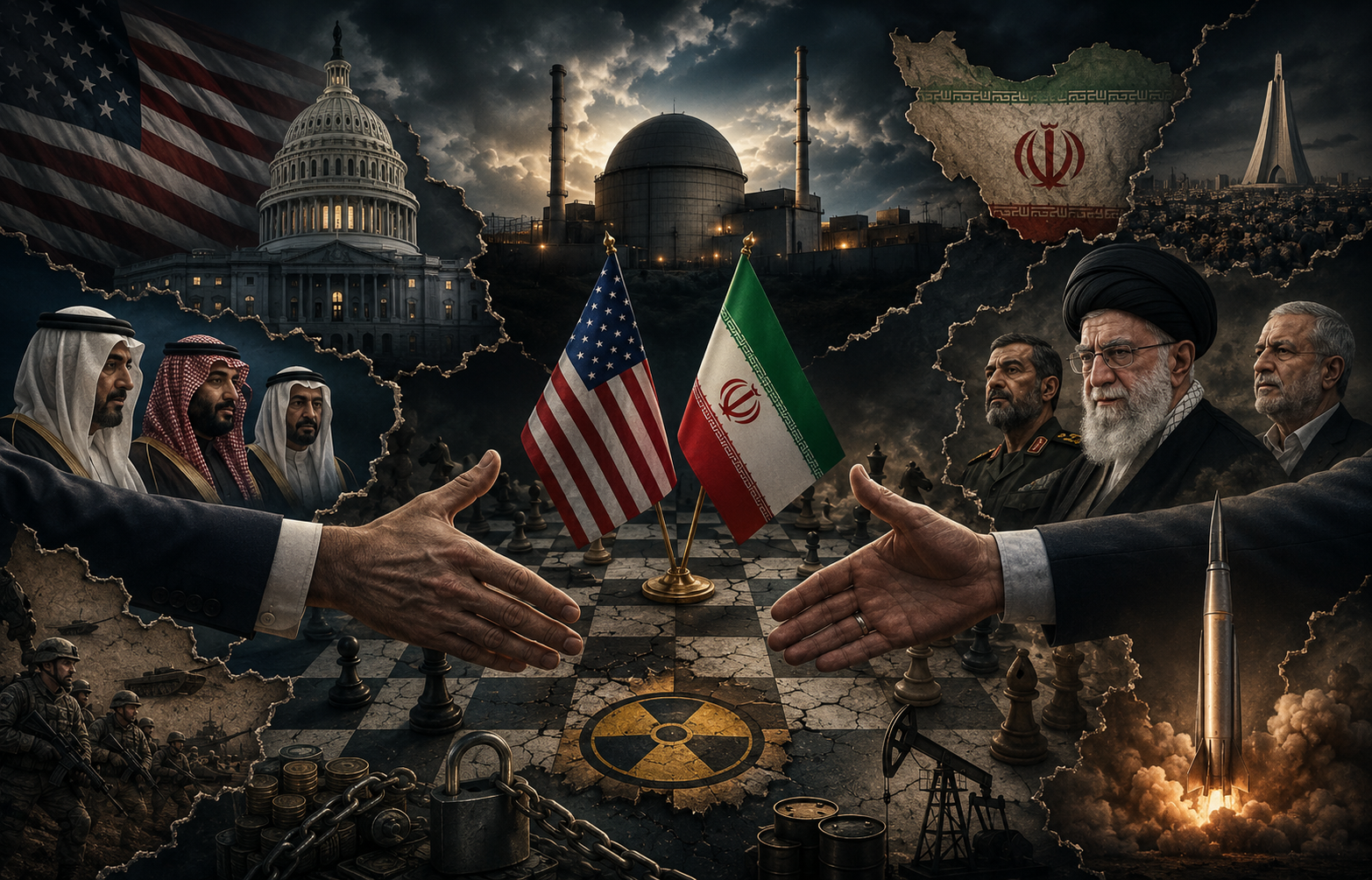
Unhealed Wounds: Why the Deal Still Hangs by a Thread in 2026
June 21, 2026. President Donald Trump announced that the nuclear negotiations between Washington and Tehran could succeed within the next 60 days. Yet this optimism fails to obscure the four massive obstacles lurking beneath the surface. Last year, indirect talks that began in Oman reached an impasse four times throughout 2025. Now, as both sides convene in Geneva for the fifth round, diplomatic sources say the deal has never been more fragile.
According to the International Atomic Energy Agency's May report, Iran's stockpile of highly enriched uranium has reached 142 kilograms — far beyond the spirit of the 2015 deal's 300-kilogram cap on low-enriched uranium. Moreover, Iran has activated new-generation IR-9 centrifuges at the Fordow and Natanz facilities. Time is not on diplomacy's side.
The Shadow of Distrust from the Past
The greatest psychological barrier between the parties is the trust crisis triggered by Trump's unilateral withdrawal from the Joint Comprehensive Plan of Action (JCPOA) in 2018. In a press conference last March, Iranian Foreign Minister Hossein Amir-Abdollahian sent a clear message to Washington: "Without permanent guarantees, we will sign no agreement." Tehran demands a legally binding framework that would constrain future U.S. presidents. Yet the Republican majority in the Senate fiercely opposes such a commitment.
First Obstacle: Scope of the Nuclear Program and Verification Mechanisms
The toughest item on the agenda is how much of Iran's nuclear infrastructure will be preserved. The U.S. wants to extend Iran's "breakout time" — the period needed to produce enough fissile material for a nuclear weapon — to at least 12 months. Tehran, however, has no intention of relinquishing its technological gains. During technical talks in 2025, the Iranian side insisted on keeping at least 60 percent of its 8,000-plus operational centrifuges running. Washington's red line is 30 percent.
At the heart of this deadlock lies the IAEA's inspection authority. In November 2025, Iran blocked IAEA inspectors from accessing two nuclear sites. Agency Chief Rafael Grossi summarized the crisis last month: "Without transparency, we can provide no assurance." The technical annex of any deal remains vague on how snap inspection protocols would actually function.
The Mystery of the Military Dimension
Another critical sub-item concerns Iran's past possible military nuclear activities (PMD). In a February 2026 report, the IAEA noted that Iran still has not provided satisfactory explanations regarding alleged nuclear weapon design work prior to 2003. Washington insists any comprehensive deal must include closure of the PMD file. Tehran, rejecting this file as a "political tool," refuses to bring it to the table.
Second Obstacle: Regional Geopolitics and Proxy Forces
The second major obstacle lies with actors beyond the negotiating room: Iran's proxy forces in the Middle East. In a speech last week, Israeli Prime Minister Naftali Bennett stated, "The deal must prevent Iran from funneling billions to Hezbollah and the Houthis." Tel Aviv also demands that Iran's ballistic missile program be included. Yet Tehran has repeatedly stressed that its missile capability is a "red line."
Saudi Arabia and the UAE are also watching the talks closely. Though Riyadh took normalization steps with Iran in 2025, it insists on an end to Tehran's support for the Houthis in Yemen. The deal's impact on the regional security architecture hinges on the security guarantees Washington provides its Gulf allies, turning the negotiation into a multidimensional chessboard.
Competition in Syria and Iraq
Iran's military presence in Syria and Iraq also indirectly poisons the nuclear talks. In the first quarter of 2026, U.S. Central Command (CENTCOM) reported 17 attacks by Iran-backed militias on American bases in Iraq. Washington believes the spirit of the deal should include halting such attacks. Tehran insists the nuclear dossier must be kept separate from regional matters.
Third Obstacle: Gradual Sanctions Relief and Economic Guarantees
Iran's economy shrank 3.2 percent in 2025, with inflation still running above 40 percent. For Tehran, the most tangible outcome of a deal is the lifting of all U.S. sanctions linked to the nuclear file. Washington, however, insists sanctions will be eased only "step-by-step and reversibly." According to Central Bank of Iran data, restoring oil exports to previous levels is impossible without full SWIFT access.
The most concrete debate in the talks revolves around the timetable for releasing Iran's frozen $20 billion in assets. The U.S. has proposed initially unfreezing $6 billion from accounts in South Korea and Iraq. Tehran demands "one-time, unconditional" access. This financial bargaining will directly determine the deal's enforceability.
Companies' Fear of Returning
Western companies remain cautious about the snapback of sanctions. In 2025, France's Total and Germany's Siemens conducted preliminary talks about re-entering Iran but made no investment decisions. The U.S. Treasury's OFAC informed firms that secondary sanction risks have not fully disappeared. This uncertainty erects a massive wall against the economic revival Iran expects.
Fourth Obstacle: Domestic Political Pressures and a Tight Timeline
In both Washington and Tehran, domestic political dynamics are weakening negotiators' hands. Trump wants to present an Iran deal as a foreign policy victory ahead of the 2026 midterms. But 12 Republican senators have published a joint letter demanding "no concessions to Iran." Democrats, meanwhile, require the deal to address Israel's security concerns.
On the Tehran front, the situation is more complex. In a February speech, Supreme Leader Khamenei said "America cannot be trusted," undermining his own negotiating team. Iran's conservative faction argues that a deal means "compromising revolutionary values." The 60-day timeline offers an extremely narrow window to overcome these internal resistances.
The Shadow of the 2026 Elections
The U.S. congressional elections in November create a de facto deadline for the deal. If talks fail to conclude by September, the rational ground for discussion could vanish entirely in the election atmosphere. This explains why Trump's "60-day optimism" is actually a necessity: time is working not in favor of diplomats, but of politicians. The coming weeks will determine the nuclear future of the Middle East. Will diplomacy prevail, or will these four obstacles consign the deal to the dustbin of history? The answer lies in the parties' will to compromise.
