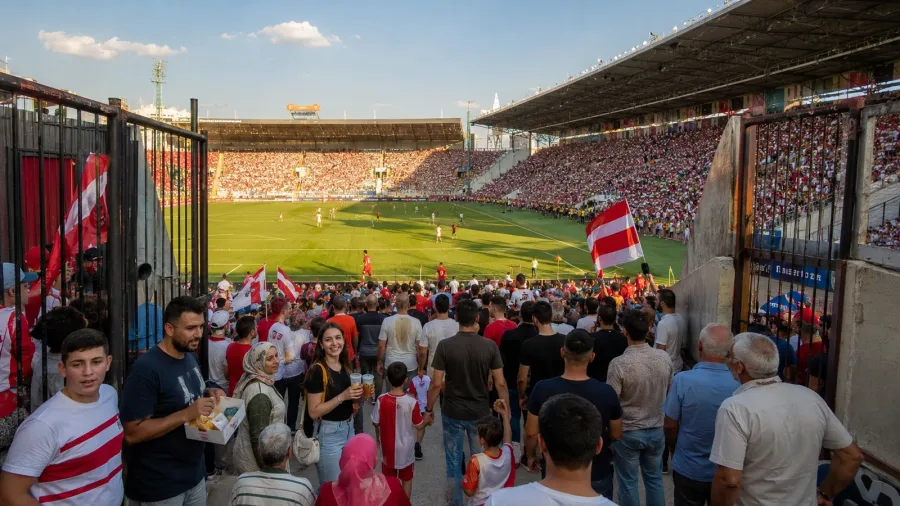
The Turkish Football Federation (TFF) has officially scrapped its controversial late-night kickoff policy for the Super Lig, marking a significant victory for clubs and fans who argued the schedule was destroying matchday culture and physical performance. The decision, effective from the 2026-2027 season, reinstates traditional evening and afternoon slots across all tiers of Turkish professional football.
How the Clubs' Union forced the federation's hand
The rollback didn't happen overnight. For two seasons, the TFF had enforced a rigid broadcasting schedule that pushed marquee Super Lig fixtures to 9:00 PM and 9:45 PM local time, even during the scorching summer months. The rationale was purely commercial: higher prime-time television ratings for the league's official broadcaster. However, the reality in the stands told a different story. Attendance figures plummeted, with some Istanbul derbies seeing empty seats for the first time in decades. The Clubs' Union Foundation, representing all 20 top-flight teams, presented a unified front in May 2026, demanding an immediate return to the old system.
Behind closed doors, club presidents argued that the late kickoffs were a direct threat to their financial sustainability. While TV money remained stable, matchday revenues—including ticket sales, corporate hospitality, and merchandise—collapsed. An internal report circulated among club executives showed that stadium occupancy rates had dropped to an alarming 40% for weekday fixtures. Facing a potential revolt, TFF President İbrahim Hacıosmanoğlu convened an emergency board meeting and ratified the changes, effectively prioritizing the in-stadium experience over broadcast scheduling convenience.
The delicate renegotiation with broadcasters
The decision required immediate renegotiation of the existing broadcasting contract. Late-night matches had guaranteed high ratings in the competitive Turkish television market, where prime time extends well past midnight. The TFF and clubs argued that the long-term health of the league depended on full stadiums, which create a superior broadcast product. Preliminary studies suggest that the atmospheric boost from packed stands could offset minor rating dips, a gamble the federation appears willing to take.
Why sports science backs the Super Lig's scheduling shift
Beyond economics, the scheduling reversal aligns with modern sports science. Research into circadian rhythms consistently demonstrates that elite athletes perform at their physical and cognitive peak in the late afternoon and early evening. Matches starting after 9:45 PM disrupt natural sleep cycles, slow reaction times, and increase the risk of soft-tissue injuries. Several Super Lig coaches had publicly criticized the old schedule, arguing it compromised their teams' preparation for crucial European fixtures. For clubs competing in the UEFA Champions League and Europa League, the previous schedule often meant playing a domestic league match late on Sunday and traveling for a Wednesday European tie with less than 72 hours of recovery.
The new system introduces a fixed Saturday 4:00 PM slot for teams involved in midweek European action, guaranteeing a minimum three-day rest period. This logistical adjustment is expected to have a tangible impact on the performance of Turkish clubs on the continental stage, where they have struggled with squad rotation and fatigue in recent seasons. The federation's move is being framed not just as a concession to fans, but as a strategic investment in the league's competitive standards.
A broader focus on player welfare
The TFF has also introduced a regional weather clause, granting referees and club doctors the authority to delay kickoffs by up to 30 minutes in extreme heat, particularly in southeastern provinces like Gaziantep and Şanlıurfa. This nuanced approach acknowledges Turkey's diverse climate and marks a departure from the one-size-fits-all scheduling that dominated the previous era.
Rebuilding fan culture: The return of the family audience
For Turkey's passionate supporter groups, the late-night schedule was an existential threat. Iconic fan organizations like Çarşı (Beşiktaş), Genç Fenerbahçeliler (Fenerbahçe), and ultrAslan (Galatasaray) had led protests, arguing that matches ending near midnight made it impossible for families, women, and elderly supporters to attend. Away travel became particularly hazardous, with fans returning from distant provinces in the early hours of the morning. The new 4:00 PM and 7:00 PM slots are specifically designed to welcome back the family demographic that forms the long-term foundation of any club's support base.
Early projections from club marketing departments suggest a 25-30% increase in season ticket renewals for the 2026-2027 campaign. The earlier kickoffs also allow clubs to transform matchday into a full afternoon experience, with fan zones, concerts, and family activities planned in the hours before kickoff. This holistic approach to the matchday experience is seen as essential for competing with the comfort and convenience of high-definition home viewing.
Reviving the stadium economy
Concession stands, club shops, and local businesses surrounding stadiums are expected to benefit significantly. A 4:00 PM match encourages pre-game spending, whereas a 9:45 PM kickoff typically saw fans rushing directly from work to their seats. The multiplier effect on local economies, particularly in football-centric cities like Trabzon and Konya, could be substantial.
International viewership and the Asian betting market
The scheduling change also has implications for the Super Lig's global footprint. The previous late-night Turkish time slots translated to early morning hours in East Asia, effectively locking out a lucrative and growing betting market. The new 7:00 PM local time kickoffs align perfectly with peak evening viewing in Western Europe and late-night prime time in Southeast Asia and China. Analysts predict that this realignment could increase the international value of the Super Lig's next overseas broadcasting rights tender by up to 15%, offsetting any domestic rating fluctuations.
For a league that has invested heavily in attracting international stars and raising its global profile, this scheduling adjustment removes a significant barrier to entry for foreign audiences. It positions the Super Lig more competitively alongside Europe's top five leagues, which generally schedule their feature matches in similar afternoon and early evening windows to capture the global audience.
