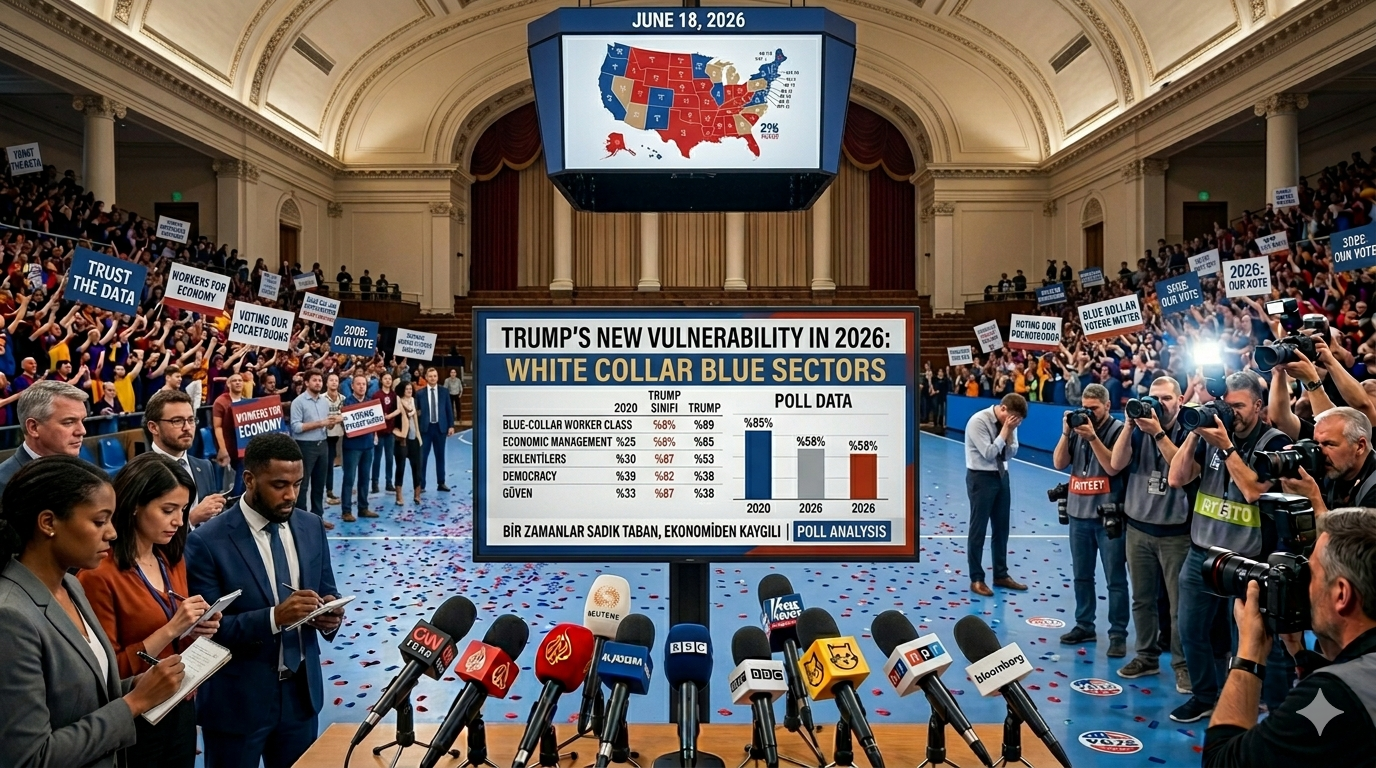
For nearly a decade, the bond between Donald Trump and America’s white working class seemed unbreakable. But in the summer of 2026, that foundation is cracking in ways that could redefine his presidency. New polling data reviewed by political analysts shows an extraordinary swing among white working-class voters on the president's handling of the economy — the very issue that once propelled him to power.
The Great Realignment Begins
In the 2016 and 2024 elections, white workers without a college degree delivered decisive margins for Trump. Their frustration with globalization, stagnant wages, and cultural displacement made them the backbone of his movement. But the latest surveys in mid-2026 paint a starkly different picture. Approval ratings on his economic management among this group have dropped by 14 points since January, from 62% to 48% — a shift that pollsters describe as 'historic' for a modern president.
The discontent isn't limited to a single region. Industrial heartlands in Pennsylvania, Michigan, and Wisconsin, which flipped to Trump in 2024 by narrow margins, are now showing buyer’s remorse. In Erie, Pennsylvania, a county that Trump won twice, more than 55% of blue-collar respondents now say the economy is heading in the wrong direction, according to a June 10 survey conducted by a nonpartisan research group.
Why the Shift?
Several factors are fueling the reversal. Inflation has remained stubbornly above 3% throughout 2026, eating into weekly paychecks despite a strong job market. The promised manufacturing renaissance has only partially materialized, with automation reducing the need for human labor even as factories return. And the administration’s renewed trade wars have led to retaliatory tariffs that hit farm and factory exports hard, triggering layoffs in key battleground states.
Economic Pain Points
To understand the shift, one must look at the lived experience of white working-class households. The average hourly wage for production and nonsupervisory employees has risen by 4.2% in 2026, but when adjusted for inflation, real earnings have actually declined by 1.1%. For families that rely on overtime and shift work, the squeeze is relentless. 'I used to vote for him because I thought he’d bring back good jobs,' said a 52-year-old machine operator from Youngstown, Ohio, in a recent focus group. 'Now I’m working two jobs and still falling behind.'
Healthcare costs, too, have spiked. The administration’s push to deregulate insurance markets has led to higher premiums for many middle-income families, with the average annual deductible now exceeding $10,000 for a family of four. This burden falls disproportionately on workers without union-negotiated benefits — the very demographic Trump counts on.
The Housing Crunch
Another overlooked pressure is housing. In small towns and exurban areas, where white working-class voters are concentrated, home prices have surged 18% since 2024, driven by limited supply and higher mortgage rates. Rentals have become equally scarce, forcing many adult children to live with parents. This has created a deep-seated anxiety that erodes trust in economic promises.
From Loyalty to Doubt
Perhaps the most striking finding in the polling data is the erosion of emotional loyalty. Only 41% of white blue-collar voters now say they 'trust the president to do what’s right for people like them,' down from 65% in early 2025. This 24-point plunge indicates not just policy dissatisfaction but a profound break in the personal connection that defined Trumpism.
Political strategists say that once trust evaporates, it rarely returns without a major external event. 'These voters aren’t just angry about prices — they feel betrayed,' explains Dr. Amanda Henson, a professor of political science at the University of Michigan. 'They believed he was different, that he understood their pain. Now they’re questioning whether he ever really did.'
Cracks in the Narrative
Trump has long portrayed himself as the defender of the working class, but his 2026 budget proposal, which cut funding for apprenticeship programs and rural infrastructure, received withering coverage in local media. That message has cut through: 58% of white working-class respondents in a recent poll said they were aware of the cuts, and among them, disapproval of the president’s economic leadership reached 73%.
What It Means for 2026 and Beyond
The midterm elections just five months away could be a referendum on this economic discontent. If white working-class turnout drops or shifts significantly toward Democratic candidates, Republicans could lose control of Congress. Early signals from special elections in Pennsylvania and Ohio suggest a 7- to 10-point swing away from the GOP in working-class precincts compared to 2024.
For Trump, the danger is existential. His political persona has always rested on the idea that he alone could fix a rigged system for the forgotten men and women. If those very people now feel forgotten again, the scaffolding of his movement could collapse. Donor circles are already buzzing with concern, and potential primary challengers are testing the waters.
A Path Forward?
Some advisers are urging a pivot — a new 'American Worker Bill of Rights' that would mandate profit-sharing, expand overtime pay, and invest directly in community colleges. Whether Trump, known for his instinctual rather than strategic governance, will embrace such a shift remains unclear. One anonymous aide told a reporter: 'He still thinks the base will never leave him. But the numbers don’t lie, and even he’s starting to ask questions.'
The coming months will test whether this vulnerability becomes a mortal wound or a temporary blip. What’s certain is that the white working class, once the unshakeable core of Trumpism, is no longer a given. In a democracy built on shifting allegiances, the 2026 election year may belong to those who can listen to the quiet desperation in factory towns and farm communities — and answer with deeds, not just words.
