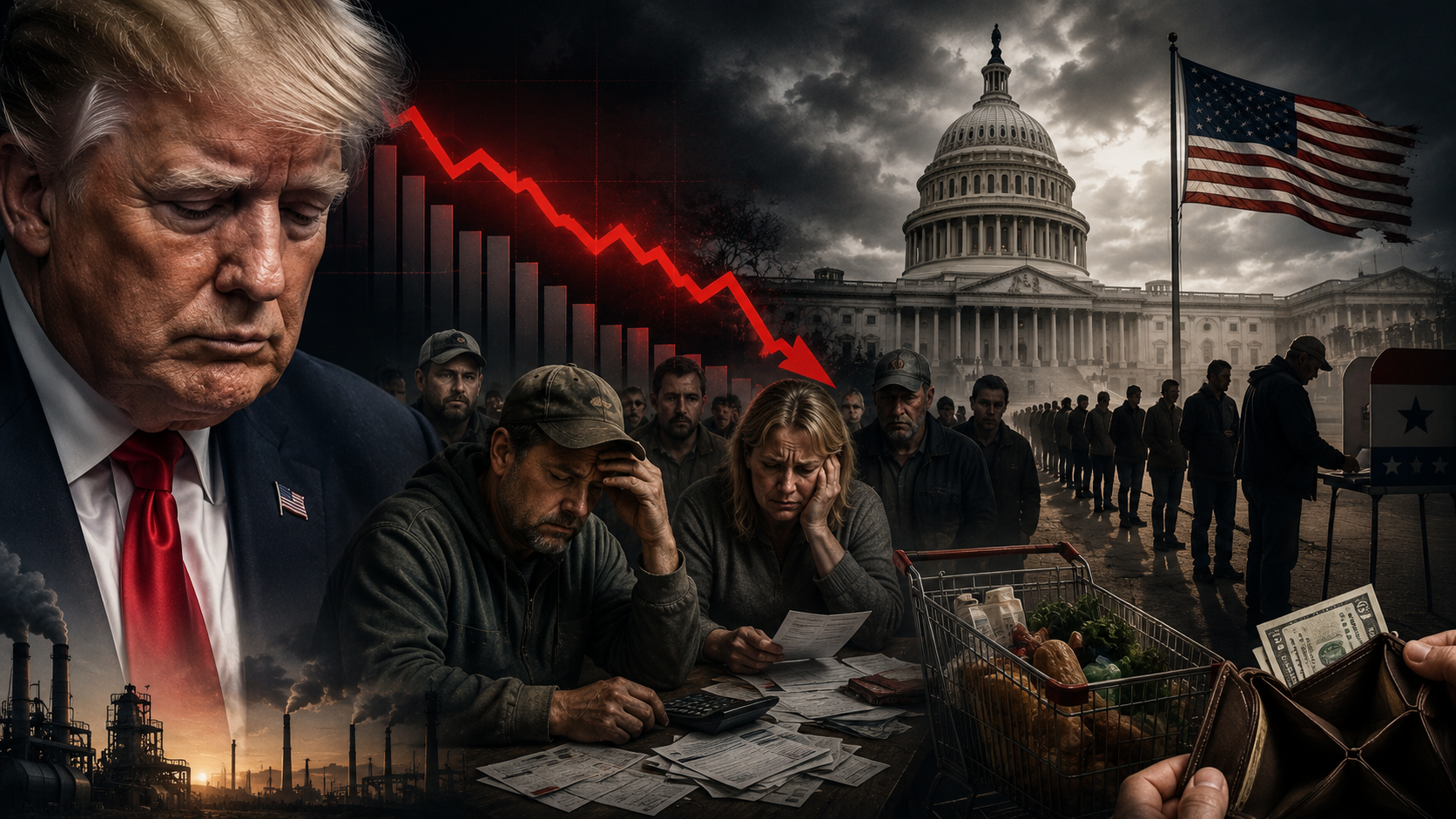
The latest polling data out of Washington has set off alarm bells in the West Wing. A comprehensive survey released in June 2026 reveals that President Trump’s economic approval rating has plummeted to 38%, the lowest point of his tenure. Just eight months ago, the same metric stood at a comparatively robust 46%; the eight-point tumble marks a dramatic loss of confidence that transcends the usual partisan divide. More unsettling for the administration is where the discontent is concentrated: among the very voting blocs that delivered Trump his decisive 2024 victory.
A Shaken Base: White Working-Class Voters Wobble
The poll’s most sobering statistic is that 51% of white voters without a college degree now disapprove of the president’s economic stewardship. This demographic, which powered landslide margins in Rust Belt states from Pennsylvania to Wisconsin, has long formed the political backbone of Trumpism. Yet the data suggest that anxieties on factory floors and in logistics hubs are beginning to crystallize into a voting-block problem. “We keep hearing about ‘the greatest deals,’ but when I look at my wallet, I’m not seeing any more cash than I did in 2025,” an Ohio steelworker told a local affiliate last week.
The Tariff Bill Coming Due
The aggressive tariff regime, sold as the administration’s signature economic weapon, is now eroding trust within its own ranks. In theory, levies on steel and aluminum were supposed to shield domestic production; in practice, they have triggered price hikes of up to 25% on imported consumer goods. The University of Michigan’s Consumer Sentiment Index preliminary report for the second quarter of 2026 shows a real-terms contraction of 4.2% in durable goods spending. For blue-collar families balancing budgets down to the penny, that translates into a tangible squeeze—from grocery receipts to auto loans—that no amount of supply-side rhetoric can mask.
The Inflation Beast: The Other Half of the Story
Optimism that inflation was tamed in mid-2025 has given way to a harsh reality check in the summer of 2026. The Consumer Price Index has posted an annualized increase of 3.8% over the last three months, fueled by stubborn rises in energy and shelter costs. Markets hoping for Federal Reserve rate cuts were left disappointed, and the 30-year fixed mortgage rate has crept back to 7.2%. According to the poll, 62% of respondents now describe inflation as their “number one personal economic threat.” When combined with the pervasive feeling that wage gains are trailing price increases, the White House’s narrative of a “post-Bidenomics abundance” rings increasingly hollow.
The Silent Cry of Real Wages
Beneath the surface of a seemingly healthy labor market—unemployment stands at a historically low 4.1%—lies a different story. As of February 2026, average hourly earnings rose a nominal 4.3%, but after adjusting for inflation, real wage growth was a meager 0.5%. In plain terms, American workers are technically earning more yet their purchasing power is barely budging. This “I got a raise but feel poorer” paradox has become one of the most concrete drivers of the economic approval slump, turning a statistical talking point into a kitchen-table grievance.
Dark Signals for the 2026 Midterms
With congressional elections looming in November, the survey acts as a cold shower for Republican strategists. The party is defending a fragile four-seat majority in the House, and an economic discontent wave is likely to buffet the razor-thin races in Pennsylvania, Wisconsin, and Michigan. Only 29% of independent voters approve of Trump’s economic handling, creating a trust deficit that could force GOP candidates to distance themselves from the president. A leaked memo from a former party consultant warned: “Voters watching their credit-card balances balloon don’t want to hear chest-thumping speeches about tariff victories.”
The Administration’s Response and the Narrative Fight
The White House responded to the poll by insisting that “rebuilding the American economy in the face of global headwinds is a long-term project.” Yet this defense clashes with the campaign’s earlier promise of “prosperity from day one,” opening the administration to charges of a bait-and-switch. While officials point to tariff revenues being funneled into infrastructure projects, 68% of poll respondents said they have not seen any direct impact on their lives. In the battle for the narrative, hard-hitting household metrics are clearly eclipsing big-picture pledges.
The coming months will revolve around one burning question: how will this bubbling discontent translate into votes? As the polls paint a map of geographic depression, the ultimate test is whether a miracle is needed to restore economic confidence—or whether the electorate’s patience has already run dry.
