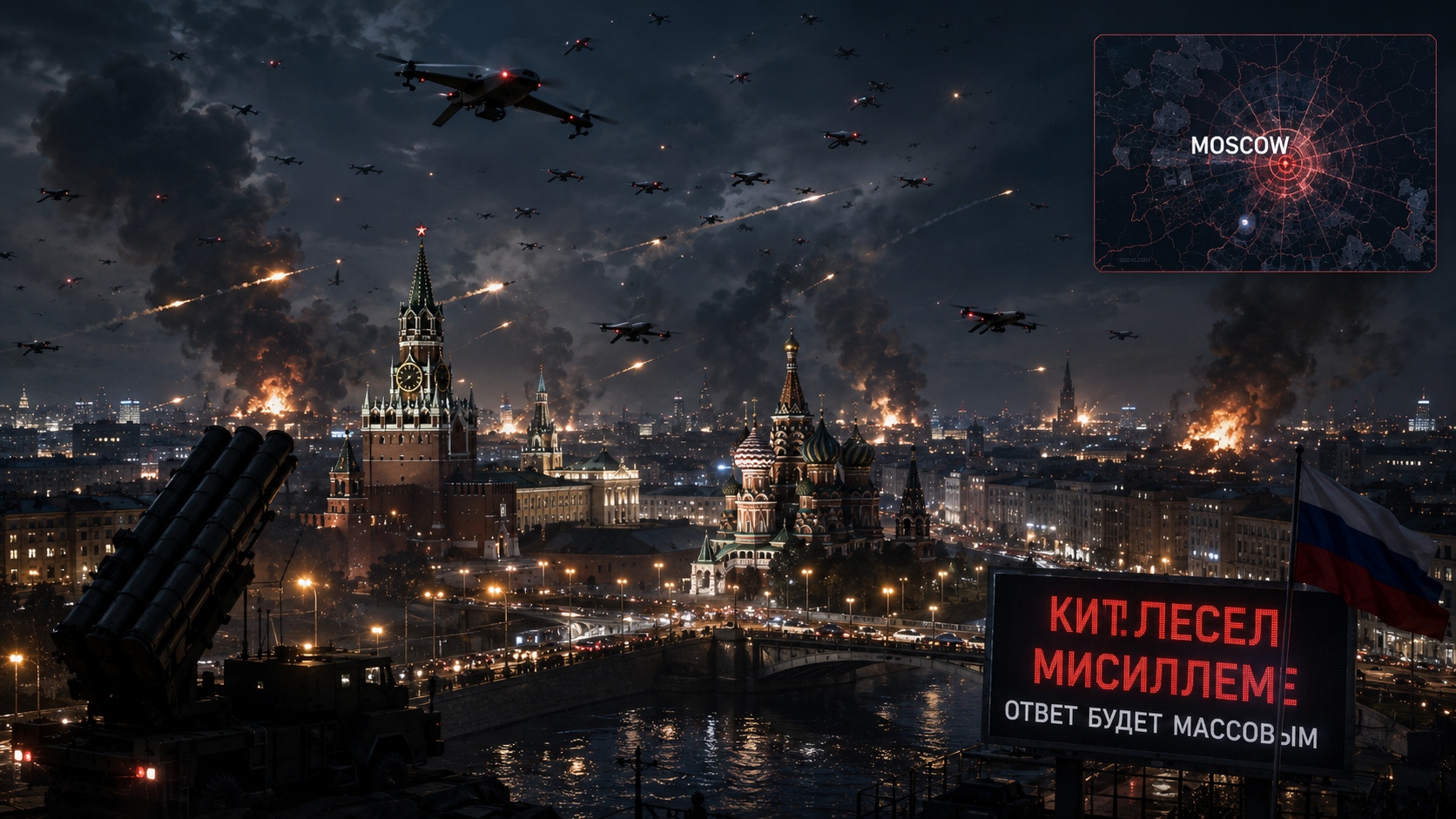
The Midnight Swarm: Moscow Hit by Largest Drone Onslaught Yet
In the early hours of 20 June 2026, Moscow’s air defences faced their most complex test since the Cold War. Ukraine launched a coordinated swarm of approximately 200 unmanned aerial vehicles — its boldest strike on the Russian capital to date. Although Russia’s Ministry of Defence claimed to have downed 337 drones, falling debris set residential buildings ablaze across Odintsovo, Vnukovo and Domodedovo districts, killing at least two civilians and injuring 18. For the first time since 2022, the wail of air raid sirens pierced the heart of the Russian capital, shattering the Kremlin’s narrative of a distant war.
A New Front Behind the Lines: Why Civilians Feel Targeted
Footage of a shattered apartment block just 30 kilometres from the Kremlin fed a media frenzy — Russian state TV called it ‘unprecedented audacity.’ Ukraine insisted the operation struck military infrastructure, but the civilian toll highlighted the psychological dimension of modern drone warfare. In 2025, sporadic drone incursions into Moscow were largely symbolic; today’s synchronized 200-strong wave proves Kyiv can now transform the capital into a regular operational theatre, blurring the boundary between front line and home front.
‘Massive Retaliation’: Bluff or Blueprint for Escalation?
Within hours, Kremlin spokesman Dmitry Peskov appeared on screen vowing a ‘massive and devastating’ response. The phrasing echoed earlier threats after the Crimean Bridge explosion, but the steely tone sparked immediate concern in Western capitals about a possible nuclear dimension. Moscow updated its nuclear doctrine last year, reserving the right to use tactical weapons if ‘the very existence of the state is threatened.’ Today, with the heart of Russia struck, that clause hangs over the world like a sword of Damocles.
Beyond the Red Line: What Retaliation Scenarios Are on the Table?
Military analysts expect Russia to unleash intense missile and drone salvos on Kyiv, Kharkiv and Odesa within hours. The greater risk, however, lies in a naval escalation: the Black Sea blockade could be tightened to strangle remaining grain exports, while provocative exercises near NATO’s Polish border might test Article 5. Russia had long declared Western supply of long-range weapons to Ukraine a red line; now that 1,000-km Ukrainian drones have made that line obsolete, the question remains: how can Moscow deliver ‘massive’ payback without resorting to weapons of mass destruction?
Ukraine’s Deep Strike Capability and the West’s Dilemma
The majority of drones that reached Moscow are believed to be the domestically produced ‘Lyuty’ model, boasting a range exceeding 1,000 kilometres — a testament to Ukraine’s growing self-reliance. The attack has also reignited a simmering debate in Washington and Berlin: should Ukraine finally be given the green light to strike deep inside Russian territory? Though both capitals have resisted such a move through early 2026, today’s swarm proved that Kyiv no longer needs permission to hold Moscow at risk.
The Taurus Quandary and the ATACMS Silence
Germany’s Chancellor reiterated last month that Taurus missiles would only be supplied under ‘full allied consensus.’ The attack exposes the strategic cost of Berlin’s hesitation, while key members of the US Congress intensify pressure to remove range restrictions on ATACMS. Moscow, meanwhile, warns that any Western assistance for deep strikes constitutes ‘direct participation in the war,’ raising the stakes of every future shipment.
The Road Ahead: Peace or Perpetual Spiral?
The unprecedented drone wave has frozen the already fragile peace track scheduled for informal talks in Istanbul later this summer. Beijing and Ankara’s mediation efforts hang in the balance, while Moscow residents describe a surreal new reality: air raid shelters are becoming routine, commutes are rescheduled around curfews. This psychological erosion could either fuel an anti-war backlash or ignite a vengeful nationalism — both scenarios threaten to prolong the bloodshed.
Saturation Point: Why Moscow’s Sky Shield Failed
Defence experts note that launching over 200 low-cost drones simultaneously overwhelmed the layered S-400 and Pantsir systems through sheer quantity. Ukraine’s swarm tactic drains expensive missile batteries and leaves symbolic and economic targets exposed. In the fourth year of the war, Russia’s air defence doctrine faces an urgent overhaul — yet the cost and time required suggest that the days ahead may be even darker for civilians on both sides. Will this escalation finally force both sides to the negotiating table, or does it mark the beginning of an all-out spiral of destruction? Share your insights — the world is watching a pivotal moment unfold.
