Behind the Scenes of Trump's Intervention
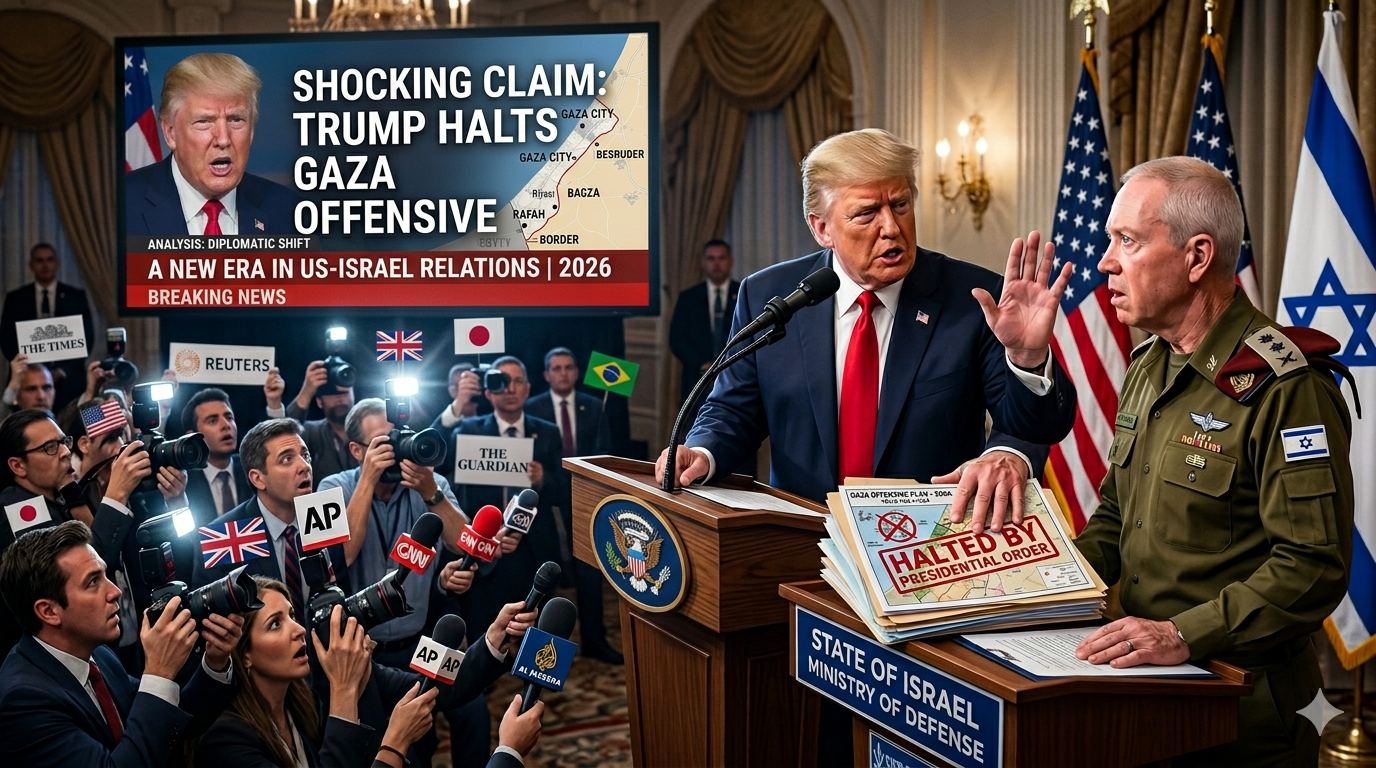
According to reports from leading Israeli newspapers, the Israel Defense Forces (IDF) were preparing to launch a large-scale ground and air operation in the Gaza Strip during the first week of June 2026. The planned offensive was specifically targeting Hamas infrastructure in the Rafah area and envisioned a more comprehensive strategy than the conflicts of 2025. However, it is claimed that the operation was suspended following a direct phone call between President Trump and Prime Minister Benjamin Netanyahu. White House sources reported that Trump stated 'further civilian casualties are unacceptable' and pressured Israel to explore alternative diplomatic solutions.
Leaked Details from the White House
Behind-the-scenes information reflected in the Israeli press suggests that Trump's concern about losing Arab-American voter support in the 2026 presidential election played a role in this decision. The Trump administration has intensified mediation talks with Saudi Arabia and Egypt in recent months. Additionally, growing calls in the US Congress to 'end unconditional support for Israel' may have influenced Trump's political calculations. A leaked note from the White House alleged that Trump told Netanyahu, 'We can no longer continue with the old methods. We haven't forgotten the losses of 2025.'
Reactions and Political Earthquake in Israel
Trump's intervention sent shockwaves through Israeli politics. Initial reactions from the right wing of the coalition government were harsh. National Security Minister Itamar Ben-Gvir described Trump's decision as 'interference in Israeli sovereignty' and called for early elections. Meanwhile, opposition leader Yair Lapid cautiously welcomed the move, which could reduce international pressure. Cracks have reportedly formed within Netanyahu's own Likud party, with some lawmakers questioning the prime minister on 'the consequences of dependency on the US.'
Crisis Within the Security Bureaucracy
Divisions have also surfaced within Israeli security institutions. Some senior officials in Shin Bet and Mossad have long argued that military operations would undermine diplomatic gains. Trump's intervention has strengthened this internal opposition. A former Mossad official, speaking anonymously, stated, 'We saw that the operations in 2025 did not eliminate Hamas but instead led to further radicalization. A different path must now be tried.'
The Humanitarian Situation in Gaza and International Pressure
Following the large-scale conflicts of 2025, the humanitarian crisis in Gaza has deepened. According to UN reports, 1.2 million people were facing food insecurity by early 2026, and access to clean water had decreased by 40%. Rising outrage from the international community has cornered the Trump administration. In March 2026, the European Union had tabled economic sanction options against Israel. The humanitarian diplomacy led by Turkey and Qatar has put the US at risk of losing its regional leadership role.
A Critical Threshold in Ceasefire Efforts
Ceasefire talks underway in Cairo, Egypt, have gained new momentum following Trump's intervention. Hamas officials are conditioning a permanent ceasefire on Israel's withdrawal from buffer zones captured in 2025. Israeli media wrote that Trump conveyed a message to Netanyahu to 'seize this opportunity for a lasting solution.' Secretary of State Marco Rubio's scheduled visit to the region next week is seen as a signal that the diplomatic process will accelerate.
A New Era in US-Israel Relations
Trump's move is being evaluated as an unusual break in US-Israel relations. The Trump administration, which took office in 2025, had maintained its unconditional support for Israel in its early months. However, in 2026, domestic public pressure and shifts in global power balances have pushed the White House toward a more pragmatic line. Analysts note that this decision could strengthen the US hand against Iran and Russia but may lead to long-term tension with the right-wing government in Israel.
Foreign Policy in the Shadow of the 2026 Elections
Trump's stance has also reverberated in domestic politics ahead of the 2026 midterm elections. While the Arab-American community and progressive Democrats have responded with cautious optimism to Trump's Gaza policy, the evangelical base and Israel lobby have reacted harshly. Commentators suggest that Trump, who criticized former President Joe Biden's passive approach in 2025, is now trying to craft an image as a 'peacemaker.' Middle East experts emphasize that 2026 will be a critical year in which the real consequences of this move will unfold.
Do you think Trump's move can contribute to lasting peace in the Middle East, or will it escalate tensions with Israel's right-wing government and lead to a new crisis? Share your thoughts with us.
