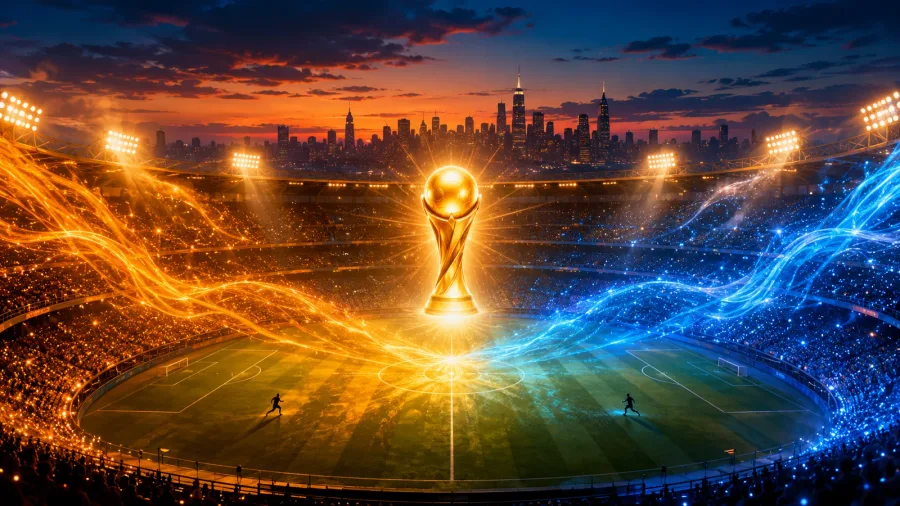
NEW JERSEY, USA — The stage is set for a monumental showdown at MetLife Stadium as Argentina and Spain prepare to battle for the FIFA World Cup 2026 trophy this Sunday, July 19. In what promises to be a generational clash, the defending champions from South America face a resurgent European powerhouse, with both sides carrying the weight of history and the expectations of millions into football's ultimate fixture. The match represents the culmination of a tournament that has expanded to 48 teams for the first time, delivering upsets and drama across three host nations.
Argentina arrives at the final having navigated a challenging knockout path, eliminating the Netherlands on penalties before dispatching co-host United States 2-0 in the semifinals. Spain, under the tactical guidance of Luis de la Fuente, has been arguably the tournament's most impressive side, dismantling Germany in the quarterfinals and overcoming Brazil in a thrilling semifinal. With both squads at full strength and no significant injury concerns, the tactical chess match between Lionel Scaloni and De la Fuente will be as compelling as the action on the pitch.
Messi's potential final act on the world stage
Lionel Messi, at 39, has defied age and logic throughout this tournament, contributing five goals and four assists to Argentina's campaign. The Inter Miami forward has been the heartbeat of La Albiceleste, orchestrating attacks with the same vision that defined his prime years at Barcelona. Reports from Argentine media suggest this final could mark his farewell to international football, adding an emotional layer to an already charged occasion. A victory would make him one of the few players in history to lift the World Cup twice, a feat that would permanently settle any debate about his place among the sport's immortals.
The narrative weight of Messi's potential swan song has dominated global headlines, but his teammates have ensured Argentina is far more than a one-man show. Julian Alvarez has provided relentless pressing and four crucial goals, while Enzo Fernandez has been the tournament's most effective ball-winner in midfield. The defensive partnership of Cristian Romero and Lisandro Martinez has conceded only twice from open play, providing the platform for Argentina's attacking talents to flourish. This collective strength, forged in the fires of their 2022 triumph in Qatar, makes Argentina a formidable opponent regardless of the emotional stakes.
Spain's golden generation seeks redemption
Spain enters the final with a squad that blends youthful exuberance with tactical sophistication. Lamine Yamal, the 18-year-old Barcelona prodigy, has been the breakout star of the tournament, scoring a stunning goal against Brazil that instantly entered World Cup folklore. Alongside Pedri and Gavi, Yamal forms the core of a midfield that has dominated possession and dictated tempo against every opponent. This trio represents the fruition of Spain's long-term investment in youth development, a project that has finally delivered on its immense promise.
Luis de la Fuente has evolved Spain's traditional possession-based approach into a more vertical, direct style without sacrificing control. The team leads the tournament in shots on target and pass completion rate, a statistical combination that reflects their dual threat. The wing play of Nico Williams and Yamal has stretched defenses, creating space for striker Alvaro Morata to score four goals. For Spain, this final is an opportunity to reclaim their place at football's summit after 16 years without a World Cup triumph, a drought that has felt interminable for a nation that once dominated the sport.
Tactical battle in the heart of midfield
The outcome of the final will likely hinge on the midfield confrontation between two contrasting philosophies. Argentina's Enzo Fernandez and Alexis Mac Allister offer a blend of defensive tenacity and creative distribution, while Spain's Pedri and Gavi provide relentless movement and incisive passing. Fernandez leads the tournament in interceptions and tackles won, a shield that has protected Argentina's backline throughout the knockout stages. Pedri, conversely, has created more chances from open play than any other midfielder, underlining his role as Spain's primary creative outlet.
The tactical adjustments made by both managers will be crucial. Scaloni may opt for a more conservative setup, ceding possession to Spain and looking to exploit transitions through Alvarez and the wide runs of Angel Di Maria. De la Fuente, meanwhile, must decide how high to push his defensive line against Argentina's pace on the counter. The chess match between these two coaches, both of whom have won major trophies with their respective nations, adds an intellectual dimension to what promises to be a physically intense encounter.
The economic and cultural magnitude of the final
The World Cup final at MetLife Stadium represents a landmark moment for soccer in the United States, with ticket prices on the secondary market reaching $15,000 and hotels in the New Jersey-New York area charging five times their standard rates. FIFA officials project a global television audience exceeding 1.5 billion viewers, which would shatter previous records for a single sporting event. The economic impact on the region is estimated at $500 million, encompassing hospitality, transportation, and merchandise sales.
Security preparations have been extensive, with over 5,000 law enforcement personnel deployed and a no-fly zone established around the stadium. An estimated 40,000 fans from each nation have traveled to the United States, transforming parts of New Jersey and Manhattan into vibrant celebrations of Argentine and Spanish culture. The scenes recall the 1994 World Cup final at the Rose Bowl, but the scale and commercial sophistication of the 2026 edition reflect how much the sport has grown in North America over three decades.
A defining moment for world football
This final carries implications that extend far beyond the trophy itself. For Argentina, a victory would secure a fourth World Cup title, joining Italy and Germany in the pantheon of the sport's most successful nations. For Spain, a second championship would validate the country's footballing philosophy and cement the legacy of its current golden generation. The match also serves as the culmination of the first 48-team World Cup, a format that has delivered increased representation and memorable upsets, including Morocco's run to the quarterfinals and Japan's elimination of England in the round of 16.
As the football world converges on New Jersey, the question that dominates every conversation is simple yet profound: will Messi's fairy tale continue, or will Spain's young lions usher in a new era? The answer will unfold over 90 minutes, and perhaps beyond, in what promises to be a defining chapter in the sport's rich history. Whatever the outcome, the Argentina-Spain final of 2026 is destined to be remembered as a clash of generations, styles, and legacies.
