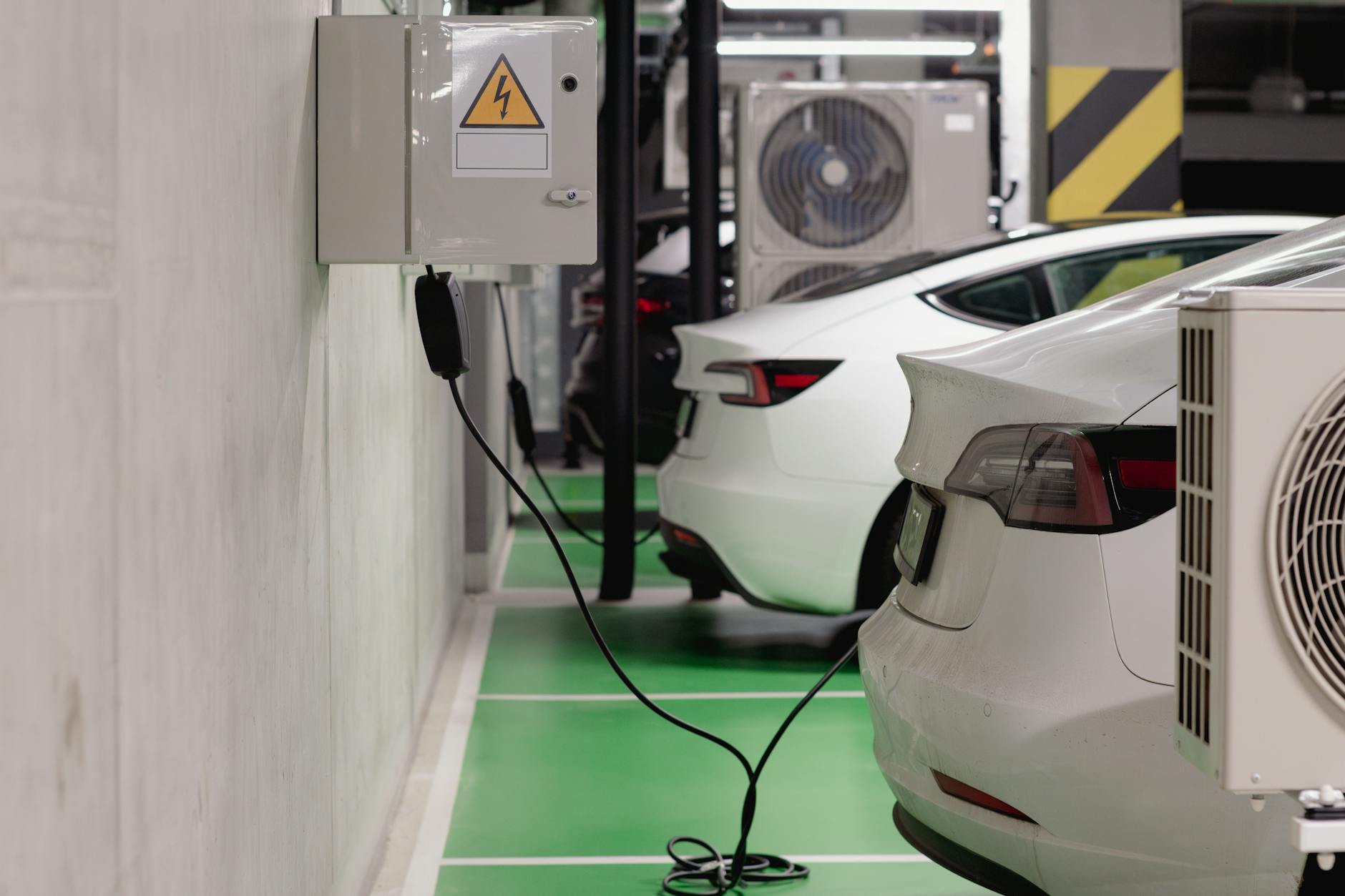
Tesla Inc. delivered 480,126 vehicles globally during the second quarter of 2026, shattering analyst expectations and snapping a punishing two-year streak of year-over-year declines that had cast doubt on the electric vehicle pioneer's growth narrative. The Austin, Texas-based company also reported production of 455,889 units for the April-through-June period, signaling that inventory levels built up during the 2024-2025 demand slump are finally beginning to normalize.
Wall Street had braced for a more modest 445,000 deliveries, according to consensus estimates compiled by Bloomberg. The 8% beat sent Tesla shares surging 8% in after-hours trading on July 10, 2026, pushing the stock to $285 — its highest level since January 2024. The results mark a decisive turning point for Elon Musk's company, which had posted eight consecutive quarters of declining deliveries through the end of 2025, fueling concerns that Tesla's era of hypergrowth was permanently over.
How Tesla engineered its comeback after two years of decline
The delivery slump that began in the first quarter of 2024 was unprecedented in Tesla's modern history. After years of 40-50% annual growth, the company suddenly faced a constellation of headwinds: softening EV demand in key markets, bruising price wars initiated by Chinese competitors led by BYD, and a consumer backlash tied to Musk's increasingly polarizing political commentary on X (formerly Twitter). By the fourth quarter of 2025, Tesla's global market share in the battery electric vehicle segment had eroded from 18% to just under 11%.
The turnaround strategy that crystallized in early 2026 rested on three pillars. First, Tesla executed an aggressive product refresh cycle, headlined by the heavily updated Model Y 'Juniper' — a comprehensive mid-cycle overhaul featuring redesigned exterior panels, an upgraded interior with ventilated seats and ambient lighting, and a 5% improvement in range across all trims. Second, the company slashed Model 3 base prices by $3,000 in North America and Europe, bringing the entry-level sedan to $35,990 before incentives. Third, Tesla finally resolved the persistent production bottlenecks at its Texas Gigafactory, enabling Cybertruck output to reach meaningful volumes for the first time since its troubled 2023 launch.
China strategy and the BYD challenge
China remains Tesla's most important — and most treacherous — market. The Shanghai Gigafactory, which accounts for roughly 40% of the company's global production capacity, churned out approximately 210,000 vehicles in the second quarter, with about 72,000 sold domestically and the remainder exported to Southeast Asia, Australia, and Europe. Tesla's China sales benefited from the government's extension of EV purchase subsidies into 2026, which provide up to 30,000 yuan ($4,100) in direct consumer incentives for qualifying vehicles.
Yet the competitive pressure from BYD is intensifying rather than easing. BYD delivered over 980,000 vehicles in the same quarter, more than double Tesla's global total, and is on track to surpass 3 million annual sales in 2026. The Shenzhen-based automaker's vertical integration — it manufactures its own batteries, semiconductors, and even ships its own vehicles — gives it a structural cost advantage that Tesla cannot easily match. Analysts at Bernstein estimate that BYD's gross margins on its best-selling models are now within 200 basis points of Tesla's, a gap that was 800 basis points just two years ago.
Musk leadership and investor confidence rebound
Elon Musk's 2025 was, by any measure, a reputational nightmare for Tesla's brand. His acquisition and transformation of Twitter into X had already alienated a significant portion of Tesla's environmentally conscious, left-leaning customer base in California and Western Europe. But it was his increasingly explicit endorsements of far-right political figures in the United States and Europe during the 2025 election cycle that triggered measurable sales declines — Tesla registrations in California dropped 15% year-over-year in 2025, while the brand's net promoter score among Democratic voters fell to an all-time low of -12.
The 2026 reset has been as much about optics as operations. In January, Musk announced he would step back from day-to-day management at X and appoint a full-time CEO for the platform. He also added three new independent directors to Tesla's board, including former Ford CFO Bob Shanks and ex-Apple executive Isabel Ge Mahe, addressing long-standing criticism about the board's lack of independence. Norway's sovereign wealth fund, which had publicly rebuked Tesla over governance concerns in 2024, increased its stake by 12% in the first quarter of 2026. Vanguard Group, Tesla's second-largest institutional shareholder, added 4.5 million shares to its position.
Cybertruck and Model 2: the growth catalysts
The Cybertruck's journey from punchline to profit contributor has been one of the more remarkable subplots of Tesla's 2026 resurgence. After years of production hell, the angular stainless-steel pickup finally hit a weekly run rate of 2,500 units at the Texas Gigafactory in May 2026, translating to roughly 30,000 deliveries in the second quarter. While still a niche product compared to Ford's F-150 Lightning (which sold 24,000 units in the same period), the Cybertruck's average transaction price of $82,000 makes it a high-margin vehicle that disproportionately boosts Tesla's bottom line.
Even more consequential for Tesla's long-term growth trajectory is the Model 2, the long-awaited $25,000 compact car that the company officially unveiled in November 2025. Pre-orders opened in Europe in March 2026, and Tesla has confirmed that series production will begin at the Berlin Gigafactory in the fourth quarter of this year. Analysts at Goldman Sachs project that the Model 2 could expand Tesla's total addressable market by 40%, particularly in price-sensitive European and Asian markets where the Model 3's $40,000-plus starting price has been a barrier to mass adoption.
Global EV market dynamics and Tesla's position
Tesla's record quarter coincides with a broader recovery in the global electric vehicle market. According to the International Energy Agency's (IEA) June 2026 Global EV Outlook, worldwide plug-in vehicle sales are projected to reach 18 million units this year, up from 15.2 million in 2025 — an 18% increase that reverses the growth deceleration observed in 2024-2025. China remains the dominant force with roughly 60% of global EV sales, but Europe and North America are both showing renewed momentum as charging infrastructure expands and model availability improves.
The competitive landscape, however, has fundamentally changed since Tesla's last period of unchallenged dominance. Volkswagen Group, which invested €180 billion ($195 billion) in electrification through 2025, delivered 520,000 battery electric vehicles in the second quarter across its Audi, Porsche, and VW brands — edging ahead of Tesla for the first time in the European market. Hyundai Motor Group's E-GMP platform vehicles (Hyundai Ioniq 5/6, Kia EV6/EV9) have carved out a loyal following with their 800-volt architecture and faster charging speeds. Tesla's ability to maintain its technological edge in this increasingly crowded field will determine whether the second-quarter delivery beat represents a genuine inflection point or merely a temporary reprieve.
Tesla in emerging markets and Turkey case study
While Tesla's core markets remain North America, China, and Western Europe, the company has quietly expanded its footprint in select emerging markets where EV adoption is accelerating. Turkey offers an instructive case study. Tesla entered the Turkish market in 2023 with sales and service centers in Istanbul, Ankara, and Izmir — the country's three largest cities — and has since expanded to Bursa and Antalya. In the first half of 2026, Tesla sold 4,200 vehicles in Turkey, already surpassing the 3,800 units delivered in all of 2025.
Turkey's EV market is particularly noteworthy because of the presence of Togg, the country's first indigenous automaker, which launched its T10X electric SUV in 2023. The rivalry between Tesla and Togg has become a proxy for broader debates about technology sovereignty and national pride. Tesla's Model Y competes directly with the T10X in the premium electric SUV segment, and while Togg maintains a slight edge in total Turkish EV sales thanks to patriotic buying and government fleet contracts, Tesla leads in the private consumer market. The Turkish government's investment in charging infrastructure — the number of fast-charging stations nationwide surpassed 8,500 in mid-2026, according to the Energy Market Regulatory Authority (EPDK) — has benefited both companies and accelerated the country's transition away from internal combustion engines.
Wall Street reaction and the autonomy premium
Tesla's second-quarter delivery numbers have injected fresh optimism into a Wall Street analyst community that had grown increasingly skeptical during the 2024-2025 downturn. Morgan Stanley's Adam Jonas, one of Tesla's most influential bulls, raised his price target from $320 to $350, writing in a client note that 'Tesla has regained control of the narrative.' Goldman Sachs highlighted the inventory drawdown — from 16 days of supply at the end of Q1 to an estimated 11 days at the end of Q2 — as evidence that pricing power is returning after several quarters of margin-crushing discounting.
The bear case, however, remains stubbornly persistent. Noted short-seller Jim Chanos, who has been betting against Tesla since 2016, argues that the company's price-to-earnings ratio of 65 remains wildly disconnected from automotive industry norms. 'Tesla is still being valued like a tech company, but it's increasingly competing like a car company,' Chanos said in a CNBC interview following the delivery announcement. The counterargument — and the reason Tesla commands its premium valuation — rests on two non-automotive businesses: energy storage, where Tesla deployed a record 12.5 GWh in Q2 2026, and the anticipated robotaxi service.
Robotaxi Day and the FSD promise
The single most important event on Tesla's 2026 calendar is August 8, when Elon Musk is scheduled to host 'Robotaxi Day' — a showcase for the company's Full Self-Driving (FSD) version 12.5 software and its long-promised autonomous ride-hailing service. Musk has hinted that the first robotaxi fleet could begin limited operations in Austin and Las Vegas by mid-2027, pending regulatory approvals. The anticipation of this event has arguably done more to boost Tesla's stock price over the past three months than the improving delivery numbers.
The regulatory path forward, however, remains uncertain. The National Highway Traffic Safety Administration (NHTSA) continues its investigation into multiple crashes involving Tesla vehicles operating with Autopilot and FSD engaged. The California Department of Motor Vehicles, which would need to issue a deployment permit for any robotaxi service in the state, has requested additional safety data that Tesla has not yet fully provided. Even among Tesla's most bullish supporters, there is growing recognition that the technological and regulatory hurdles to full autonomy are more formidable than Musk's ambitious timelines have historically acknowledged. Still, with over 6 million Tesla vehicles on the road collecting real-world driving data — a dataset that no competitor can replicate — the company's long-term bet on autonomy remains the central pillar of its investment thesis as it enters the second half of 2026.
