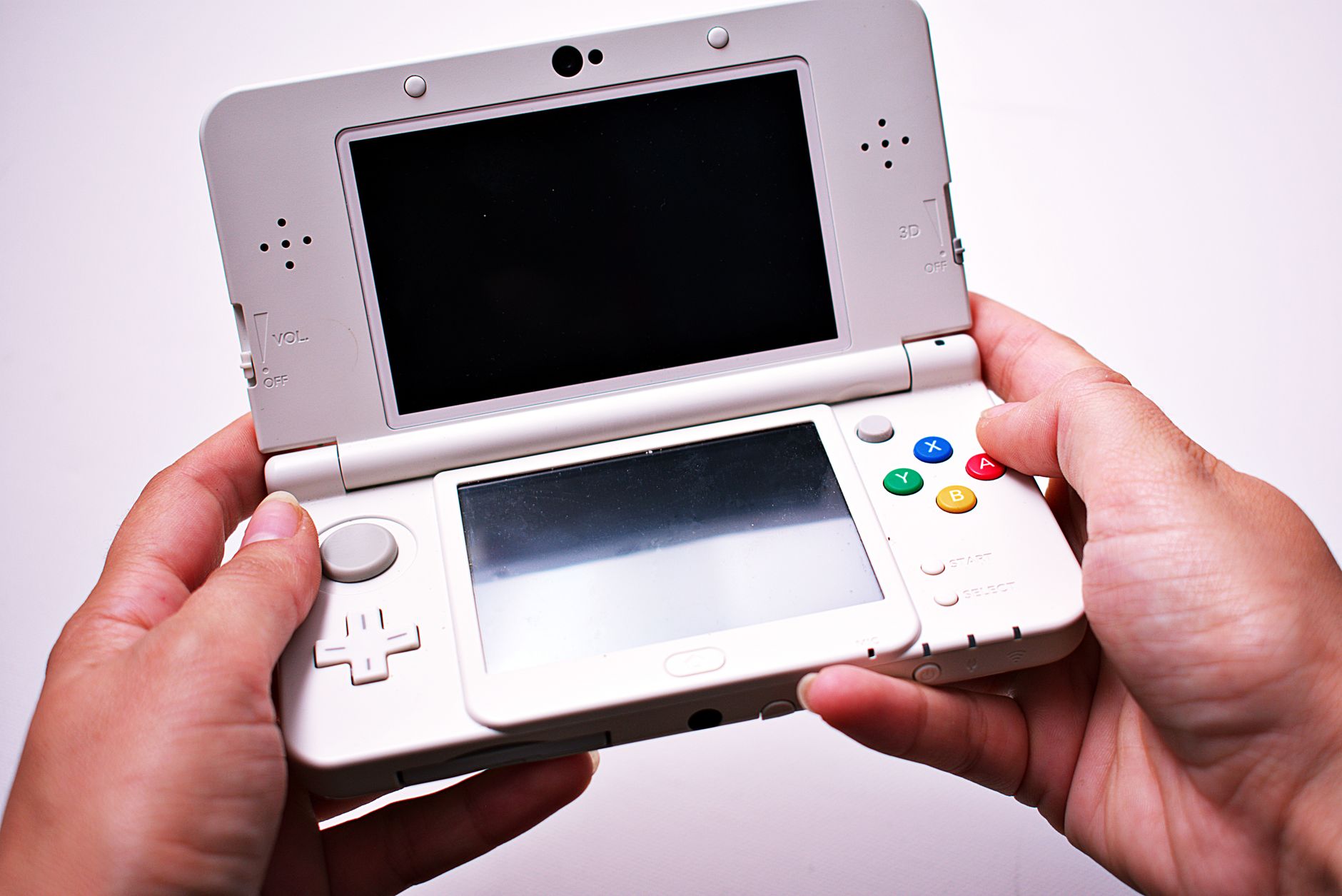
The portable gaming landscape is shifting dramatically in July 2026, and Sony is making sure it doesn't get left behind. PlayStation chief Hideaki Nishino has dropped the clearest hint yet that the upcoming PlayStation 6 family will include a dedicated handheld device, describing a future that extends 'beyond the living room.' The revelation comes as rival Nintendo's Switch 2 cements its dominance with a staggering 19.86 million units sold since its 2025 launch, reigniting a portable console war that could define the next decade of interactive entertainment.
The strategic context behind Sony's handheld signal
Hideaki Nishino, CEO of Sony Interactive Entertainment's Platform Business Group, chose a Tokyo technology summit in early July 2026 to articulate a vision that fundamentally reimagines what a PlayStation can be. 'The future of PlayStation is not confined to a television set,' Nishino told attendees. 'Wherever players are, that experience will follow them.' While the executive stopped short of confirming a dedicated PS6 handheld, the language represents a marked departure from Sony's traditionally living-room-centric messaging and signals a strategic pivot of enormous proportions.
This shift has been years in the making. Sony's 2023 release of the PlayStation Portal, a PS5 streaming companion initially dismissed by critics as a niche accessory, quietly evolved into a commercial success that validated internal research about portable gaming demand. By 2026, the Portal's unexpected trajectory—bolstered by significant cloud infrastructure investments—has given Sony executives the confidence to pursue a fully standalone handheld device. Nishino's comments reflect lessons learned from both the Portal experiment and the sobering discontinuation of the PS Vita in 2019.
From PlayStation Portal to a native PS6 handheld
The PlayStation Portal served as Sony's low-risk probe into the portable market, and its performance exceeded internal projections. What began as a remote-play accessory gradually transformed into a cloud gaming hub as Sony upgraded its server infrastructure across North America, Europe, and Asia. By mid-2026, PlayStation Plus Premium subscribers can stream over 1,000 titles at up to 4K resolution, making the Portal a genuinely capable gaming device independent of a local PS5 console.
Industry analysts at Ampere Analysis suggest that the Portal's evolution provided Sony with crucial data on user behavior, battery life expectations, and ergonomic preferences. This intelligence is now being channeled directly into the PS6 handheld's development. Unlike the Portal, which relied entirely on streaming or remote play, the new device is expected to feature a custom AMD mobile processor built on TSMC's 3-nanometer process, enabling native gameplay at respectable fidelity levels. The device will reportedly support both local processing and cloud streaming, offering flexibility that neither the Portal nor Nintendo's Switch 2 can match on their own.
Nintendo Switch 2's 19.86 million milestone and what it means for the industry
Nintendo's Switch 2 has achieved what many analysts considered improbable: matching and potentially exceeding the original Switch's meteoric sales trajectory. The 19.86 million units sold as of June 2026 represent a 22% increase over the original Switch's performance during the same post-launch period, according to Nintendo's latest financial disclosures. The Kyoto-based company has successfully navigated the generational transition that historically plagued console manufacturers, delivering a device that feels both familiar and substantially upgraded.
The Switch 2's success validates the hybrid console concept beyond any reasonable doubt. With an improved OLED display, processing power roughly equivalent to a PlayStation 4 Pro, and full backward compatibility with the vast Switch library, Nintendo has created a product that appeals to both upgraders and first-time buyers. The device's portability remains its killer feature, allowing games like 'The Legend of Zelda: Echoes of Eternity' and 'Metroid Prime 4: Beyond' to be played seamlessly at home or on the go. This is precisely the consumer expectation that Sony's Nishino is now addressing with his 'beyond the living room' vision.
What 19.86 million units reveals about modern gaming habits
The Switch 2's sales figures tell a broader story about how gaming consumption has evolved. Market research firm Newzoo's mid-2026 report indicates that 47% of console gamers now split their playtime between docked and portable modes, up from 31% in 2023. The pandemic-era shift toward flexible gaming habits has not receded; it has solidified into a permanent behavioral change. Consumers increasingly view the ability to transition seamlessly between a television and a handheld screen as a baseline expectation rather than a premium feature.
This behavioral shift has attracted new competitors to the portable space. Valve's Steam Deck has sold over 8 million units, while ASUS, Lenovo, and MSI have collectively shipped more than 5 million Windows-based handheld gaming PCs. The total addressable market for dedicated portable gaming devices has expanded far beyond what existed during the PS Vita era, and Sony's return to this segment is a recognition that absence carries a greater risk than competition.
The technological arms race between Sony and Nintendo
The emerging PS6 handheld and the established Switch 2 represent fundamentally different design philosophies. Nintendo's approach emphasizes accessibility, battery efficiency, and a curated ecosystem of first-party titles. Sony, by contrast, appears to be pursuing a no-compromise strategy where the handheld delivers an experience comparable to its home console counterpart. This ambition requires solving significant engineering challenges: delivering console-quality graphics within a 15-25 watt thermal envelope, achieving acceptable battery life during intensive gaming sessions, and managing heat dissipation in a compact form factor.
Sony's rumored partnership with AMD on a custom accelerated processing unit (APU) suggests the company is leveraging its console architecture expertise for the handheld space. The chip is expected to incorporate RDNA 4 graphics cores and Zen 5 CPU cores, potentially delivering performance between a PlayStation 4 Pro and a PlayStation 5 in a mobile package. Combined with AI-driven upscaling technology similar to AMD's FSR 4, the device could render games at lower internal resolutions while outputting a sharp 1080p or even 1440p image on its built-in display.
Cloud, AI, and the future of hybrid gaming architecture
The PS6 handheld's most significant differentiator may not be its local processing power but its integration with Sony's cloud infrastructure. The company has invested over $3 billion in data center expansion and edge computing nodes since 2024, creating a network capable of delivering low-latency game streaming across major markets. A handheld that can switch dynamically between local rendering and cloud streaming—using AI to predict network conditions and pre-load assets—would represent a genuine technological leap over current portable devices.
This hybrid architecture could allow Sony to sidestep the storage limitations that plague current handhelds. Rather than requiring users to install massive 150GB game files locally, the device could stream high-resolution assets on demand while keeping core gameplay logic resident. Nintendo's Switch 2, by contrast, relies entirely on local storage and game cartridges, a more straightforward but less flexible approach. The strategic question for 2026 and beyond is whether consumers will prioritize the simplicity of Nintendo's model or embrace the technological ambition of Sony's vision.
Global market implications and shifting competitive dynamics
Sony's handheld ambitions arrive at a moment of unprecedented competition in the portable gaming sector. Microsoft, while not offering dedicated handheld hardware, has aggressively expanded Xbox Cloud Gaming to smart TVs, tablets, and phones, effectively turning any device with a screen into a potential Xbox. Apple has pushed AAA gaming on iPhone and iPad with titles like 'Resident Evil Village' and 'Death Stranding' running natively on A-series and M-series chips. The battlefield for portable gaming has never been more crowded.
For Sony, the PS6 handheld represents both an opportunity and a necessity. The company cannot afford to cede the portable segment to Nintendo and the PC handheld ecosystem indefinitely. However, entering this market requires careful positioning to avoid cannibalizing PS6 home console sales. Nishino's framing of the handheld as an extension of the PlayStation ecosystem—rather than a separate platform—suggests Sony views the two devices as complementary. A single game purchase that works across both form factors, with cloud saves synchronizing progress, could become a powerful selling proposition that neither Nintendo nor the fragmented PC handheld market can easily replicate.
Regional pricing strategies and emerging market considerations
The success of any portable gaming device hinges significantly on pricing, particularly in price-sensitive markets across Latin America, Southeast Asia, and the Middle East. Nintendo's Switch 2 launched at $399, a price point that has proven accessible enough to drive 19.86 million unit sales. Sony faces a delicate balancing act: the PS6 handheld's advanced hardware and cloud capabilities will likely push its manufacturing cost above the Switch 2's, potentially resulting in a $449 or even $499 retail price. Whether consumers will pay a premium for Sony's technological advantages over Nintendo's established portable ecosystem remains an open question.
Sony's global distribution network and established PlayStation brand loyalty provide advantages that should not be underestimated. The company has sold over 65 million PS5 units worldwide, creating a massive installed base of potential handheld adopters who are already invested in the PlayStation ecosystem. If Sony can execute a seamless cross-device experience and price the handheld competitively, the PS6 portable could rapidly establish itself as the premium option in a market that Nintendo currently dominates through accessibility and charm.
