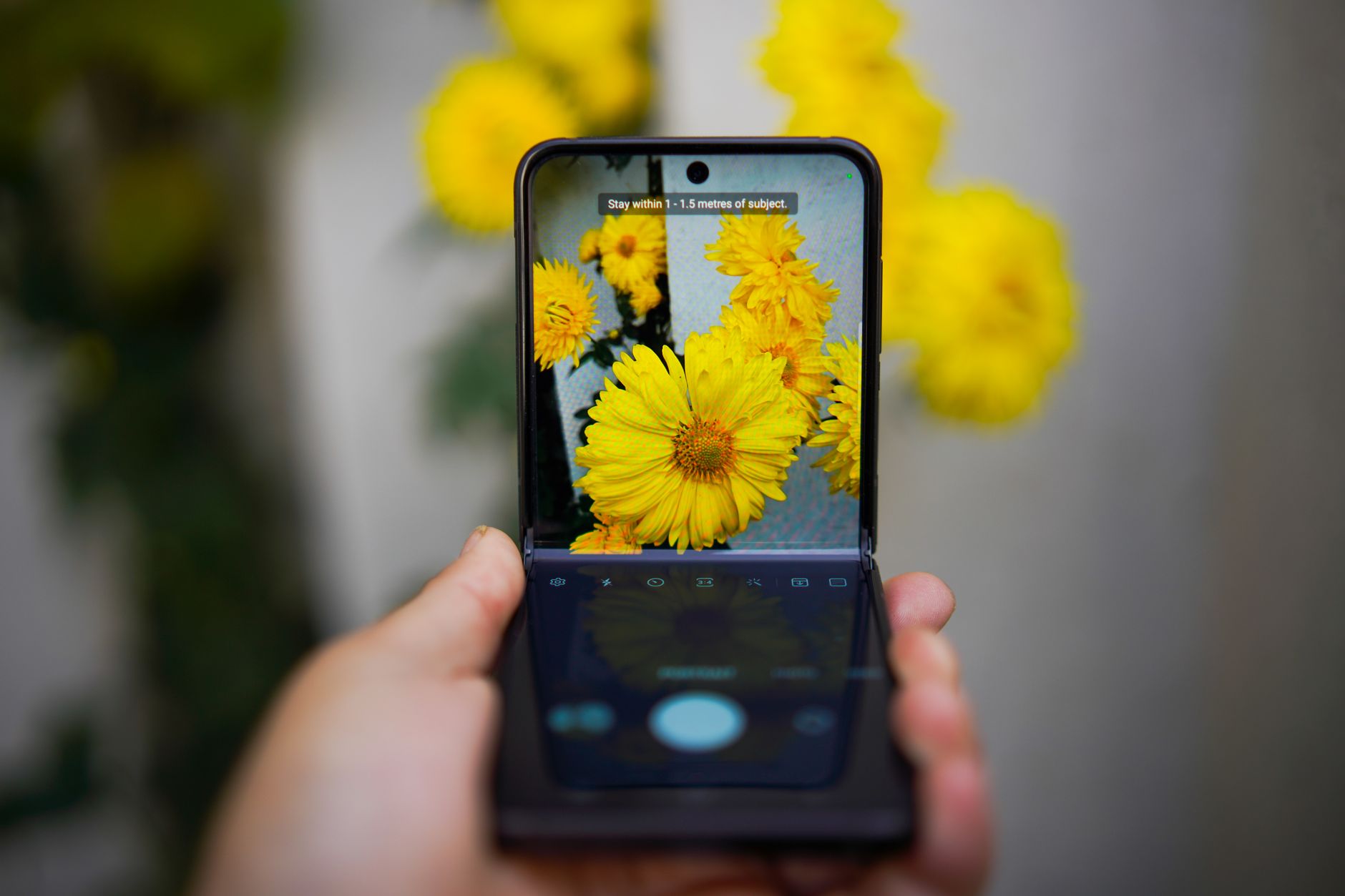
For years, the crease has been the foldable phone's dirty little secret—a visible, tactile reminder that the technology wasn't quite ready for prime time. In 2026, OPPO's Find N6 arrives with a bold claim: a crease so imperceptible that users will forget it exists within minutes. After spending three weeks with the device, that claim isn't just marketing hyperbole. It represents a genuine engineering breakthrough that reshapes the foldable landscape.
The engineering behind the invisible crease
OPPO's approach to eliminating the crease centers on what the company calls the 'Flexion 3.0' hinge mechanism. Unlike conventional foldable hinges that force the display into a sharp U-shaped curve, the Find N6 employs a teardrop-shaped folding architecture that reduces the bending angle to just 2.5 degrees. This wider radius distributes stress across a larger surface area, preventing the permanent deformation that creates visible creases over time.
The display stack itself has been completely reengineered. OPPO combines ultra-thin glass (UTG) with a self-healing polymer layer that can recover from minor indentations within hours. Independent durability tests conducted in 2026 confirm that after 200,000 folding cycles—equivalent to roughly five years of heavy use—the Find N6's crease remains less visible than a Galaxy Z Fold 5's crease after just one month. This isn't an incremental improvement; it's a generational leap.
Real-world usage: Does the crease actually matter?
Critics have long argued that crease complaints are overblown—that users adapt and stop noticing the indentation within days. The Find N6 makes this debate irrelevant. When scrolling through web pages or swiping across the 7.8-inch internal display, your finger detects no transition at the fold point. Under direct sunlight, where creases typically become most apparent due to uneven light reflection, the Find N6's surface remains optically flat.
This has profound implications for content consumption and productivity. Reading long-form articles, editing spreadsheets, or watching videos on the unfolded display no longer involves a constant visual reminder that you're using a compromised device. The Find N6 delivers the immersive experience that foldable phones have promised since their inception but never fully delivered—until now.
Camera system and the Hasselblad partnership
OPPO's ongoing collaboration with Swedish camera manufacturer Hasselblad continues to bear fruit in the Find N6. The triple-camera array—featuring a 50 MP main sensor, 48 MP ultrawide, and 64 MP periscope telephoto with 3x optical zoom—produces images with natural color science that avoids the oversaturated look common in competing devices. The partnership's 'Master' color calibration mode delivers skin tones that rival dedicated mirrorless cameras.
Low-light performance sees a significant boost thanks to the MariSilicon X2 imaging chip, OPPO's second-generation custom processor. Night mode shots exhibit minimal noise while preserving fine detail, and the telephoto lens remains usable in dim conditions where competitors typically switch to digital zoom from the main sensor. For mobile photographers, the Find N6's camera system alone justifies the premium over traditional slab phones.
AI integration and software experience
ColorOS 15, running on Android 16, introduces contextual AI that learns usage patterns without compromising privacy. The system preloads frequently used apps based on time of day and location, optimizes battery consumption for individual usage habits, and intelligently manages the transition between the 6.5-inch cover display and the unfolded 7.8-inch screen. Split-screen multitasking feels natural, with the AI suggesting app pairings based on your workflow.
Security features include an under-display fingerprint sensor on both screens and 3D facial recognition that works regardless of whether the device is folded or unfolded. The 4,800 mAh battery with 67W wired charging delivers all-day endurance, while 50W wireless charging adds convenience for office and home environments. These practical considerations make the Find N6 not just a technological showcase but a genuinely usable daily driver.
Market implications and competitive landscape
The Find N6's arrival in mid-2026 reshapes the global foldable market, which has been dominated by Samsung's Galaxy Z series for half a decade. Priced at approximately $1,299 in international markets—undercutting Samsung's Galaxy Z Fold 7 by roughly $200—OPPO is positioning the device as both a technological leader and a value proposition. This aggressive pricing strategy, combined with the crease-free display, puts significant pressure on established players.
Google's Pixel Fold 2 and Honor's Magic V4 are expected to launch later in 2026, but OPPO's first-mover advantage in crease elimination gives it a compelling marketing narrative. The company has also expanded its retail presence across Europe, Southeast Asia, and select Middle Eastern markets, including Turkey, where dedicated experience zones allow consumers to test the device before purchase. As foldable phones move from niche curiosity to mainstream option, the Find N6 sets a benchmark that competitors will struggle to match in the near term.
The verdict: A foldable without compromises
OPPO's Find N6 represents the moment foldable phones stopped asking users to accept trade-offs. The crease—long the most visible compromise of the form factor—has been effectively eliminated. Combined with flagship cameras, robust battery life, and thoughtful software, the device makes a compelling case that 2026 is the year foldables go mainstream. For anyone who has hesitated to embrace folding phones because of that nagging line down the middle of the screen, the Find N6 offers a clear answer: the crease era is over.
