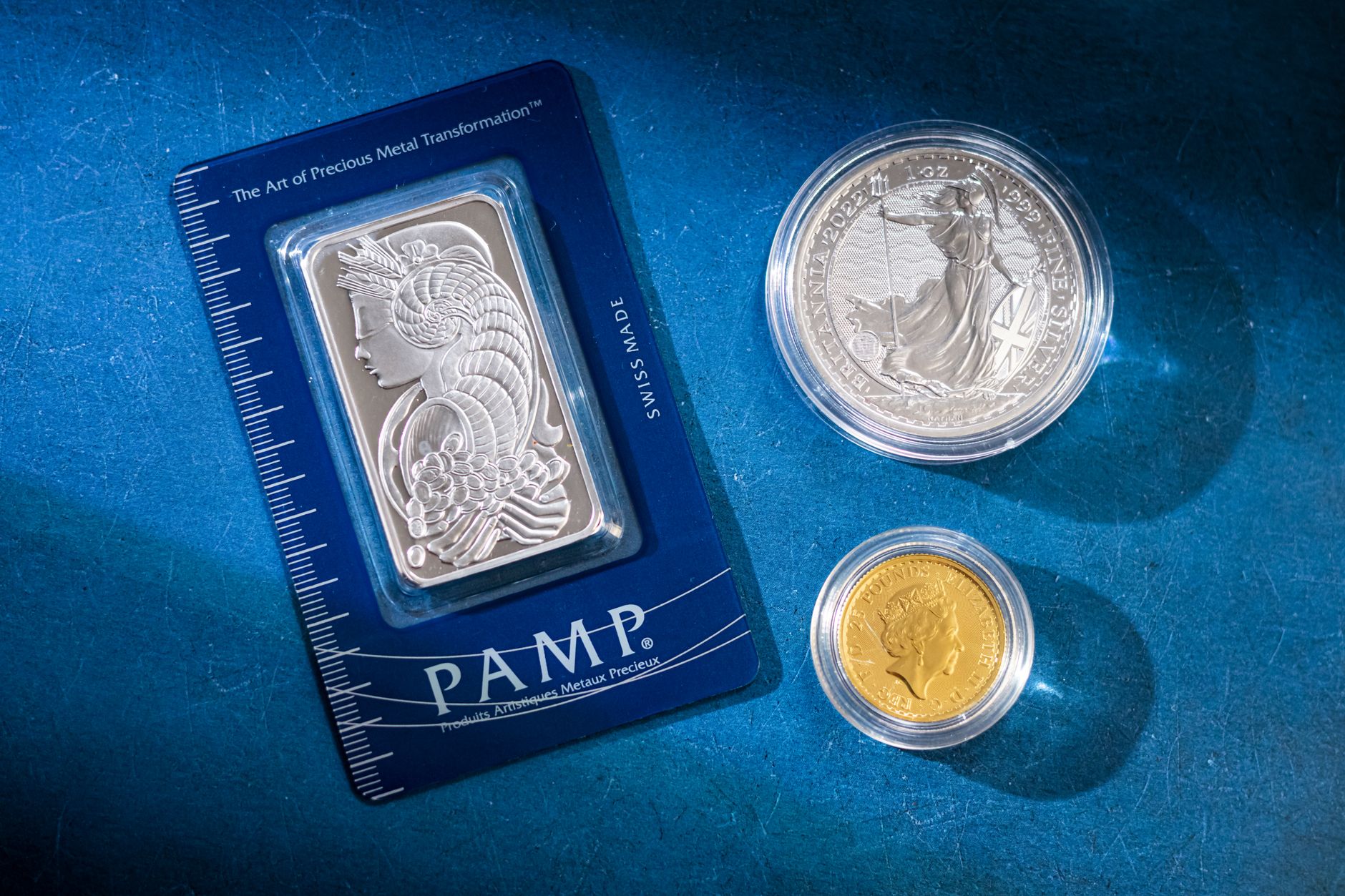
JPMorgan Chase has delivered a resounding vote of confidence in the precious metals market, forecasting that gold prices are poised to shatter nominal records in the latter half of 2026. In a comprehensive commodity outlook released to investors, the Wall Street giant cited a perfect storm of aggressive central bank buying, anticipated Federal Reserve rate cuts, and escalating geopolitical fragmentation as the primary engines of a new gold supercycle that could redefine portfolio strategies worldwide.
The bank's analysts argue that the current market behavior transcends a typical cyclical recovery, representing instead a structural shift in the global financial architecture. With the spot price of gold hovering near the $2,500 per ounce mark in early July 2026, JPMorgan sees a clear path to $2,800 by the fourth quarter, a level that would solidify gold's status as the decade's premier safe-haven asset. This outlook comes despite a relatively strong US dollar, suggesting that the bullion's momentum is driven by deeper, non-currency factors.
The Anatomy of a Commodity Supercycle in 2026
JPMorgan's research note meticulously breaks down why the current rally is fundamentally different from the post-pandemic spikes of the early 2020s. The analysts describe a 'multi-polar reserve system' where emerging economies, particularly the BRICS nations, are actively reducing their dependency on the US Treasury market. This de-dollarization trend has translated directly into physical bullion purchases, with central banks across Asia and the Middle East hoarding gold at an unprecedented pace to hedge against potential financial sanctions and currency volatility.
According to the bank's data, official sector gold purchases exceeded 1,200 metric tons in 2025, and the projection for 2026 suggests this figure will remain above the 1,000-ton threshold. The People's Bank of China (PBoC) and the Reserve Bank of India (RBI) remain the dominant players, but a notable surge in buying from Eastern European and Central Asian banks has tightened the physical market considerably. JPMorgan warns that this structural demand creates a high floor for prices, as any dip below $2,300 is immediately met with aggressive buying by sovereign wealth funds and central banks.
The Fed's Pivot and the Opportunity Cost of Gold
A critical pillar of JPMorgan's bullish thesis rests on the monetary policy trajectory of the US Federal Reserve. The bank's economic team forecasts two 25-basis-point rate cuts in the second half of 2026, bringing the federal funds rate closer to 4.0%. In a lower-rate environment, the opportunity cost of holding non-yielding assets like gold diminishes sharply, making it a more attractive proposition against bonds and dividend stocks. The report also suggests that the Fed's quantitative tightening program is nearing its end, which could further suppress real yields and inject liquidity into the commodity space.
Furthermore, JPMorgan strategists highlight the growing disconnect between gold prices and real interest rates, a relationship that historically dictated bullion's trajectory. They attribute this breakdown to the 'geopolitical risk premium' now permanently embedded in the gold price. With ongoing conflicts in Eastern Europe and the Middle East showing no signs of resolution, and with trade tensions between the US and China escalating, investors are willing to pay a premium for the insurance that physical gold provides against tail risks in the equity and bond markets.
Global Investment Implications and the Turkish Market Context
While the report focuses on the international spot price, its implications for emerging markets like Turkey are profound. In Turkey, where gold serves not only as an investment but as a deeply ingrained cultural asset for savings and weddings, the JPMorgan forecast has electrified retail investors. The combination of a rising international spot price and a depreciating Turkish lira has historically created a leveraged return for gram gold prices, and 2026 appears to be following the same script with even greater intensity.
As of mid-2026, Turkish investors are grappling with persistent inflation, making gold the primary vehicle for wealth preservation. The Turkish Central Bank (TCMB), mirroring the trend identified by JPMorgan, has been a net buyer of domestic physical gold to bolster its gross reserves. This dual demand—from both the state and the citizenry—has occasionally caused premiums in the Istanbul Grand Bazaar to spike above the theoretical price, a sign of robust physical tightness. Analysts predict that if the spot price hits $2,800, the gram gold price in Turkey could breach the 3,000 Turkish Lira threshold, a psychological milestone for the domestic market.
Strategic Allocation for Institutional and Retail Portfolios
JPMorgan's wealth management division advises high-net-worth clients to maintain a 10% to 15% allocation to gold and gold-related assets. The report argues that traditional 60/40 stock-bond portfolios are increasingly vulnerable to stagflationary shocks, and gold provides a negative correlation that bonds have recently failed to deliver. For institutional investors, the bank recommends a shift from gold ETFs to physically-backed vaulted gold to avoid counterparty risks associated with paper gold during times of extreme market stress.
For the average retail investor, the advice is nuanced. While the long-term trend is decisively bullish, the bank cautions against chasing momentum at short-term peaks. Technical indicators suggest that gold is entering overbought territory on the weekly charts, and a healthy correction of 5% to 8% could occur before the next leg up. Dollar-cost averaging into physical coins, bars, or regulated gold deposit accounts offered by Turkish banks is highlighted as the most prudent strategy to navigate the expected volatility in the third quarter of 2026.
Sanctions, Trade Wars, and the New Monetary Order
Beyond the technical and macroeconomic data, JPMorgan dedicates a significant portion of its analysis to the weaponization of the dollar. The freezing of Russian central bank reserves in previous years has acted as a catalyst for non-aligned nations to restructure their sovereign wealth. The report explicitly states that gold is the only reserve asset free of political liability, a characteristic that has become paramount in a fragmented geopolitical landscape. This sentiment is driving not only central bank demand but also a surge in private wealth migration into the precious metal from high-net-worth individuals in Asia.
The report also touches upon the technological role of gold in a digital future. While cryptocurrencies have positioned themselves as 'digital gold,' JPMorgan notes that central banks and sovereign funds overwhelmingly prefer the tangible asset for their tier-one reserves. The bank does not see tokenized gold or blockchain-based gold trading platforms as a threat to physical demand but rather as a complementary tool that enhances liquidity and price discovery, potentially attracting a younger generation of tech-savvy investors into the gold market.
Downside Risks and the Bear Case for Late 2026
No Wall Street forecast is complete without a stress test of the bear case, and JPMorgan outlines specific risks that could cap gold's upside. A sudden breakthrough in peace negotiations in major conflict zones could erase the geopolitical risk premium, potentially knocking $200 to $300 off the spot price within weeks. Additionally, if artificial intelligence-driven productivity gains trigger a supply-side economic boom that suppresses inflation without job losses, the 'soft landing' narrative could re-emerge, pushing capital back into risk assets and out of havens like gold.
However, JPMorgan assigns a low probability to this 'Goldilocks' scenario. The bank's base case remains firmly bullish, with a year-end target of $2,800 and a stretch target of $3,000 if stagflationary pressures intensify. For investors worldwide, the message from the largest bank in the United States is clear: the current gold rally is not a speculative bubble waiting to burst, but a rational repricing of risk in a world that is becoming increasingly polarized and volatile. As the second half of 2026 unfolds, gold is set to reclaim its throne as the ultimate store of value.
