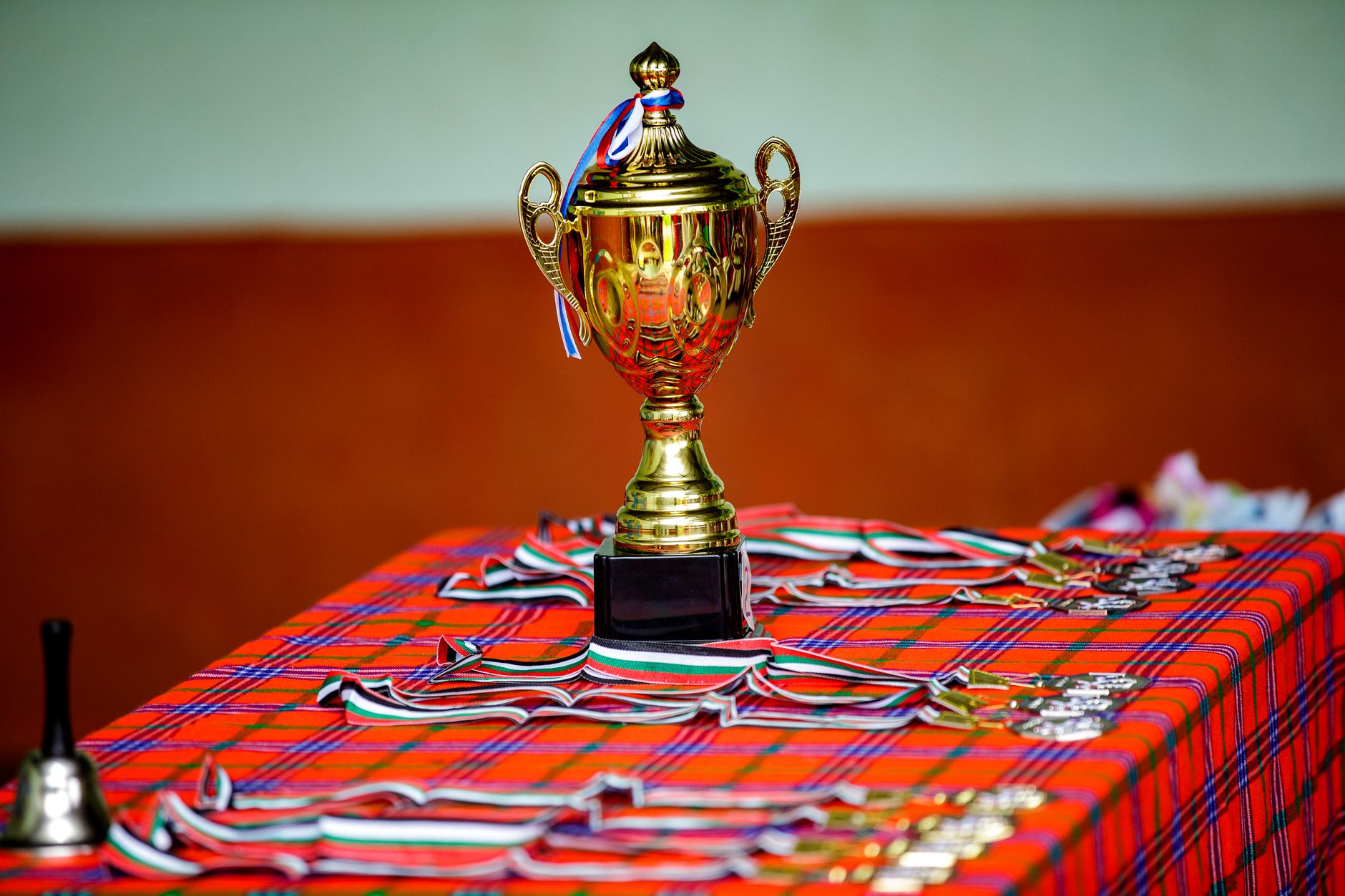
When a magnitude 7.4 earthquake struck northwestern Turkey in August 1999, few could have imagined that an 11-month-old deaf baby pulled from the rubble would one day stand atop a world championship podium. Kürşat Kiraz, now 27, completed that extraordinary journey in May 2026, winning gold at the World Deaf Greco-Roman Wrestling Championships in Rome — a triumph that resonates far beyond the wrestling mat.
From Tragedy to Triumph: The 1999 Earthquake That Shaped a Champion
The Marmara earthquake of August 17, 1999, remains one of the deadliest natural disasters in modern Turkish history. Striking at 3:02 a.m. local time, the quake killed more than 17,000 people and left hundreds of thousands homeless across the Marmara region. In the city of Sakarya, about 150 kilometers east of Istanbul, the Kiraz family's apartment building collapsed within seconds. Kürşat, his parents, and thousands of others were trapped beneath tons of concrete and twisted steel.
Rescue teams worked for six hours before reaching the family. Against all odds, all three survived. For young Kürşat, already navigating a world of silence due to congenital deafness, the earthquake became the first of many obstacles he would overcome. His father, Mustafa Kiraz, later recalled: 'When we emerged from the rubble, my son didn't have a single scratch. At that moment, I knew this child was born to survive.' That survival instinct would become the cornerstone of an athletic career defined by relentless determination and an uncanny ability to turn adversity into advantage.
Early Signs of Athletic Excellence
In the years following the earthquake, the Kiraz family lived in prefabricated housing provided by the Turkish government's disaster relief program. Despite communication barriers posed by his hearing impairment, young Kürşat displayed exceptional physical coordination and energy levels that far exceeded his peers. A primary school physical education teacher first identified his athletic potential, steering him toward track and field before he eventually found his calling in wrestling — a sport where his silence would become his greatest weapon.
The Silent Assassin: How Deafness Became a Competitive Edge
In Greco-Roman wrestling, where split-second reactions and tactical awareness define champions, Kürşat Kiraz has cultivated a unique competitive advantage: absolute focus. His coach, Yılmaz Demir, explains the paradox: 'Kürşat hears nothing on the mat — not the crowd's roar, not his opponent's breathing, not the coaches' shouts. This forces him to rely entirely on visual cues and physical intuition. He reads his opponents' movements like a chess player, anticipating attacks before they fully materialize.'
That distinctive approach has yielded remarkable results. After claiming his first Turkish national championship in 2018, Kiraz went on to dominate the domestic circuit, securing three consecutive titles through 2024. His international breakthrough came at the 2023 Deaflympics, where he earned a bronze medal. But the real statement came in 2025, when he defeated Russia's Dimitri Volkov by fall in the European Deaf Wrestling Championships final. By the time he arrived in Rome for the 2026 World Championships, Kiraz was the clear favorite — and he delivered, dismantling his Iranian opponent 8-2 in the final to claim gold.
Innovative Training Methods for Deaf Athletes
Behind Kiraz's success lies a sophisticated training system developed specifically for deaf wrestlers. Coach Demir implemented a visual and tactile signaling method that uses colored lights and a vibrating vest worn by the athlete. This allows real-time tactical communication during matches without relying on auditory cues. 'Without this system, a world championship would have been impossible,' Kiraz said through sign language in a post-victory interview. 'My disability didn't stop me — it pushed me toward more creative solutions. On the mat, even in the loudest arena, I see only my opponent and my goal.'
A Nation's Symbol of Resilience and Renewal
Kiraz's world championship has resonated deeply across Turkish society, transcending the boundaries of sport. The hashtag #FromRubbleToVictory trended nationwide on social media platforms, with millions sharing his story. President Recep Tayyip Erdoğan personally called to congratulate the wrestler, while the Ministry of Youth and Sports announced a special awards ceremony. The Sakarya Metropolitan Municipality revealed plans to name a sports facility after Kiraz — a gesture that carries profound symbolism in a city still marked by the 1999 tragedy.
According to the Turkish Statistical Institute's 2025 data, approximately 3.5 million hearing-impaired individuals live in Turkey, yet their participation rate in organized sports remains below 5 percent. Kerim Vural, president of the Turkish Deaf Sports Federation, sees Kiraz's success as a catalyst for change: 'Kürşat's story is one of the most powerful examples showing that barriers exist only in the mind. In the three months since his world championship, our federation has seen a 40 percent increase in registration applications.' The numbers suggest that Kiraz's impact extends far beyond his own medal count.
From Earthquake City to City of Hope
Sakarya, long associated with the devastation of 1999, is now also the hometown of a world champion. The governor's office announced that a replica of Kiraz's world championship trophy will be placed beside the city's Earthquake Memorial, which honors those who perished in the disaster. This symbolic pairing — tragedy and triumph standing side by side — captures the essence of Kiraz's journey and offers a powerful narrative of rebirth for a community still healing from its wounds.
The Road to Los Angeles 2028 and the Paralympic Dream
For Kürşat Kiraz, the world championship is not a destination but a launching pad. His sights are now set on the 2028 Los Angeles Paralympic Games, where he hopes to represent Turkey on the world's biggest stage for athletes with disabilities. However, a significant obstacle remains: Greco-Roman wrestling for deaf athletes is not yet included in the Paralympic program. The Turkish Deaf Sports Federation, in coordination with Turkey's National Paralympic Committee, is actively lobbying the International Paralympic Committee (IPC) to add the discipline before 2028.
Kiraz remains undeterred. In a message delivered through sign language, he declared: 'I emerged from the rubble, I walked through silence to become world champion. Now I want to light the Olympic flame. To disabled children and their families, I say this: Whatever life gives you, you can turn it into gold. Just believe and never give up.' These words, spoken 27 years after he was pulled from the wreckage of a collapsed building in Sakarya, encapsulate a journey that has become a global testament to human resilience.
Sponsorship and Financial Support for Disabled Athletes
Kiraz's world title has also opened doors financially. A major Turkish sportswear brand signed him to a three-year sponsorship deal, while the Sakarya Chamber of Commerce and Industry awarded him 500,000 Turkish lira (approximately $15,000). For disabled athletes in Turkey, where funding shortages often derail promising careers, Kiraz's story offers a concrete model of how success can attract the resources needed to compete at the highest levels. His preparations for the 2028 Paralympic campaign will now proceed under professional conditions that were once unimaginable for a deaf wrestler from a disaster-stricken city.
