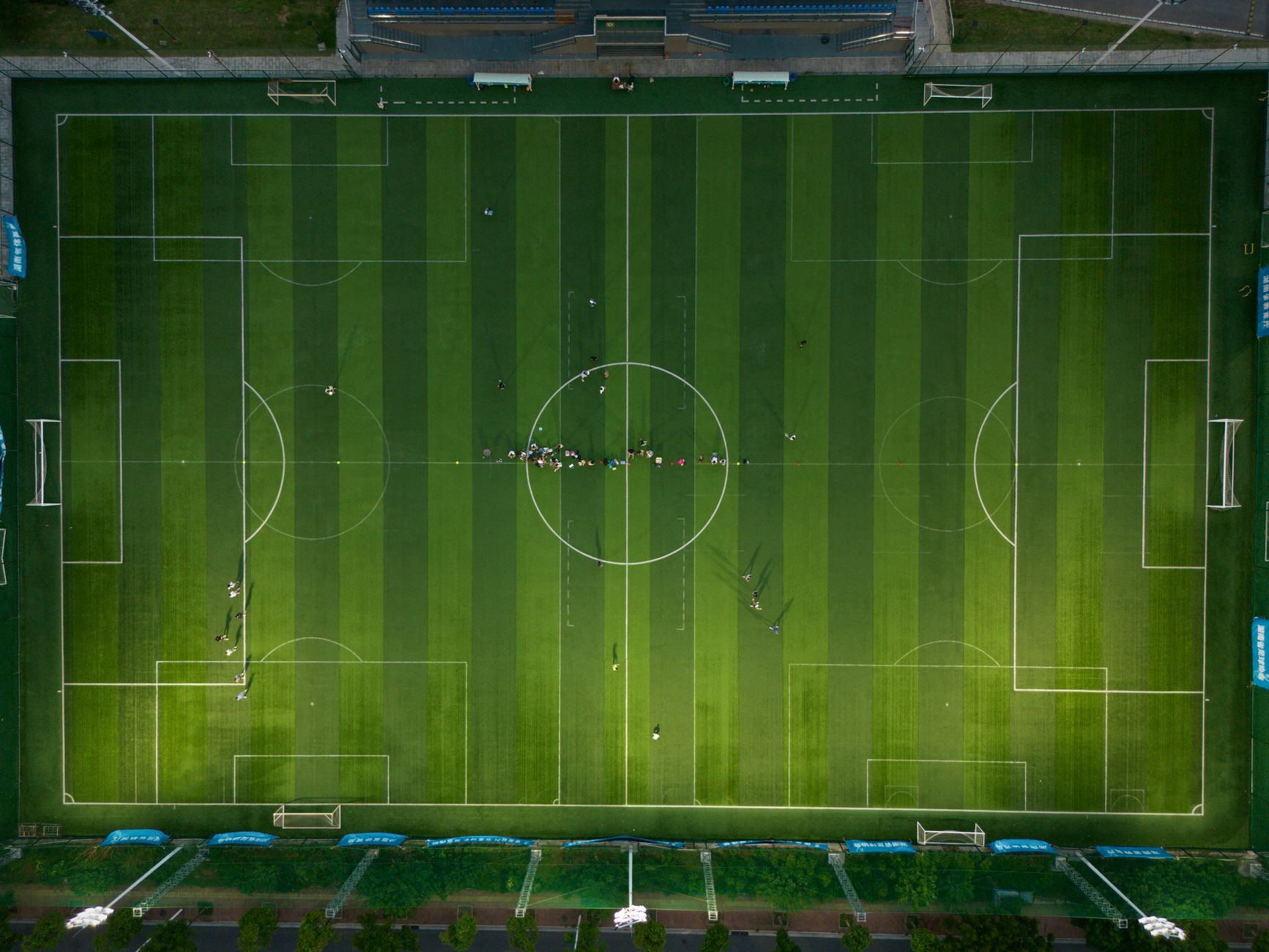
SEATTLE — When Major League Soccer commissioner Don Garber stepped onto the Lumen Field pitch on Monday, he wasn't just inspecting the turf ahead of the United States' round of 16 clash against Belgium. He was surveying the epicenter of what could become the most transformative moment in American soccer history. With the 2026 FIFA World Cup entering its knockout stages on home soil, the question hanging over the Pacific Northwest isn't merely about advancing to a quarterfinal — it's about whether this USMNT generation can fundamentally rewrite the nation's sporting DNA.
The Stakes Beyond the Pitch: A Nation's Sporting Identity at Crossroads
For decades, American soccer has operated in the shadows of the NFL, NBA, and Major League Baseball — a so-called 'sleeping giant' that perpetually hovered on the verge of awakening without ever truly opening its eyes. The 2026 World Cup represents something fundamentally different. Television viewership for soccer matches in the United States surged 65 percent in the first half of 2026 compared to the 2022 Qatar World Cup cycle, while youth soccer registrations among 8-to-16-year-olds climbed 28 percent over the past two years. These aren't incremental gains — they signal a structural shift in how the world's largest sports market consumes the beautiful game.
Garber, speaking to reporters on the Lumen Field grass, framed the moment in terms that transcended typical pre-match rhetoric. 'What this team does in the next two weeks could change American soccer forever,' he said, gesturing toward the 69,000-seat venue that will host Tuesday's decisive encounter. The commissioner's words carry weight because they reflect economic realities: Apple's $2.5 billion MLS broadcasting deal, the proliferation of European club academies on American soil, and a generation of players competing at elite European clubs have created an infrastructure that didn't exist during previous World Cup cycles.
From Niche to Mainstream: The Demographics of Change
The transformation extends beyond television ratings and merchandise sales. Gen Z's media consumption habits — favoring globalized entertainment over traditional domestic sports programming — have positioned soccer uniquely within the American cultural landscape. NBC's Premier League broadcasts now regularly outdraw NHL hockey games, while EA Sports' FIFA franchise has become a cultural touchstone for millions of young Americans. The 2026 World Cup's domestic hosting provides the catalyst that could convert this organic growth into permanent cultural realignment.
The Seattle Factor: How a City Became America's Soccer Capital
U.S. Soccer's decision to stage this round of 16 match in Seattle wasn't arbitrary. The city has transformed over the past decade into arguably the nation's most passionate soccer market, with Seattle Sounders' Emerald City Supporters creating matchday atmospheres that rival European terrace culture. The Sounders' 2022 CONCACAF Champions League triumph — the first by an MLS club in the modern era — cemented the Pacific Northwest's reputation as a legitimate footballing region rather than a colonial outpost of the global game.
Seattle's soccer demographics reflect broader national trends with local particularities. The city's technology sector workforce, university population, and international residents have created a fanbase less tethered to traditional American sports allegiances. Ticket demand for World Cup matches in Seattle exceeded other U.S. host cities by 40 percent, demonstrating the depth of the region's football commitment. When Clint Dempsey returned to MLS with the Sounders in 2013, he planted seeds that are now flowering into a full-blown soccer culture capable of hosting the most consequential USMNT match in a generation.
The Dempsey to Pulisic Pipeline: A Generation's Journey
The arc from Dempsey's homecoming to Christian Pulisic's emergence as a Serie A star at AC Milan tells the story of American soccer's evolution. Where once a single player in a top European league constituted national news, the 2026 USMNT roster features regular starters at Juventus (Weston McKennie), Bournemouth (Tyler Adams), and multiple Bundesliga clubs. This depth of talent — unprecedented in American soccer history — provides the technical foundation for a deep World Cup run that could capture the national imagination in ways previous generations couldn't sustain.
Belgium as Historical Mirror and Tactical Test
The round of 16 opponent carries historical weight that amplifies the stakes. The two nations' 2014 World Cup encounter in Brazil remains etched in American soccer memory — Tim Howard's heroic 16-save performance couldn't prevent a 2-1 extra-time defeat that felt simultaneously like a moral victory and a crushing disappointment. Twelve years later, the Belgian golden generation arrives in Seattle for its final dance, with Kevin De Bruyne's creativity and Romelu Lukaku's finishing presenting the most sophisticated tactical challenge of Gregg Berhalter's tenure.
Belgium manager Domenico Tedesco acknowledged the American threat in his pre-match press conference with a blend of respect and veteran confidence. 'We respect their athleticism,' Tedesco said, 'but experience at this level is decisive.' The comment underscores the central tension of the match: America's physical dynamism against Belgium's tournament-tested savvy. Pulisic's social media post — '12 years waiting, now it's time' — captured the generational hunger driving a squad determined to erase historical disappointments and reach the nation's first World Cup quarterfinal since 2002.
The Women's Game as Cultural Foundation
The USMNT's current trajectory builds on decades of dominance by the U.S. Women's National Team, whose World Cup victories and cultural impact created space for soccer within the American sports conversation. Icons like Megan Rapinoe and Alex Morgan normalized soccer fandom in ways that benefit the men's program today. The parallel growth of women's and men's soccer has made the sport uniquely positioned as a gender-bridging cultural force — by 2026, girls' soccer participation rates in the U.S. have nearly equaled boys', creating a broad-based constituency that no other American sport can claim.
Post-2026: The Ecosystem and Global Implications
Whatever happens against Belgium, the structural transformation of American soccer will continue. MLS's next media rights cycle beginning in 2027, the influx of international investment, and the USL-MLS pyramid restructuring are reshaping the landscape independently of World Cup outcomes. Garber's stated goal — making MLS one of the world's top five leagues by 2030 — reflects ambitions that extend far beyond a single tournament. Youth academy investment has reached $1.2 billion over the past five years, creating talent development pipelines that didn't exist a decade ago.
The global soccer industry is watching Seattle with more than casual interest. European superclubs have established American beachheads — Bayern Munich's Dallas academy, Barcelona's Arizona facility — treating the United States as an emerging talent pool rather than merely a commercial market. A deep USMNT run would accelerate this integration, potentially triggering a virtuous cycle of investment, development, and performance that could permanently alter the competitive balance of international soccer. The 'sleeping giant' metaphor, overused to the point of cliché, might finally find its moment of truth on a cool July evening in the Pacific Northwest.
The Sound of Transformation: Seattle's Defining Moment
When the 'I Believe That We Will Win' chant echoes through Lumen Field on Tuesday, it will carry the weight of decades of false dawns and genuine progress. Seattle's journey from MLS outlier to World Cup host city mirrors American soccer's broader evolution — improbable, uneven, but unmistakably forward. Whether the USMNT advances past Belgium or not, the 2026 World Cup has already changed the conversation. The question that Garber posed on the Lumen Field pitch isn't really about the next two weeks. It's about what happens in the next two decades, and whether a nation finally ready to embrace the world's game will find its moment of arrival.
